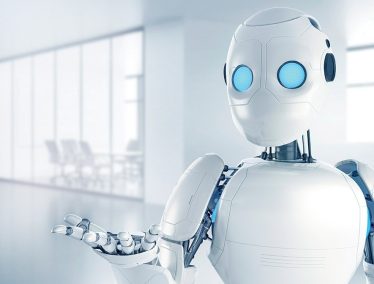
Bill Hibbard ’70, MS’73, PhD’95 and other artificial-intelligence experts want to ensure that AI meets its potential for good — avoids dystopian scenarios.
Find Articles
This page presents a paginated collection of all On Wisconsin stories by default. You can use topic and year filters to narrow the list of stories.
Selected topic: Science & Technology.
207 stories matched. Showing page 4 of 7.
Filters
Filter by Year
Filter by Topic

The UW’s ideas factory churns out remarkable findings that don’t always get the notoriety they deserve.
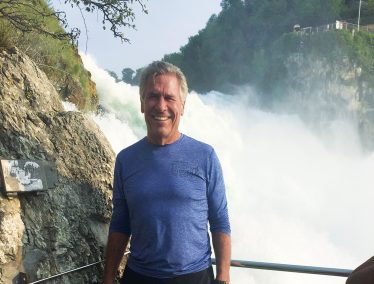
Courtesy of Mike Splinter
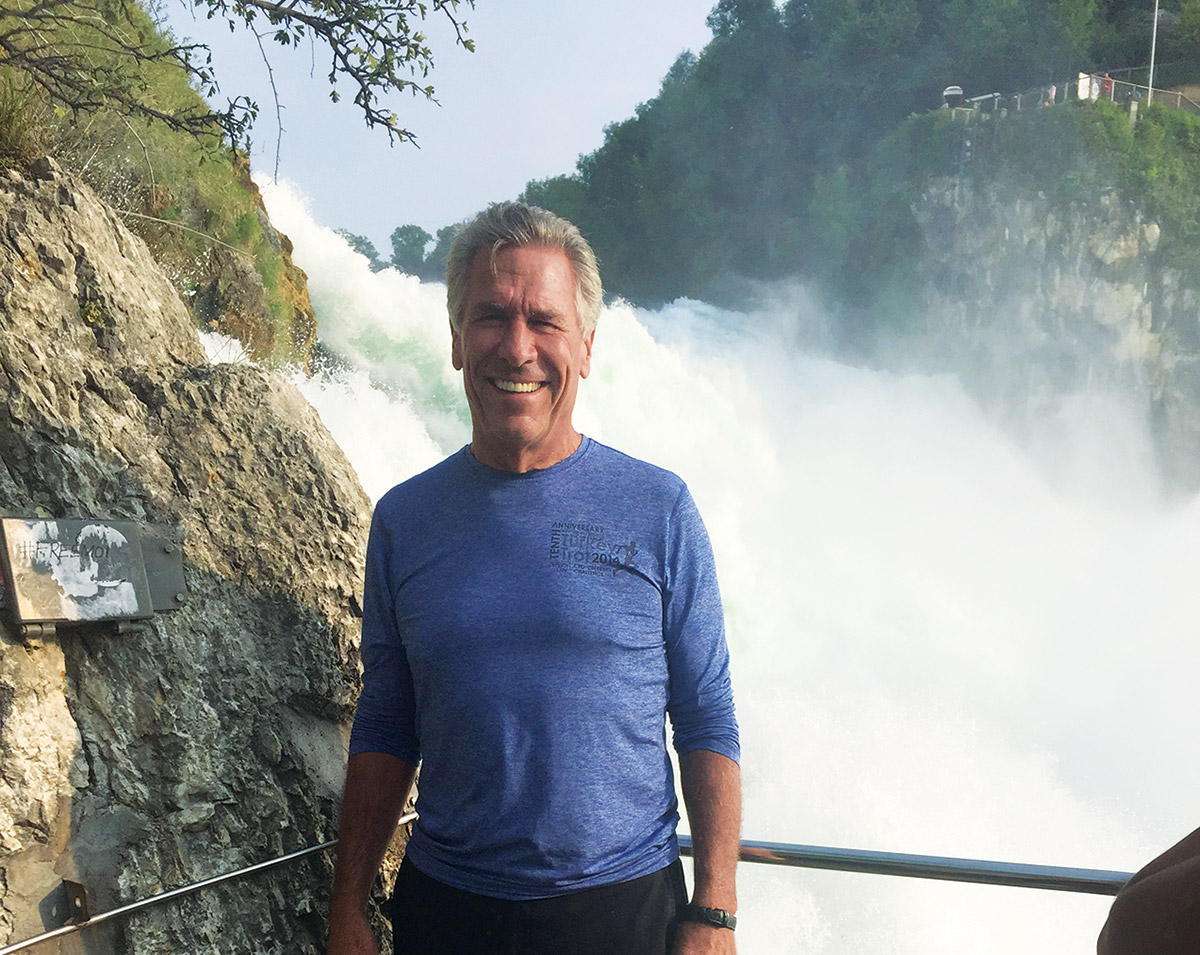
Taking Stock of SuccessWhen Mike Splinter ’72, MS’74 (above at Rheinfall, Switzerland) joined the board of Nasdaq, Inc., known for its U.S. stock exchange, he predicted the company’s high-tech edge could be a game-changer for financial-market services. That was in…
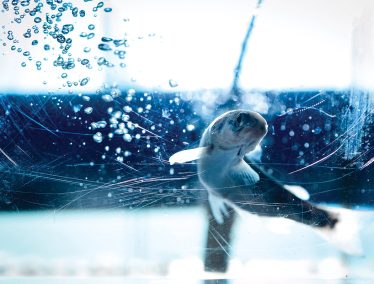
This female Norwegian Atlantic salmon seems pretty chill as it swims in a tank in the Water Science and Engineering Lab. It’s part of a study researching ways to reduce stress on farmed fish. Wisconsin has more than 2,000 fish farms.
Photo by Jeff Miller.
Spencer Walts
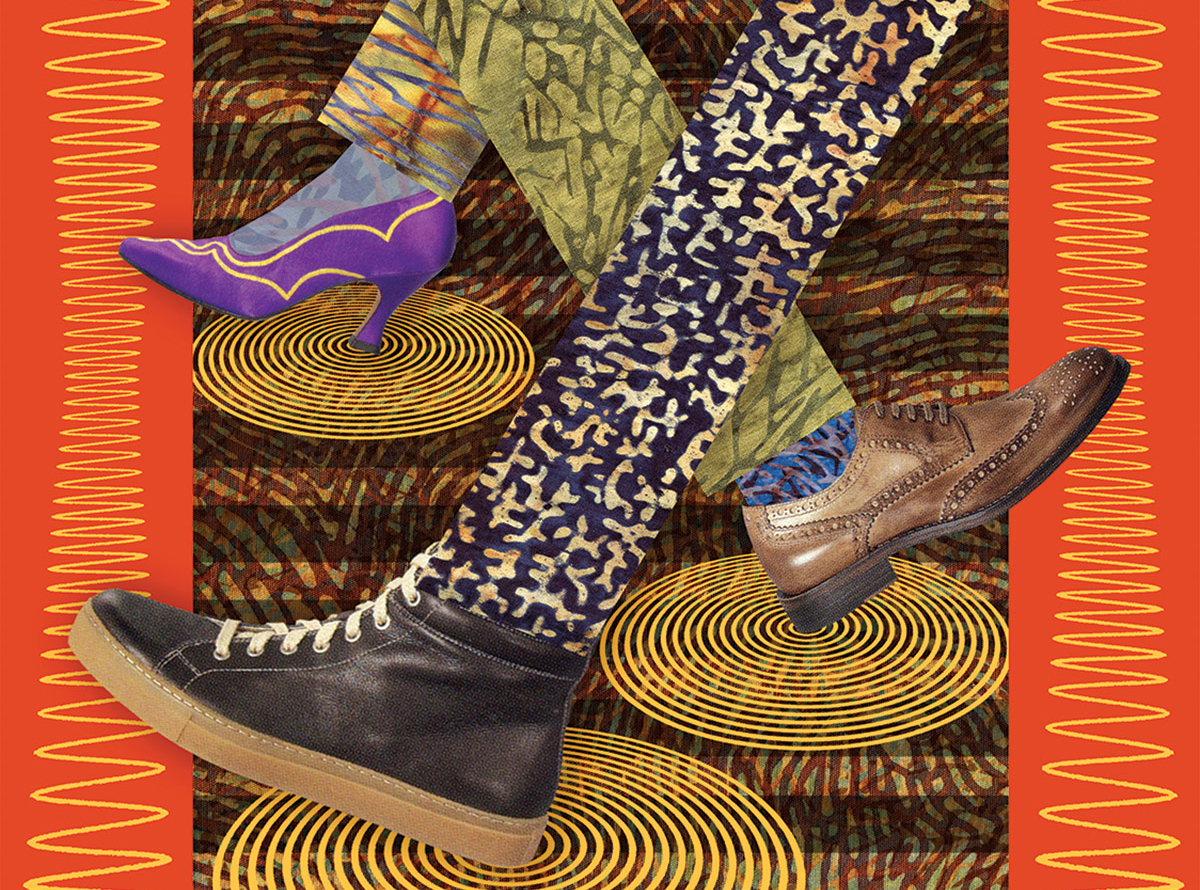
The next renewable energy source could be right underfoot. A group of UW–Madison engineers has developed an inexpensive method to convert footsteps into electricity using wood pulp and nanofibers incorporated into flooring. It marks the latest advance in “roadside energy harvesting” — green…
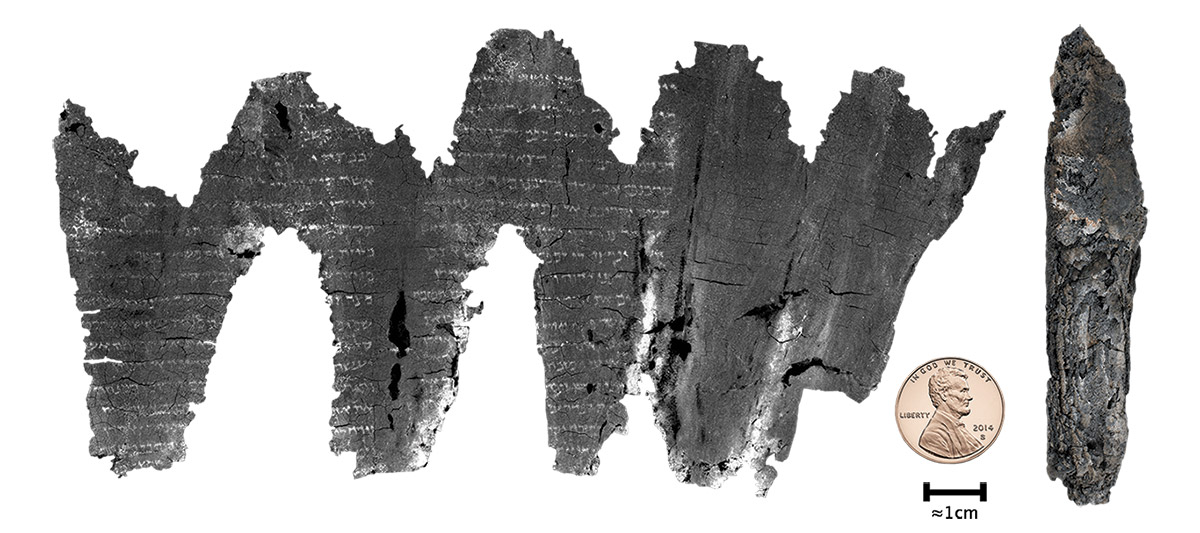
Seth Parker, Seales Research Group, University of Kentucky
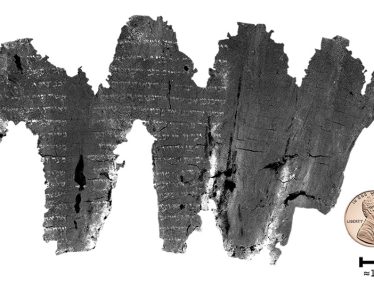
The biblical and the scientific merge with the work of W. Brent Seales MS’88, PhD’91, a University of Kentucky computer scientist who developed the technique of “virtual unwrapping” to make legible the text of a…
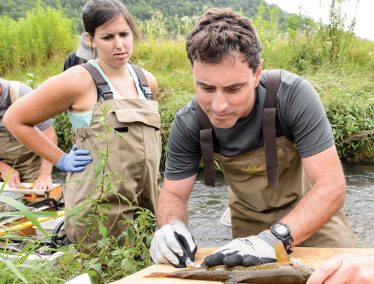
UW professor Tony Goldberg is on a life-saving mission: identify unknown pathogens before they jump to a new host and cause disease in other animals — and humans.
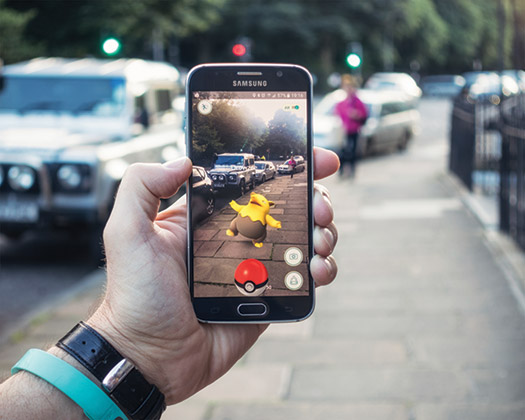
George Clerk/ISTOCK
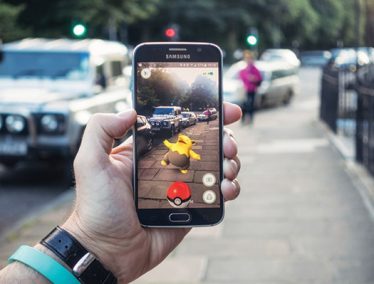
Even if you didn’t spend the summer desperately seeking a Dratini, you’ve surely heard of Pokémon Go, the augmented-reality game that captured audiences when it was released in July. As reviews came in, there was overarching praise for the physical nature…
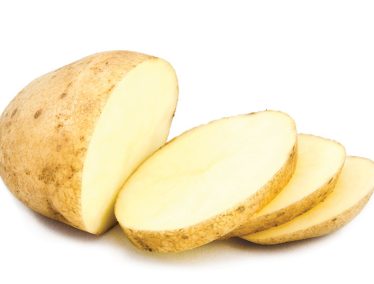
There’s more to genetically modified foods than what you hear in political debate. Just ask UW professor Jiming Jiang and his hardy — if unloved — potato.
The selfie stick’s got nothing on this camera pioneered by UW researchers.
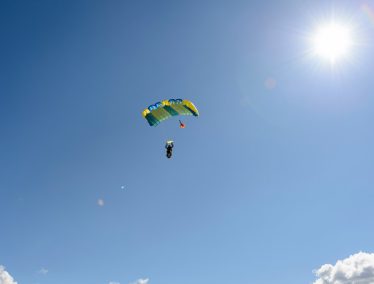
On the ground and in the air with Todd “Jinks” Jinkins ’96 and the Great Basin Smokejumpers, the Navy Seals of firefighting.
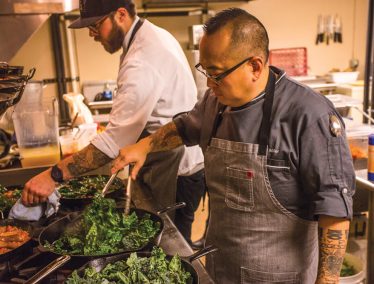
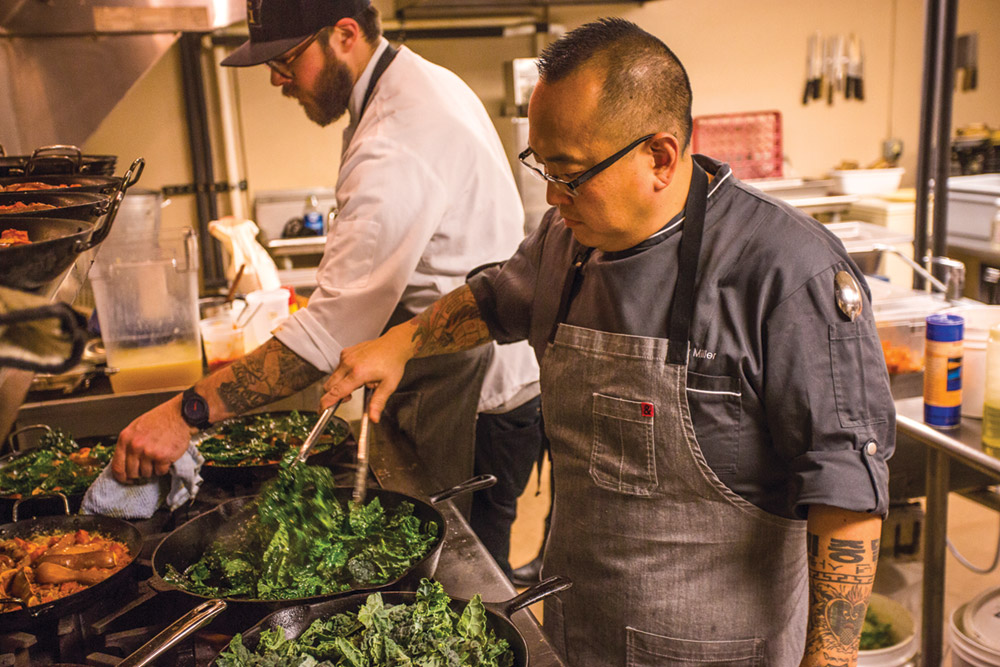
Award-winning chef Tory Miller (right) is part of a new UW program that links breeders and growers with top Madison chefs.
For farmers who sell vegetables directly to consumers, disease resistance and high yield are often the top priorities when choosing varieties, but a UW…
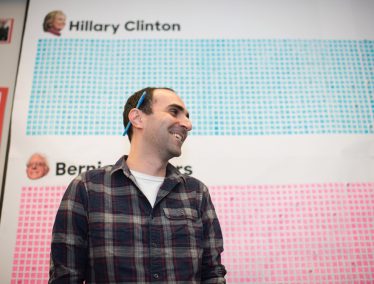
Elan Kriegel ’03 runs the data shop for Hillary Clinton’s presidential campaign. After the election, he and his team will use their algorithms and their passion to help other causes.
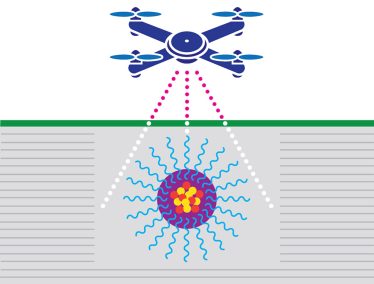
UW graduate students develop a new use for drones: detecting explosives buried in war zones.
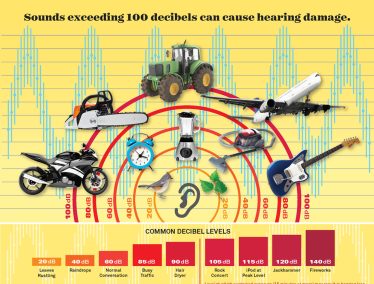
Tractor image, Shutterstock; all other images, IStock; photo illustration by Nancy Rinehart
Growing up on a dairy farm in Viroqua, Wisconsin, Melanie Buhr-Lawler ’00 heard her dad’s tractors and other loud equipment every day. Now, as a clinical associate professor of audiology at UW–Madison,…
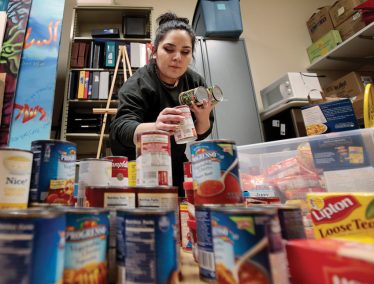
The UW campus is now home to a food pantry for students who don’t know where their next meal will come from.
UW computer sciences professor Gurindar Sohi developed technology that is at the heart of a legal dispute with Apple, Inc.
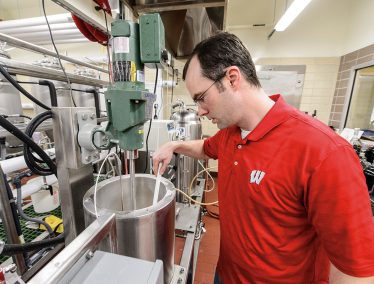
UW's first enologist is mixing science and business to make Wisconsin's wine — and its wine industry — more robust.
Shutterstock
Lego wants to turn its iconic bricks green by investing $150 million to find cleaner ways to manufacture them. But the iconic toy company isn’t alone in trying to change the process for the better.
Most of the chemicals used to make plastics, including water bottles,…
There’s a STEM boom at the UW, with those majors accounting for 40 percent of degrees.
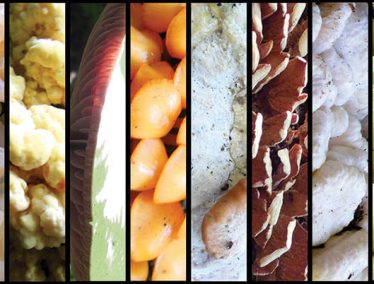
Imagery can serve as essential data that help scientists understand how things work, but science images can also be fascinating and beautiful.
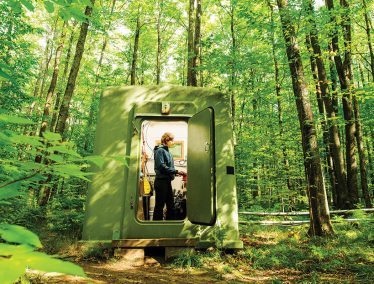
At a tiny building in Wisconsin’s Chequamegon-Nicolet National Forest, scientist Claire Phillips studies carbon in soil samples. The UW has been conducting research at the site for a decade, exploring how forests change over time, under the direction of Ankur Desai, an associate professor in atmospheric and oceanic sciences.
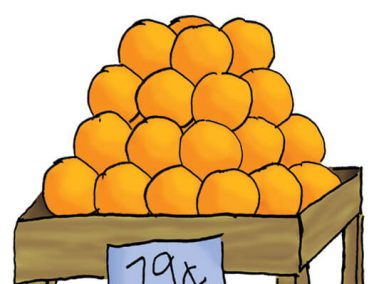
Veronica Berns PhD’14 found a novel way to make chemistry easier to understand.
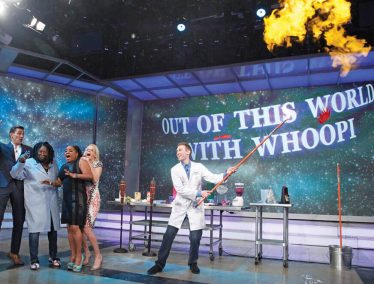
He does popping. He devotes time to his company. He teaches adults and kids about science. He works on his doctorate. Is there anything Jeff Vinokur ’12 isn't doing?
This ubiquitous material has surprising roots at UW — and it's a connection that spurred a thriving Wisconsin industry.
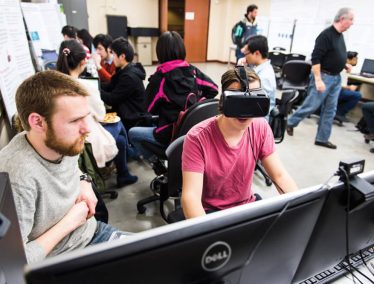

In a new UW lab, students create cool things for our interconnected world.