Teaching Preschoolers Empathy
A UW study examines how children choose their playmates.
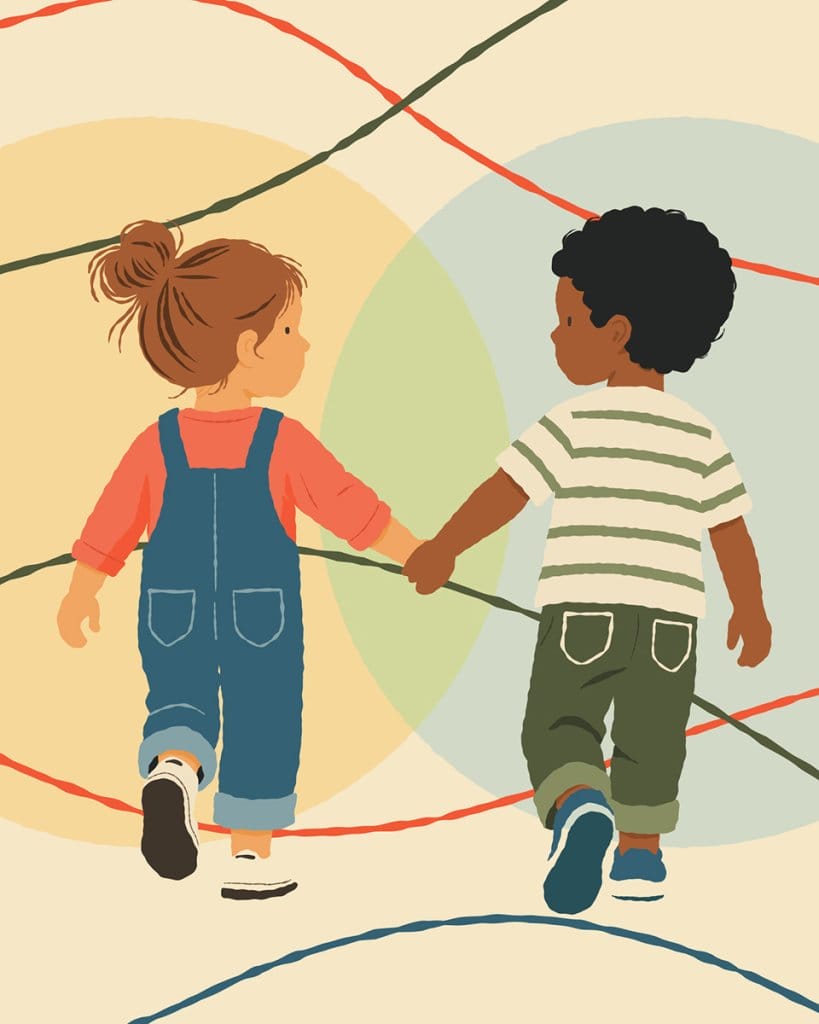
Early childhood may represent a critical window when interventions to promote cross-group friendships could have lasting benefits. Danielle Lawry
Research from UW–Madison and the Madison Metropolitan School District shows children as young as four years old begin forming social networks shaped by shared characteristics, offering new insight into how early peer relationships develop.
The study, completed under the Madison Education Partnership and coauthored by Rebecca Bier MS’\’23, PhDx’27, examines how preschool students choose their playmates. The findings suggest these early interactions may lay the groundwork for how friendships later form.
Early childhood may represent a critical window when interventions to promote cross-group friendships could have lasting benefits. Research suggests interacting with diverse peers can foster empathy, reduce bias, and support both social and academic development.
“At this stage, peer groups are still relatively fluid, and children are engaging with a broader range of classmates than we often see in later grades,” the researchers conclude. “This creates important opportunities for educators and policymakers to support inclusive peer environments from the very start of schooling.”
Published in the Winter 2026 issue



Comments
No comments posted yet.