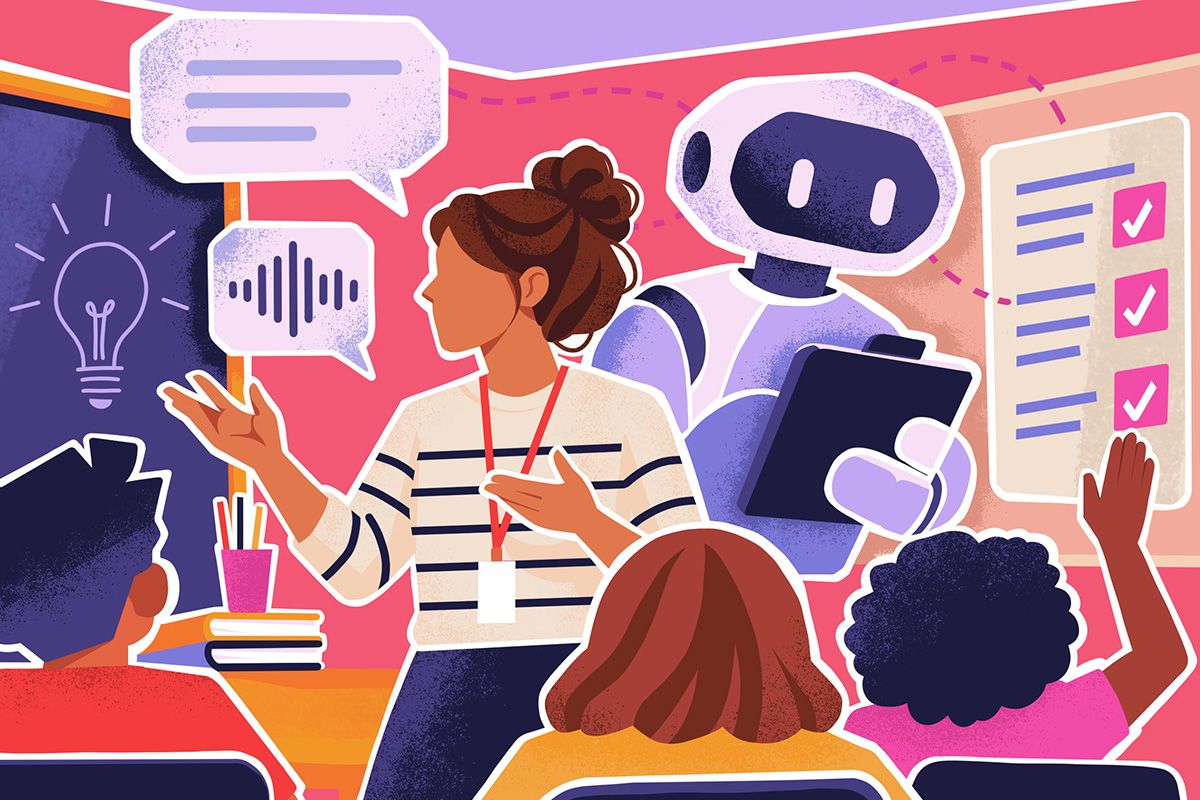
The goal was to see whether machine learning could produce reliable and meaningful scores on 18 widely used indicators of teaching effectiveness. Danielle Lawry
A new study explores whether artificial intelligence can help assess teaching quality using real classroom data and whether it can do it as well or even better than traditional human ratings, which can be time-consuming, expensive, and inconsistent.
The international team of researchers included Courtney Bell, a professor of learning sciences in the UW’s School of Education and former director of the school’s Wisconsin Center for Education Research. The team’s goal was to see whether machine learning could produce reliable and meaningful scores on 18 widely used indicators of teaching effectiveness.
The study showed that the automated scores often aligned closely with human ratings and sometimes outperformed them. Machine learning models were more reliable than human scores on 11 of the 18 measures, including classroom discourse and eliciting student thinking. These areas rely heavily on language cues, which machine learning analyzes with “fine-grained precision,” the study found. Human raters may overlook these cues or interpret them inconsistently.
The reviewers preferred human scores in elements of classroom management, such as judging how well teachers established routines and handled disruptions, suggesting humans are better at interpreting complex or ambiguous behaviors.
“Human professional judgment remains essential,” Bell says. “The promise here is real — but so is the need for caution as we explore how these tools might support educators.”
Published in the Winter 2026 issue



Comments
No comments posted yet.