The UW’s Lost Traditions
From roasting hotdogs in the Rathskeller fireplace to throwing rivals off the boathouse pier, what it takes to be a Badger is continually changing.
Whether it’s sitting on Abe’s lap after graduation or jumping around at Camp Randall, UW–Madison has never lacked for traditions: some solemn, some silly, some strange. And while many practices have evolved or disappeared, each left its imprint on what it means to be a Badger. How many of these Wisconsin customs — ranging from quaint to chaotic — have you heard of?
Welcome to Wisconsin
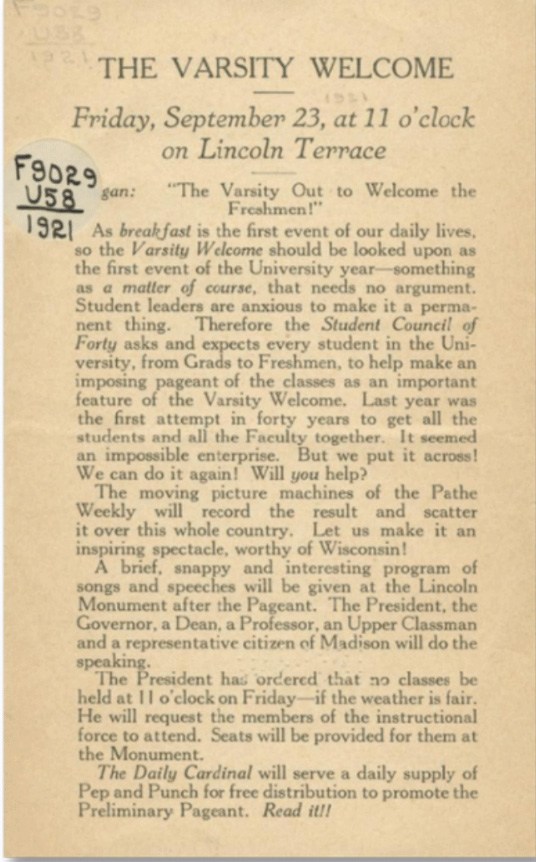
Varsity Welcome instruction booklet.
Today’s Wisconsin Welcome spans several weeks and gives incoming students many ways to connect. While Badgers now use an app to plan out their first few weeks and line up for free T-shirts, earlier generations had different methods of exploring campus, meeting new people, and scoping out complimentary refreshments.
In 1913, Scandinavian studies professor Julius Olson 1884 (who later wrote the lyrics to “If You Want to Be a Badger”) proposed a campuswide event to help foster a sense of community and class spirit. Thousands of students, from freshmen to seniors, crowded into the Red Gym for speeches, songs, and fruit punch. By 1920, the gathering had outgrown the indoor space and the Varsity Welcome moved to Bascom Hill. Each class would line up along the grassy slope and, led by the University Regimental Band, seniors would escort incoming freshmen to the Lincoln Terrace for a program and more pageantry.
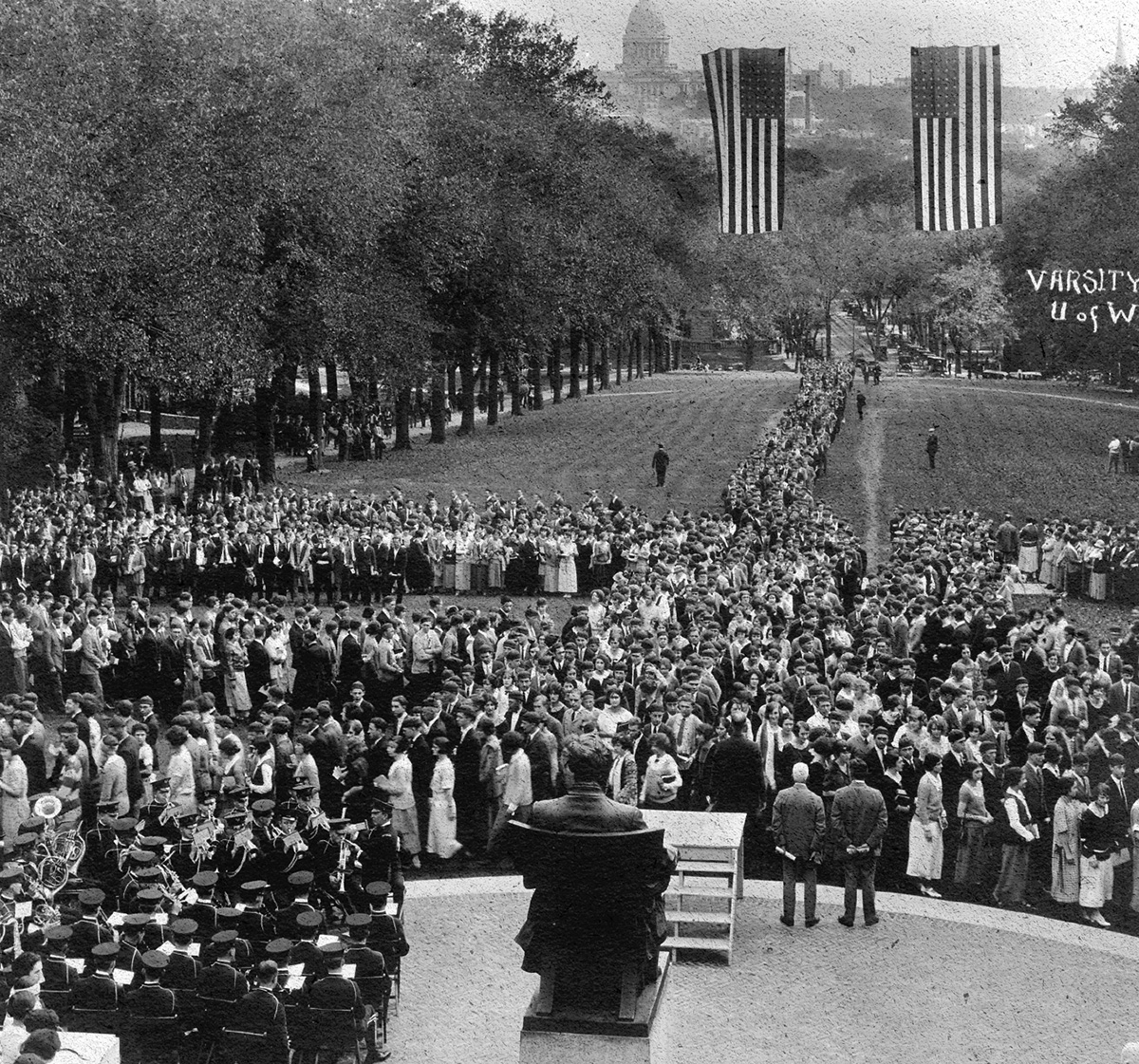
Customary ways of welcoming new students to campus have moved on from the formal pageantry of early years.
By the 1930s, university officials shifted to a convocation more in line with today’s format. Orientation Week planning was handed over to student leaders and campus organizations to coordinate tours, information sessions, and entertainment, along with smokers (for the men) and teas (for the women). For decades, the Memorial Union hosted a fall kickoff resembling a county fair, com-plete with caramel apples and hot dogs roasted in the Rathskeller fireplace, as well as palm readers, casino games, and film screenings.
Amid all this activity, women were carving their own traditions. From the early 1900s through the 1960s, the UW hosted a separate Women’s Convocation. Usually held under the guidance of the dean of women and other female campus leaders, the event offered incoming women their own dedicated welcome to the university.
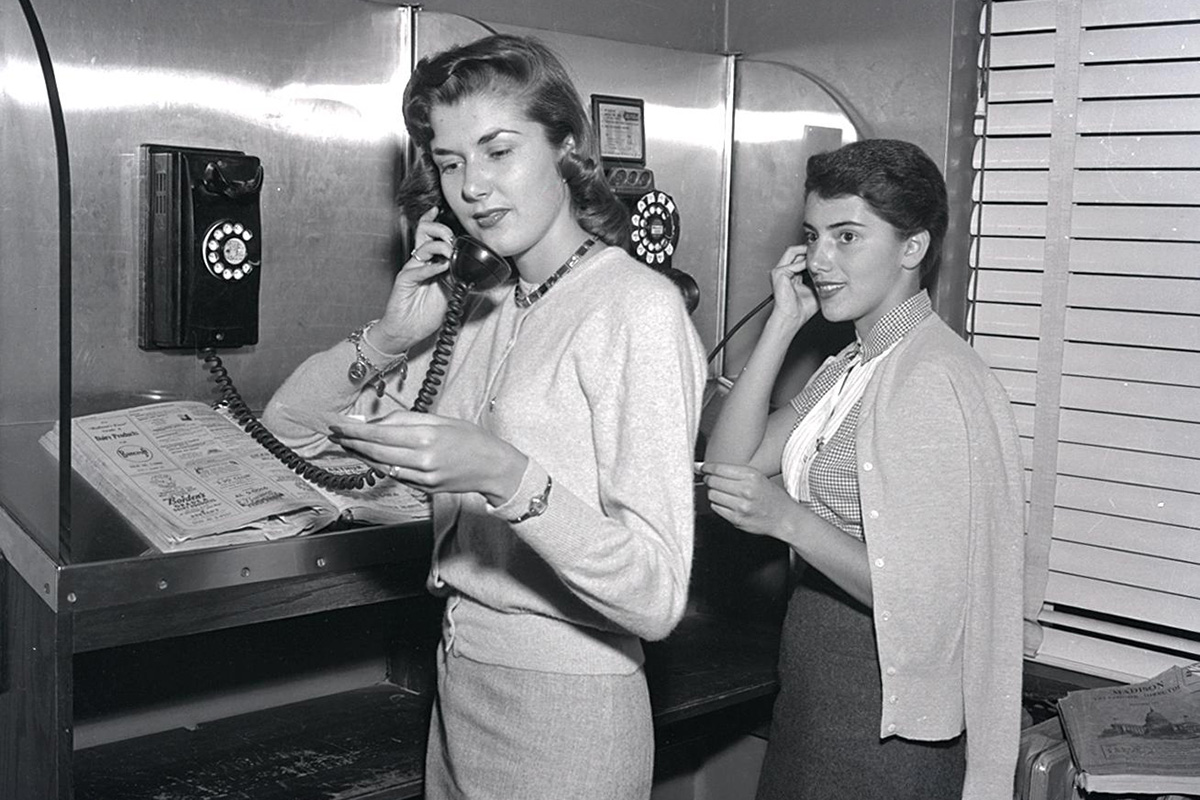
Upperclass women calling their “little sisters” to help them adjust to campus.
Residence halls and independent houses also organized welcome events. For students living off campus, Associated Women Students (AWS) sponsored the Big Sister program, pairing first-year “little sisters” with more seasoned students who offered advice on study habits, extracurriculars, and making friends.
AWS produced Wiscetiquette, a pocket-sized guidebook that began as a satirical feature in the Octopus humor magazine — practical advice with a wink. (From the 1956 edition: “Tradition has it that a girl isn’t really a coed until she’s been kissed while Music Hall clock is chiming midnight!”)
Not-So-Warm Welcome
Collegiate class rivalries and initiation rituals date back to the colonial era, and the UW followed suit. Billed as class bonding and good-natured fun, many of these customs veered closer to harassment. As early as the 1870s, university leaders and campus organizations spoke out against hazing. UW President Thomas Chamberlin referred to the practice as “childishly inappropriate”; a student newspaper described hazing as “a meaningless, purposeless, idiotic legacy.”
But before the student body voted in 1909 to abolish hazing, freshmen might have found themselves abducted and stashed in agricultural barns or tied up in a train boxcar. The tradition of “baptizing” freshmen in a blast of bone-chilling water at the old pump in front of North Hall may have given rise to the annual lake rush. That chaotic contest to see who could throw the most opponents off the old boathouse pier ended only after a string of near-drownings and was replaced by the bag rush. For one raucous afternoon, the lower campus became a mud-soaked battlefield as freshmen and sophomores grappled for control of lines of giant straw-stuffed sacks, resulting in plenty of black eyes and broken teeth.
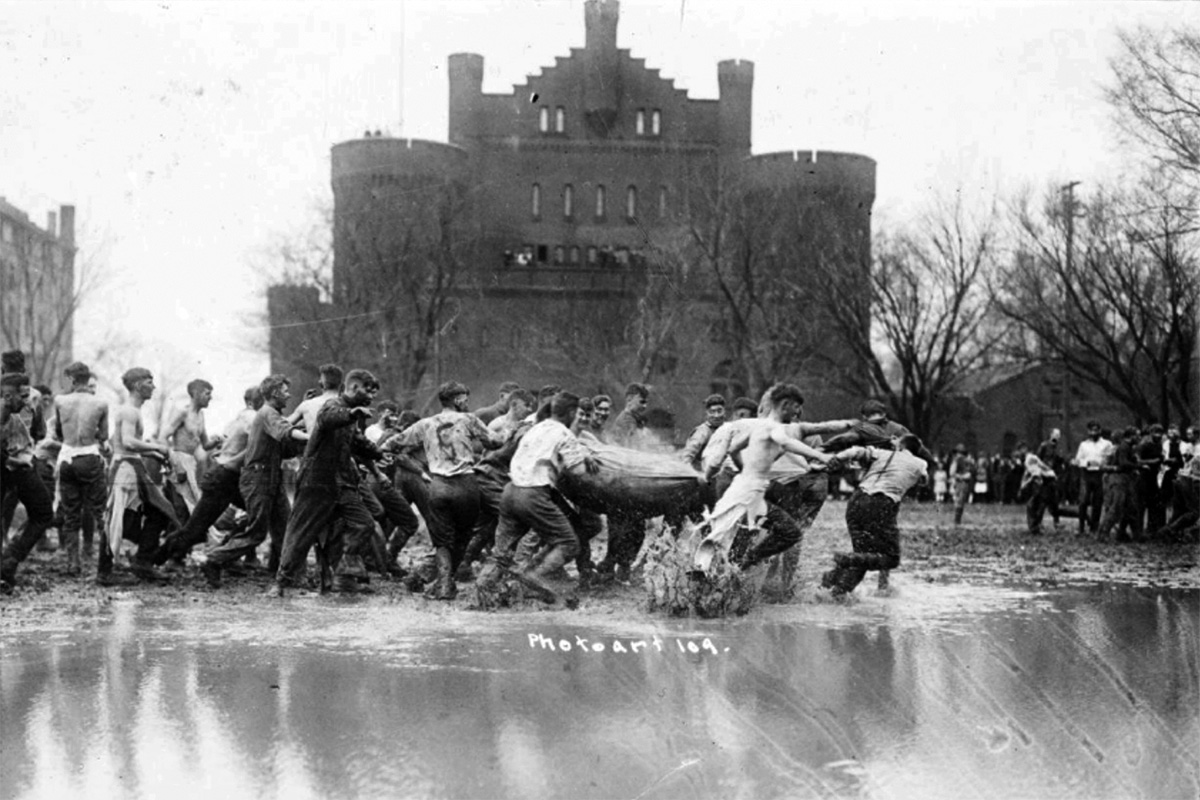
Bag rush was a muddy, rowdy contest between freshmen and sophomores for possession of giant, straw-filled bags. It replaced a competition to throw the most opponents off a pier, which resulted in some near-drownings.
Even after these rough-and-tumble rites ceased, freshmen laws lingered. In addition to the infamous green beanies (first-year men were expected to wear them at all times and tap the button on top of the cap when speaking to upperclassmen), male freshmen were forbidden to smoke or even carry a pipe in public; wear a “stiff hat” except to Junior Prom; sit on the gymnasium fence; or visit a saloon.
Women embraced more civilized expressions of class identity. First-year students wore funny outfits to dinner, baked cookies for older students, or carried upperclass students’ books across campus. Before long, female freshmen adopted green buttons as their own version of the beanie, a signal of solidarity that spread: sophomores took the name Red Gauntlets, juniors Yellow Tassels, and seniors Blue Dragons. These groups organized dances, sports contests, and social gatherings, cultivating class pride without the combat.
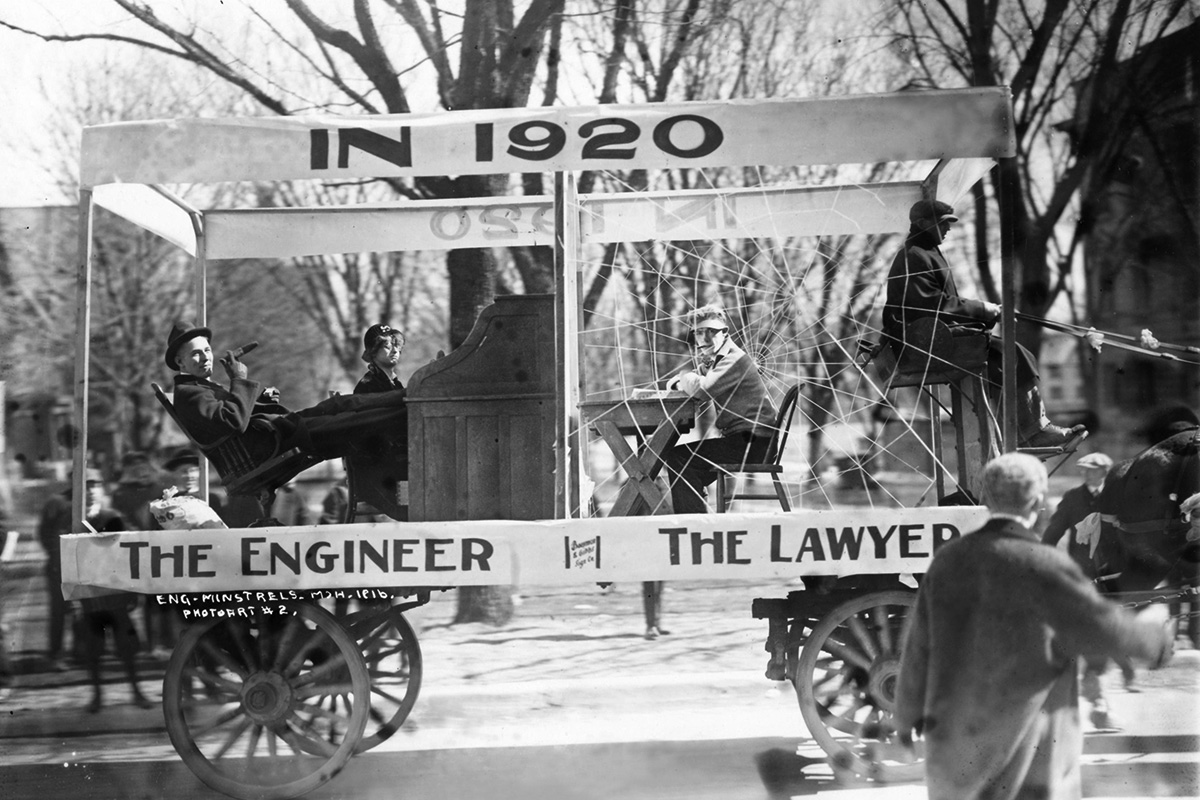
A parade float depicting the classic rivalry between engineers and lawyers.
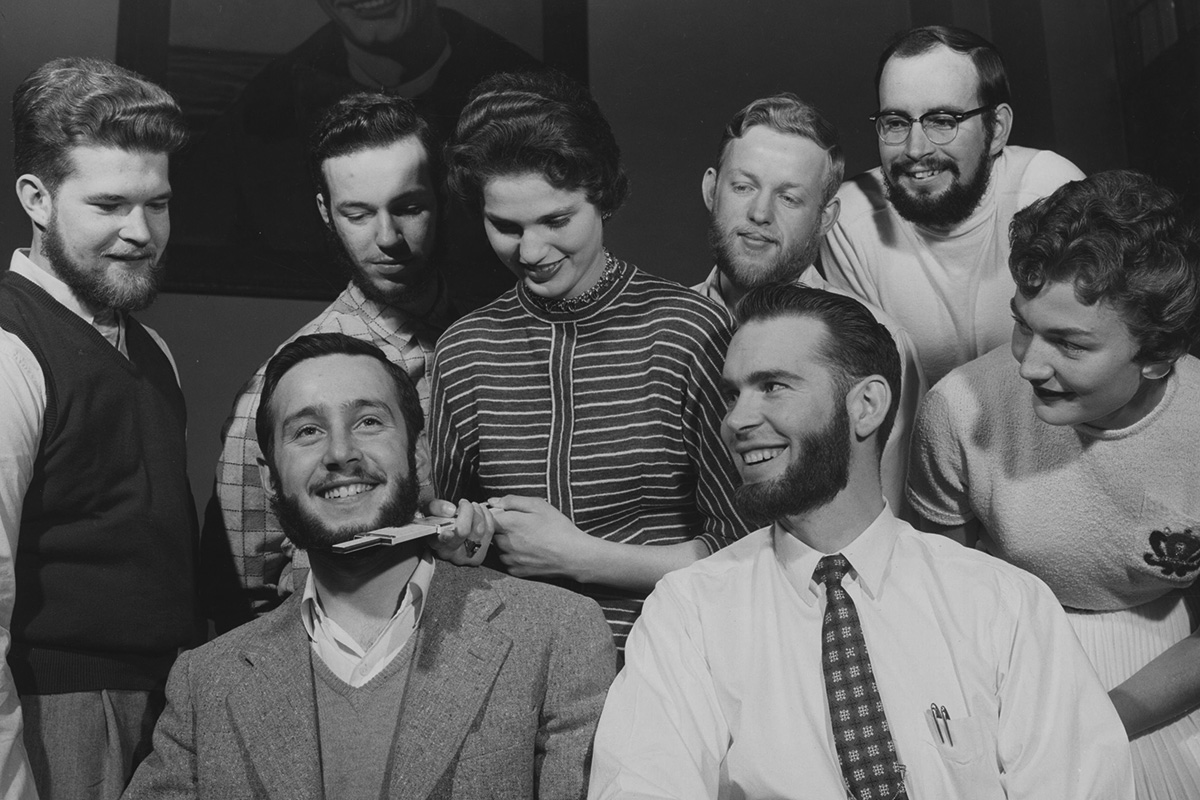
A beard-growing contest was one of the quirkier Badger traditions.
Other rivalries persisted, though. The most notorious was the annual feud between law and engineering students, who debated, with mock sincerity, whether Saint Patrick was properly the patron saint of engineers or of lawyers. The feud began in 1912 and escalated from harmless pranks and a beard-growing contest to mascot kidnappings and pelting each other’s parade floats with insults, eggs, and rotten fruit. After a 5,000-person brawl in 1938, Madison police and UW officials stepped in to put an end to the nonsense. The feud faded, but a separate Law School ritual lives on: graduating law students attempting to toss their canes over the north goalpost at Camp Randall to forecast their luck in their first case.
Classroom Customs
While the cane-toss ritual has survived, most traditions that unfolded in classrooms, lecture halls, or labs have not.
In the 1910s, UW medical professor William Middleton created a lighthearted tradition centered on an old brown derby hat. Borrowing from a popular expression, “That takes the brown derby!” he would place a hat on students who answered questions incorrectly; they had to wear it until the next student erred.
A sound once ubiquitous in UW classrooms was the skyrocket cheer. Badger fans of today may recognize the familiar “Sss … Boom … Ah!” But long before it echoed at sporting events, students launched it across their lecture halls. First-year students learned the cheer during orientation, and for decades, Badgers used the skyrocket to salute favorite professors (especially when class ended early). It’s said that professors like “Wild Bill” Kiekhofer and Benjamin “Benny” Snow rarely made it through a day without receiving one. By the 1950s, the tradition had fizzled in the classroom, but the UW Marching Band has kept it alive by using the vocal salute, followed by a whistle, to mark transitional moments at football games.
Carnivals, Circus Acts, and Cattle Calls… Oh My!
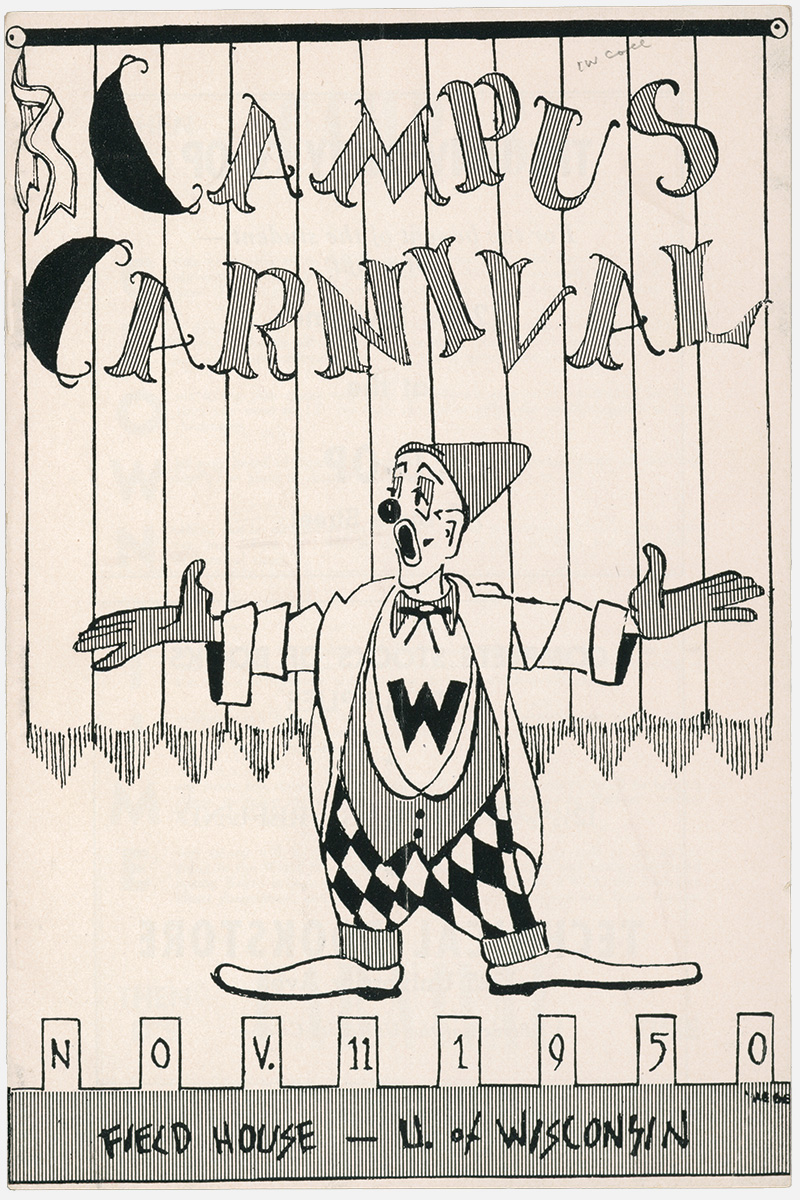 Student life outside the classroom was just as full. Beginning in the 1940s, student organizations transformed the Stock Pavilion into a riot of color, music, and fun with the annual Campus Carnival, part of a yearlong fundraising drive sponsored by the Wisconsin Student Association to support the Campus Community Chest. Nearly every student group devised creative booths and attractions that included mock marriages, comedy skits, and pie throwing.
The carnival evolved from the much earlier Varsity Circus. First held in the Red Gym in 1901 to raise funds for athletics, the circus featured trick bicycle riding, tumbling, trapeze acts, and musical numbers. The final circus, in 1920, opened with a massive street parade leading to the fairgrounds, where sideshow tents and the big top covered the entire lower campus.
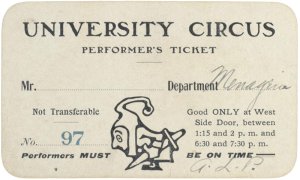
The Little International Livestock Show also flourished in the Stock Pavilion, debuting in 1909 shortly after the facility opened. The show-case inspired the creation of the Saddle and Sirloin Club and helped expand student involvement in hands-on animal training and public exhibitions with UW-owned livestock. The annual program, which ran through the late 1990s, typically included parades of beef and dairy cattle, sheep exhibitions, horse-jumping demonstrations, showmanship contests, and student emcees. One year, a greased-pig chase turned the sawdust ring into pure chaos.
Spring Fever
Every year, as the lakes thaw and the Terrace chairs return, winter-weary students rush outside to welcome spring, just like generations of Badgers before them.
Beginning in the early 1900s, the UW hosted separate springtime celebrations for mothers and fathers, with Mothers’ Weekend evolving into a multiday showcase featuring tours, pageants, and athletic events. In 1934, the university combined that with the newer Dads’ Weekend into a single student-run Parents’ Weekend, drawing thousands of families for concerts, honors ceremonies, and a formal banquet at Memorial Union. Today, the tradition lives on in the form of fall’s Family Weekend.
Springtime revelry took many forms. Fasching parties, the German take on Mardi Gras, burst onto the UW scene in the 1950s in — where else? — Der Rathskeller. Polka bands and jazz trios filled the Memorial Union with music, and between free helpings of sauerkraut, wieners, and cheese, partygoers could try their hand at yodeling, pretzel-making, and beer-brewing workshops.
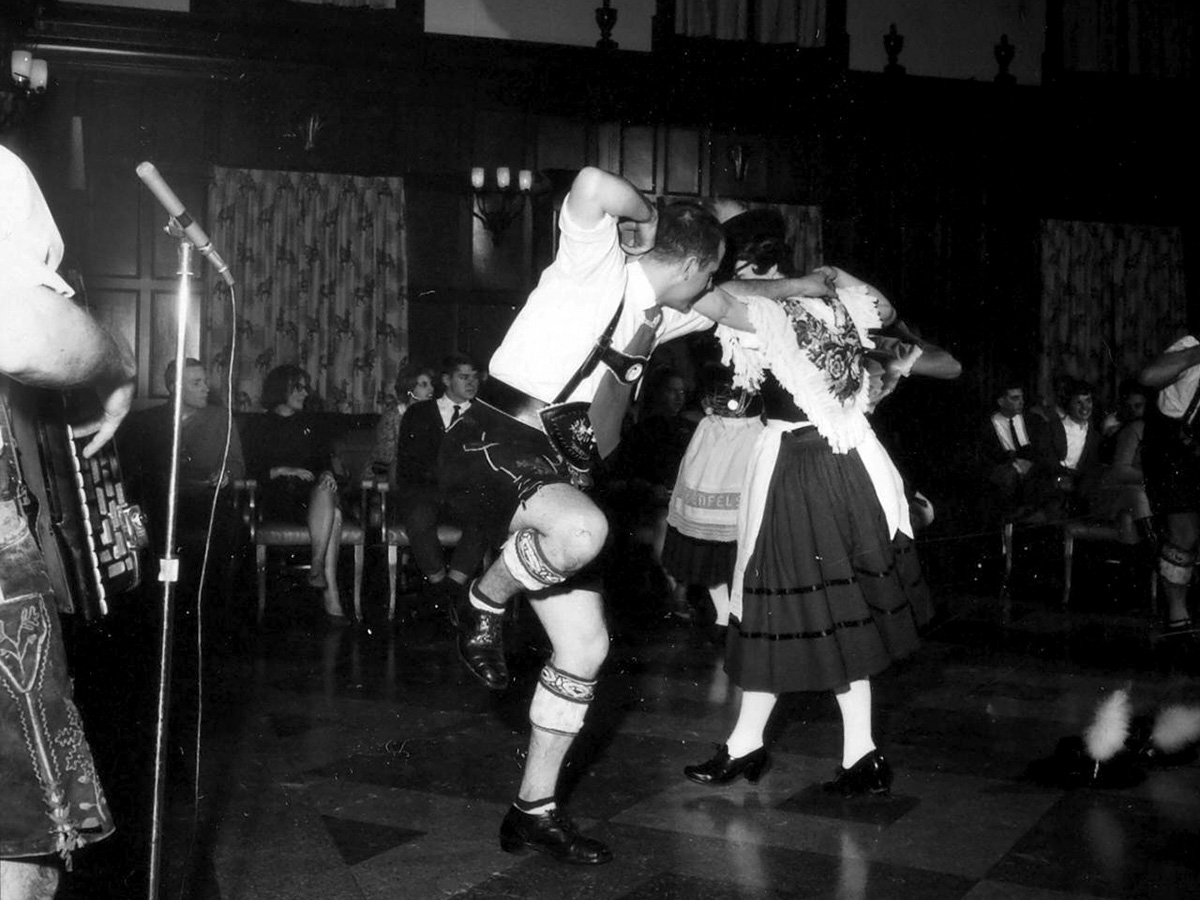
Students dancing at a Fasching party in Memorial Union's Tripp Commons
In the first half of the 1900s, hundreds would flock to Bascom Hill for May Fete — a Victorian reinterpretation of older Celtic customs — to celebrate the season with singing, dancing, and winding brightly colored ribbons around a collection of tall maypoles.
Venetian Night offered a different kind of spectacle. Canoes and rafts packed with revelers pushed off onto Lake Mendota, drifting through floating lanterns and shimmering water displays before fireworks erupted overhead.
Ballroom Badgers
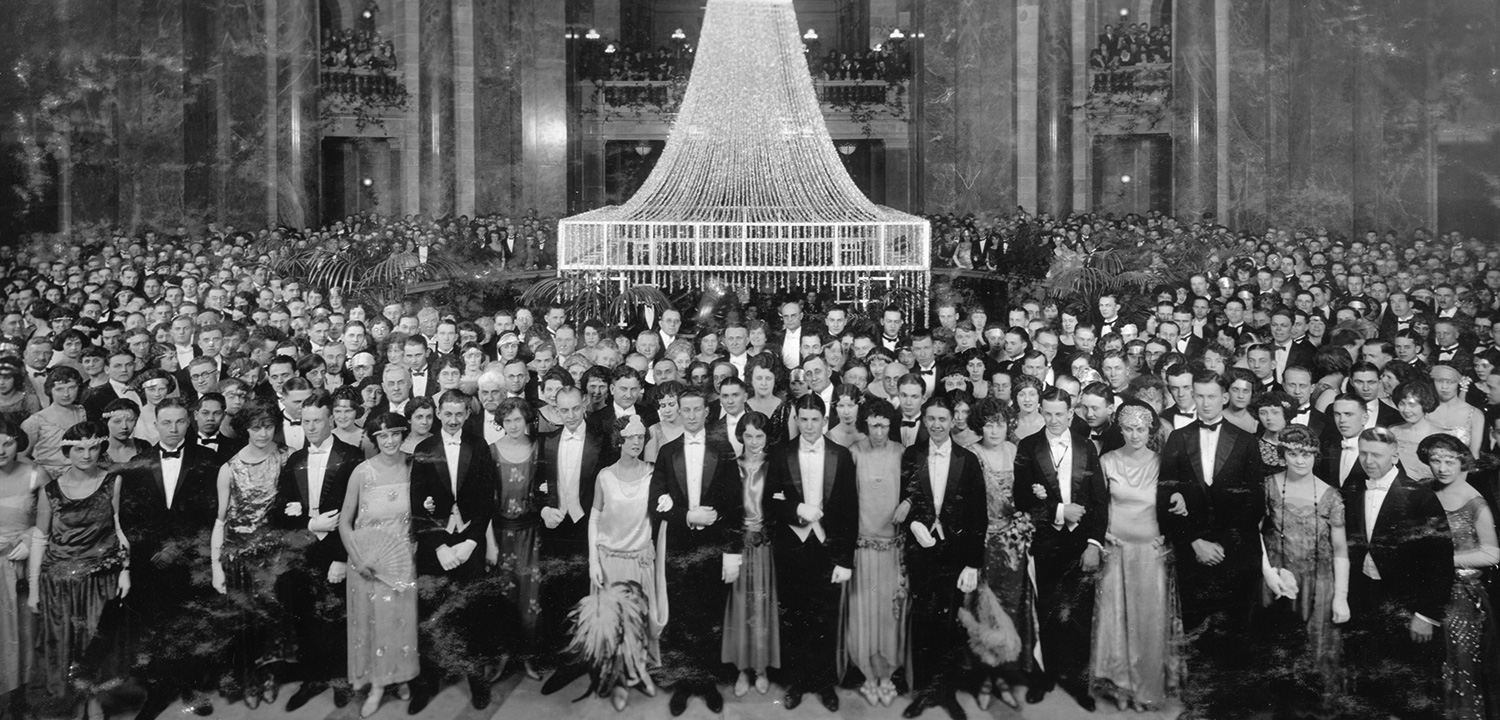
For much of the 20th century, formal dances were an important centerpiece of campus life. In fact, it wasn’t a social season at the UW without a dance or 10: Homecoming Ball, the Saint Pat’s dance (the grand finale of the engineers’ beard-growing contest), Senior Ball, International Club Ball, Panhellenic and Intra-Fraternity Balls, Pre-Medical School Ball, and a rotation of residence-hall dances. Summer Prom, held from the 1930s through the 1960s, drew students and alumni back to campus for a warm-weather weekend of dancing, live bands, and, depending on the weather, a memorable whiff of midsummer Lake Mendota algae blooms.
Some celebrations even had their own pre-event gatherings. The year’s Badger Beauties were crowned at a pre-prom ceremony, and the Scabbard and Blade Society hosted a Pre-Military Ball a week before the main event. The Military Ball itself was a full-dress formal complete with grand marches and uniformed ROTC pageantry.
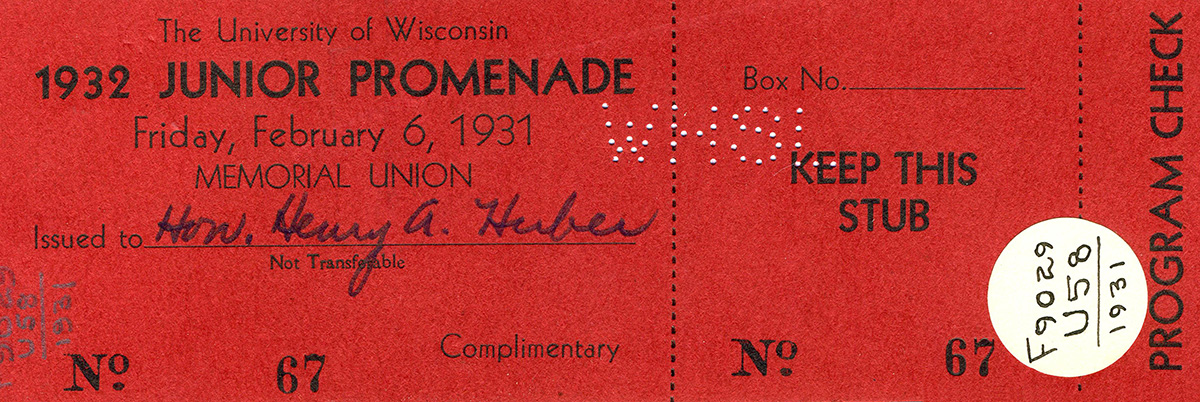
The most dazzling of all, though, was the Junior Prom, the successor to several years of informal class parties held in Music Hall. On February 22, 1895, more than 250 couples arrived in carriages for the first of these dances. The newly built Red Gym armory was trimmed with the class colors of yellow and white. Tickets cost $2.50 per couple and included a late-night supper of chicken salad, ham sandwiches, coffee, olives, and almonds. The first UW prom queen, Bessie Bowman Harper x1896, later described the event as “just a simple affair, but a very impressive one.”
Over time, the prom evolved from waltzes and two-steps to tangos and foxtrots and moved to the marbled halls of the state capitol from 1916 to 1928, where dinner was served in the basement restaurant. After the Memorial Union opened, the prom returned to campus until its final run in 1958 — aside from a return to the capitol to celebrate the state’s 100th birthday in the 1948 Centennial Program, which featured music by Lawrence Welk’s orchestra and a late-night balloon drop.
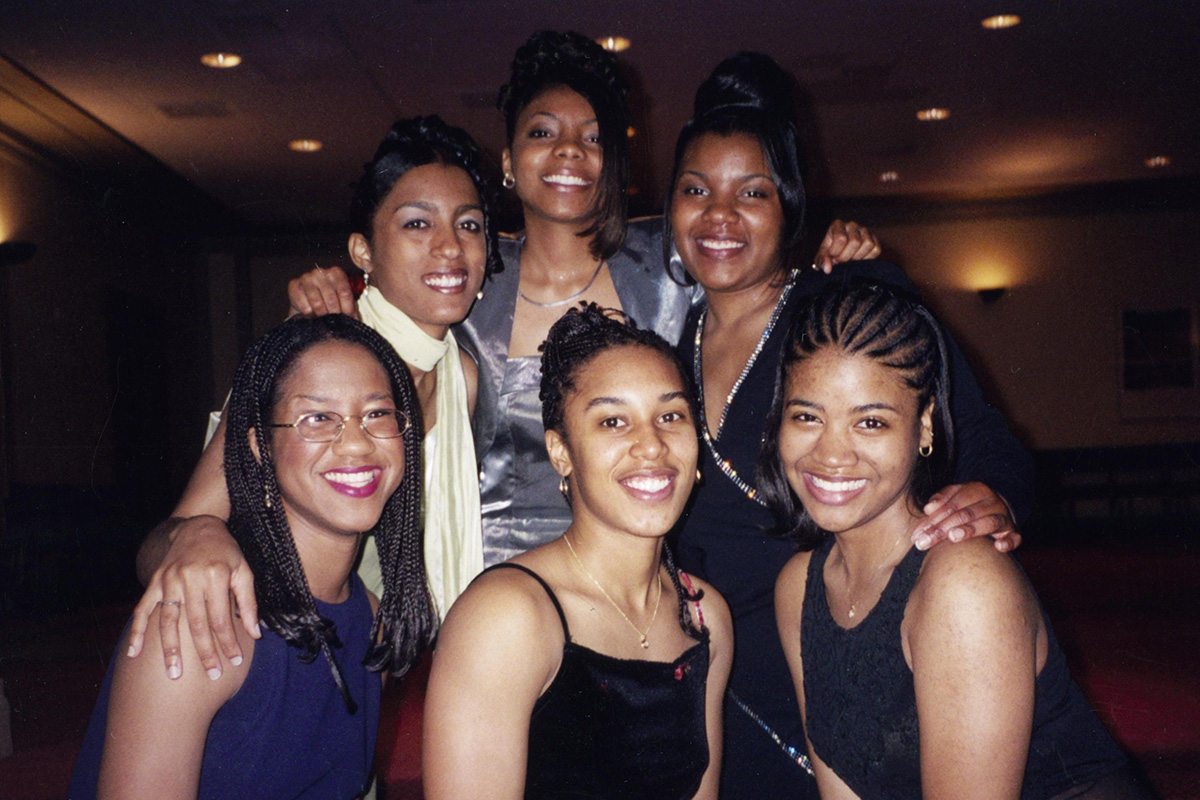
Students at the Wisconsin Black Student Union’s Ebony Ball.
Formal dances live on today, evolving to reflect communities and cultures. The Wisconsin Black Student Union has been hosting its Ebony Ball since the 1980s. Last spring, as part of Asian Pacific Islander Desi American (APIDA) Heritage Month, the Asian American Student Union put on its sixth annual APIDA Gala. That same month, the UW’s Naval Reserve Officer Training Corps held its own annual Spring Ball.
How Seniors Said Good-bye
For all the traditions that still mark graduation, many others have gone: class sing-alongs on Lincoln Terrace, outdoor “dance dramas” performed in the natural amphitheater behind Bascom Hill, women’s field days on the lower campus, and a senior gala held at Camp Randall.
One of the most striking customs was the Senior Swingout to honor graduating women. On Bascom Hill, younger students clad in white or pastel dresses formed a human archway, and the seniors — wearing traditional black caps and gowns — processed beneath while each class performed its own songs with the backing of the University Regimental Band. This chain was meant to symbolize unity across the classes, and the event became a poignant moment when seniors passed the torch.
Class Day Exercises brought the entire senior class together for a daylong program featuring farewell addresses, class histories and prophecies, and poems. The Senior Play was a popular element of Class Day, with seniors staging productions at the Orpheum Theater on State Street and at the elegant Fuller Opera House on the Capitol Square, which was razed in the 1950s.
From the late 1800s into the early 20th century, Class Day also included two beloved outdoor rites: the Ivy Oration and the Tombstone Ceremony. Inspired by traditions at several East Coast colleges, seniors would plant ivy on Bascom Hill while a designated class orator delivered a closing reflection. Then they’d cross what is now Observatory Drive toward the lake to lay small granite or marble markers, etched with the class year or a favorite phrase. Over the decades, these markers on Muir Knoll occasionally confused unsuspecting visitors. Some mistook them for a tiny hillside graveyard. (At one point, someone even added a stolen tombstone to the mix; mercifully, it was returned to the family.) Others were puzzled by inscriptions whose meanings have been lost to time: “In Memoriam, Senior Vacation, 1893.”
Both ceremonies faded out by the 1930s, but the broader tradition they belonged to — the senior class gift — persisted. Since the first class gift in 1868, which was a white marble marker of indeterminate nature near Observatory Drive, UW alumni have helped shape some of the university’s most cherished icons, from the Lakeshore Path and Picnic Point to the Carillon Tower and Memorial Union. The spirit of giving back and leaving something behind for the next generation may be the most lasting Badger tradition of all.
Wendy Krause Hathaway ’04 is a Madison-based freelance writer.
Published in the Spring 2026 issue
Comments
No comments posted yet.