The Riotous Reign of the Pail and Shovel Party
The student-government tricksters devised the greatest UW–Madison pranks of all time.
For two years at the end of the 1970s, clowns controlled the Wisconsin Student Association (WSA), producing legendary pranks that greatly benefited the university and city but left student government broke and in total disarray.
The time was right for the Pail and Shovel Party. Things were getting bleak in the spring of 1978, with rising economic, racial, and political anxieties. UW–Madison was just catching its breath after years of Vietnam War unrest, without the bandwidth to face any more crises. And who could take politics seriously anymore? Time to send in the clowns as a fitting end to what author Tom Wolfe dubbed “The Me Decade.”
Leon Varjian x’83 had been a popular prankster at Indiana University, where he got his master’s in mathematics in 1976. He enrolled in one class at the UW in 1977, just to have some fun. Jim Mallon ’79 was a communication arts junior from Minnesota who appreciated Varjian’s opening prank, a petition drive to rename the UW the University of New Jersey (so UW students could claim they attended a fancy East Coast school).
They teamed up for performance art on Library Mall, and when the elections for WSA executives approached in May 1978, Varjian — who earlier in the school year had been appointed to fill a vacancy in the student senate — suggested they run. Mallon, the designated presidential candidate, thought it would be just another goof. He didn’t learn till later that vice presidential candidate Varjian had run for student body leadership at Indiana and that this time he would run to win — and thereby gain control of WSA’s discretionary budget of about $70,000, funded primarily by student segregated fees.
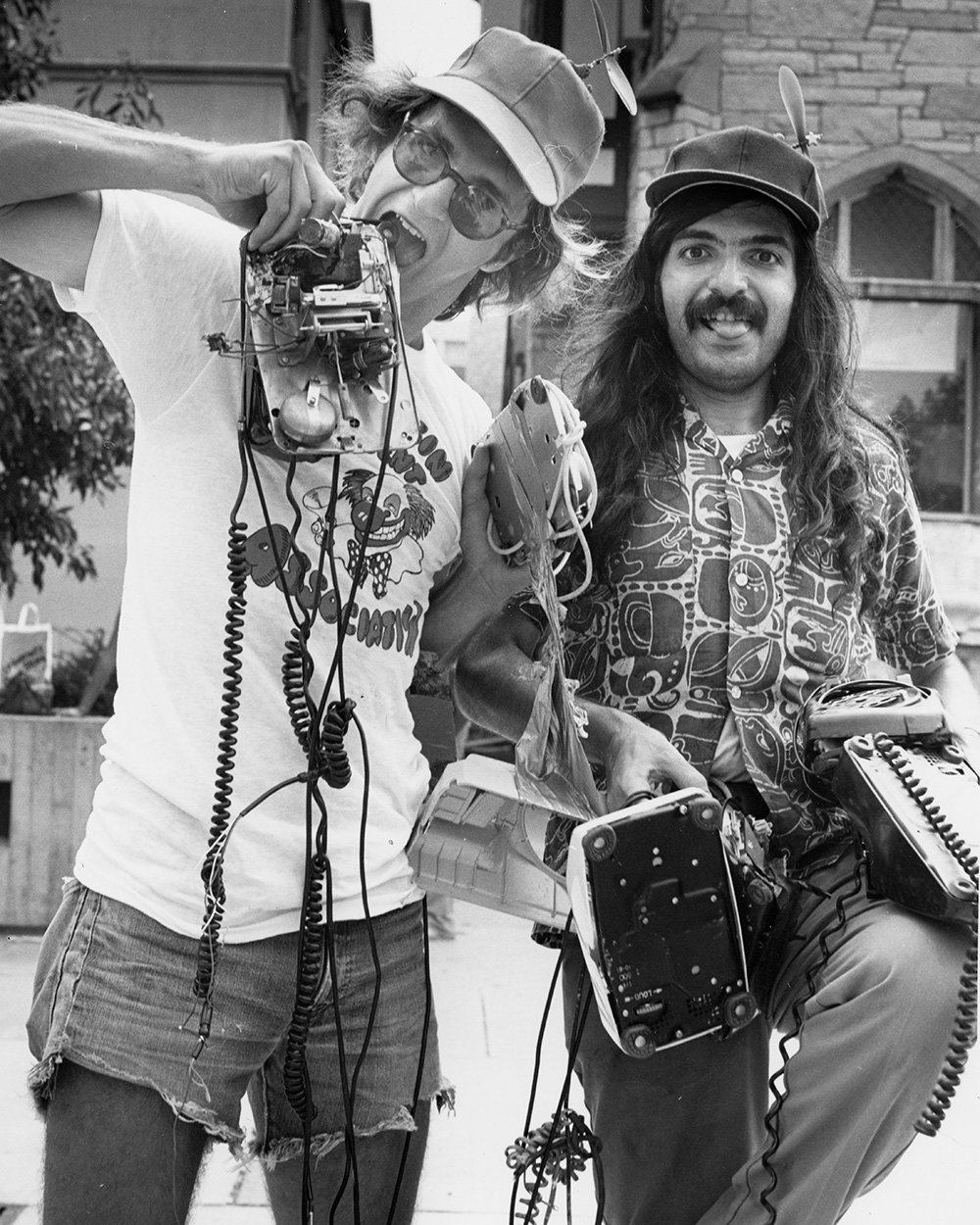
Jim Mallon (left) brought the madcap ideas to life, while Leon Varjian excelled at generating publicity. UW Archives
They formed the absurdist Pail and Shovel Party, named after the implements they said students could use to scoop up coins after the budget was converted to pennies and dumped on Library Mall. Other prominent campaign planks were even more fanciful.
They warned students about what was in store, declaring on an early campaign flyer: “Honesty, integrity, responsibility … Pail and Shovel doesn’t believe in any of them!”
Dizzyland
Beyond the innate creativity of its leaders and members, the party had a technological advantage — Varjian’s experience running an underground newspaper in Bloomington. In the era before the easy availability of computerized art and design, his printing skills made the party’s campaign material stand out.
“Everything we did was a step above,” Mallon says now. “We had some phenomenal resources.”
The Pail and Shovel team included illustrator Jay Kennedy ’81, later cartoon editor at Esquire magazine and editor in chief of King Features Syndicate; photographer Michael Kienitz ’74, who went on to work for Time, Life, and Newsweek; and the soon-to-be-famous musician/producer Butch Vig ’80, who served as music director.
“All the people involved with Pail and Shovel were very creative people doing really interesting things,” Vig says. “There was an amazing energy that I really embraced.”
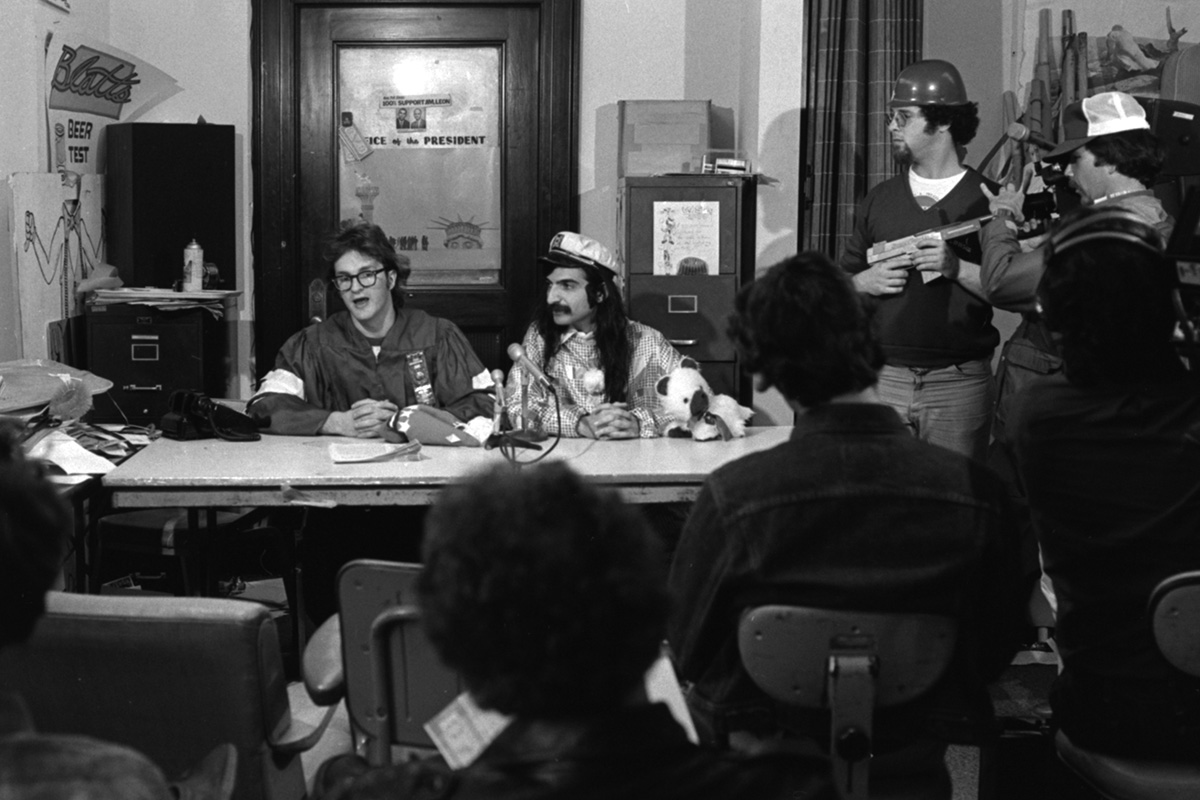
Mallon and Varjian at a Pail and Shovel press conference: “We were just doing what struck us as joyful in the moment.” UW Archives
The centerpiece to their first campaign was “Dizzyland,” the centerfold of their four-page, four-color campaign newspaper. The map of the campus “after Pail and Shovel gets its hands on it” added the Lincoln Ring Toss, Carillon Zeppelin Docking Tower, and Chadbourne Ferris Wheel as campaign promises.
No wonder they won, taking a third of the near-record 4,529 votes — up from about 2,500 total votes in 1977. Losing candidates challenged the election, but Pail and Shovel prevailed, thanks to zealous representation by its kindred-spirit attorney, Edward Ben Elson JD’67, who had waged some fanciful campaigns of his own (including declaring for district attorney at Madison’s Dangle Lounge strip club in 1970, ostensibly in the nude).
“He bulldozed his way through student court and was directly responsible for our success,” Mallon says, noting that Elson continued to represent the party for free. “He was/is a legend.”
Once elected, Mallon further elevated WSA productions by tapping the equipment and expertise of the UW Department of Theatre and Drama’s lighting program, run by his very supportive professor, the nationally renowned Gilbert Hemsley.
Dial-a-Joke
Pexels
Among the new administration’s first, more serious initiatives: creating and funding a gay affairs program, starting a voter registration drive, and increasing support for the Student Tenant Union and Women’s Counseling Service. By the following spring, the Pail and Shovel WSA also presented a series of free films, established a telephone Dial-a-Joke, provided free ice cream and watermelon during registration week, staged an Easter egg hunt on Bascom Hill, cosponsored the Mifflin Street Block Party’s move to Library Mall, and auctioned the right to pie Governor Lee Dreyfus ’49, MA’52, PhD’58.
At first, the Daily Cardinal took a supportive approach. Two months after the election, it headlined a front-page investigative report “WSA Ripoff Rumor: Unfounded.” But within a year, the paper was calling them “despicable megalomaniacs” committing “unethical and possibly illegal acts.”
The Pail and Shovel Agenda: Top 10 Campaign Promises
- Buy and relocate the Statue of Liberty
- Flood Camp Randall to stage mock naval battles
- Install escalators on Bascom Hill
- Use human cannons to help students cross West Johnson Street
- Put dormitories on wheels
- Order campus clocks to run backward (so classes end before they begin)
- Turn Gordon Commons into a brewery, linked to beer taps in every dorm room
- Require food service to serve only marijuana brownies after 7 p.m.
- Issue free contraceptives with dorm sheets every week
- Replace the Wisconsin Historical Society building’s flagpole with a 50-foot-high Mickey Mouse Pez dispenser
Facing the pivotal election for the WSA student senate the first week of October 1978, Pail and Shovel published another four-page, full-color campaign brochure featuring photos and joke statements from its candidates, with Mallon’s challenge “to vote in 36 of the wackiest, nuyttyest [sic], most irresponsible, self-centered, weird, self-motivated charlatans on campus.”
Showing some brilliant scheduling, WSA sponsored a marijuana smoke-in at the state capitol and funded and produced a wildly successful toga party the Saturday before the elections. They also presented a four-day “Symposium on the Future” with such luminaries as Beat poet Allen Ginsberg and a Field House concert by Little Feat a few days after.
Sponsored by the Sigma Alpha Mu fraternity, the UW toga party wasn’t the country’s first tribute to the hit movie Animal House, but with a boisterous crowd of 10,000 draining more than 200 half barrels of beer in and around Lot 60, it was the first massive one, scoring national television coverage. Animal House and Saturday Night Live star John Belushi called in but wasn’t patched through to the sound system.
Satisfying a coalition of freaks and Greeks, Pail and Shovel took total control and gained new national coverage by carrying all but four of the 36 open seats. The Daily Cardinal published its front-page nameplate in black, a newspaper symbol of mourning it had last shown during the 1970 U.S. invasion of Cambodia.
Dean of Students Paul Ginsberg ’52 acknowledged Mallon and Varjian’s success. “It would be a mistake to misrepresent either as clowns,” he said that fall. “They are bright, have assumed a role, and know what they are doing. There’s a method to their madness.”
The two developed “an organic division of labor,” Mallon says. The quick-witted Varjian excelled at verbal sparring and generating publicity, and he kept track of the money. Mallon’s skill was recognizing great ideas and bringing them to life, with primary logistical support and project management from senate sergeant at arms Stu Baker ’80.
Varjian “was one of the smartest people I have ever met,” Mallon says. “He had a gut instinct on how the world was wired, and had a great, subversive instinct on how to rewire it.”
The Statue of Liberty on Lake Mendota
Still, Pail and Shovel may have been lucky the election wasn’t held a few weeks later. Despite Little Feat’s high critical standing and widespread popularity, the Field House concert lost $11,000, which WSA partially covered by transferring funds in a way that apparently violated its bylaws.
True to its journalistic legacy, the Cardinal hammered away with detailed reporting and contemptuous commentary. Early winter 1979 brought a series of bad headlines: “P and S Overspends Budget, Wastes Thousands,” “P and S Pads Own Pockets,” and more.
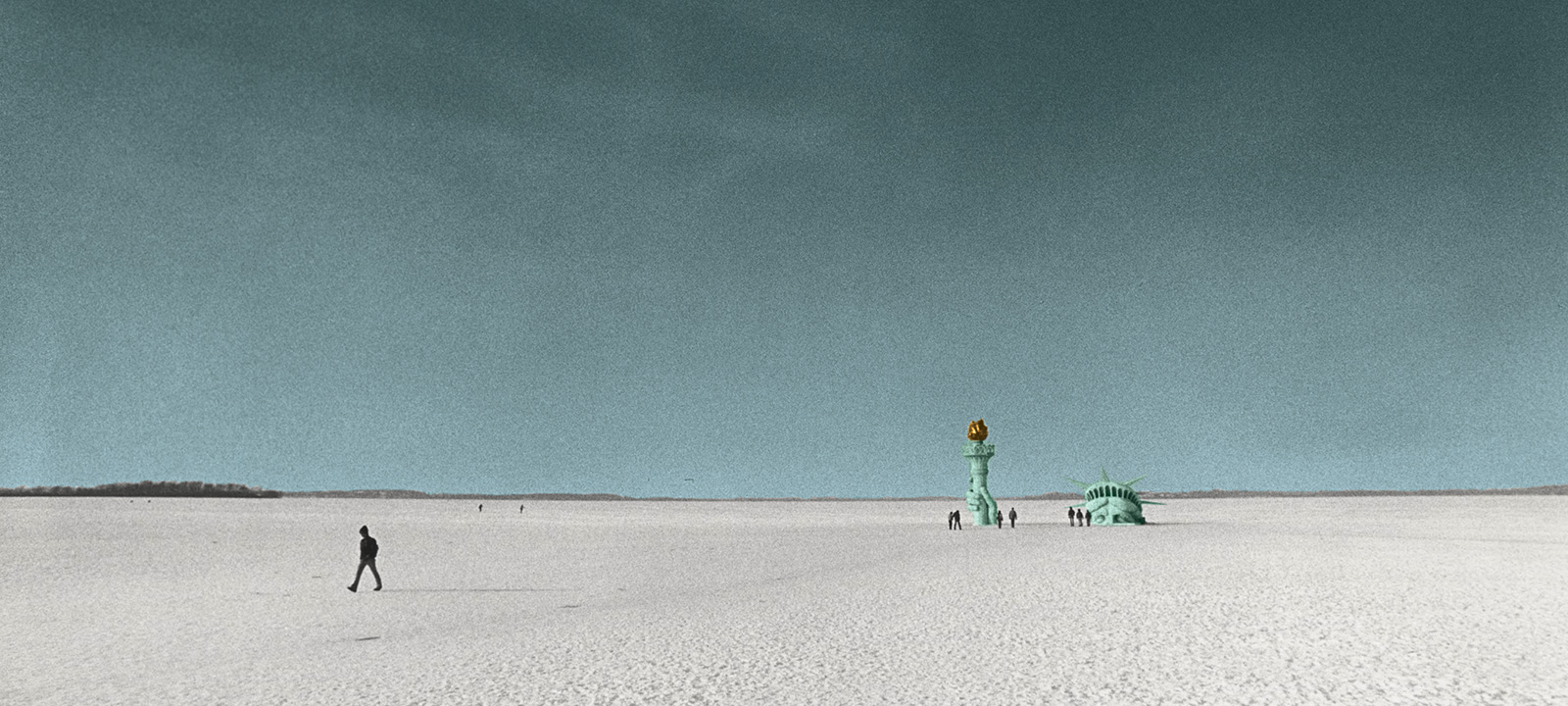
The harshest criticism came when the party spent $4,000 to build a Statue of Liberty out of papier-mâché, chicken wire, and plywood, placing it on Lake Mendota ice to make Lady Liberty appear partially submerged. The Cardinal revealed that the project was done without senate authorization. Some students thought it wasteful; others appreciated politicians fulfilling a campaign promise.
Despite his earlier appreciation, Ginsberg froze the WSA account in early February due to “several instances of apparent discrepancy” between what the senate authorized and what the administration spent, plus some incomplete accounting. When he determined there weren’t any violations of university or state regulations and “no evidence of fraud or dishonesty,” he lifted the freeze after 10 days.
Then came an act of spiteful vandalism. In the early hours of March 2, 1979, persons still unknown set the head of the Statue of Liberty ablaze. Police arrived in time to protect the torch, but the head lay in ashes on the ice.
Things got worse. Less than a week before the May election, the student senate voted to impeach Varjian. He remained in office thanks to the Pail and Shovel senators who left the meeting before the vote, preventing a quorum.
The clowns doubled down, vowing in their reelection campaign to rebuild the Statue of Liberty (done, in Styrofoam, the head even bigger than the real statue’s) and reunite the Beatles to play the Rathskeller (not done). They won a four-way race with a record voter turnout.
Again, the Daily Cardinal nameplate went black.
1,008 Pink Flamingos
Bryce Richter
That fall, Pail and Shovel pulled off a prank that has proven one of the most enduring and significant actions ever taken by UW student government.
As their last semester in power approached, Mallon and friends were brainstorming how to top the Statue of Liberty.
“We pretty much figured we couldn’t,” Mallon says.
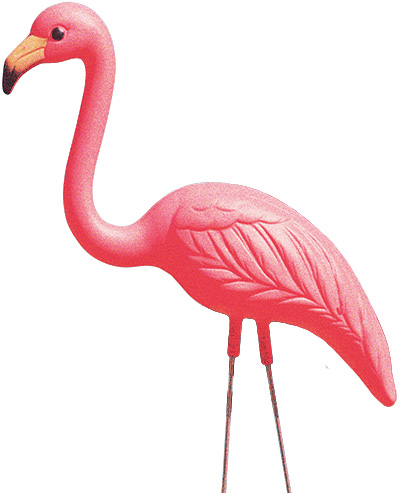
His roommate Mike McDonald ’79 suggested covering Bascom Hill with a lawn ornament that symbolized the suburban background of many students — a plastic pink flamingo.
“We didn’t really put much thought into it,” Baker recalls. “We had no clue other than it was a great photo op.”
So early on September 5, 1979, the first day of classes, there suddenly appeared 1,008 pink flamingos on the hill. Varjian explained they were blown north by Hurricane David, which had recently hit Florida. They were gone within hours, appropriated by Pail and Shovel’s happy constituents.
Ginsberg was watching from the top of the hill. “Everybody, new and old alike, has some sense of trepidation” about the new school year, he recalled in his 2009 UW oral history. But as they walked amid the flock, “people smiled.”
“It seemed like a fitting stunt,” Mallon says. “And to this day, it’s had an influence.”
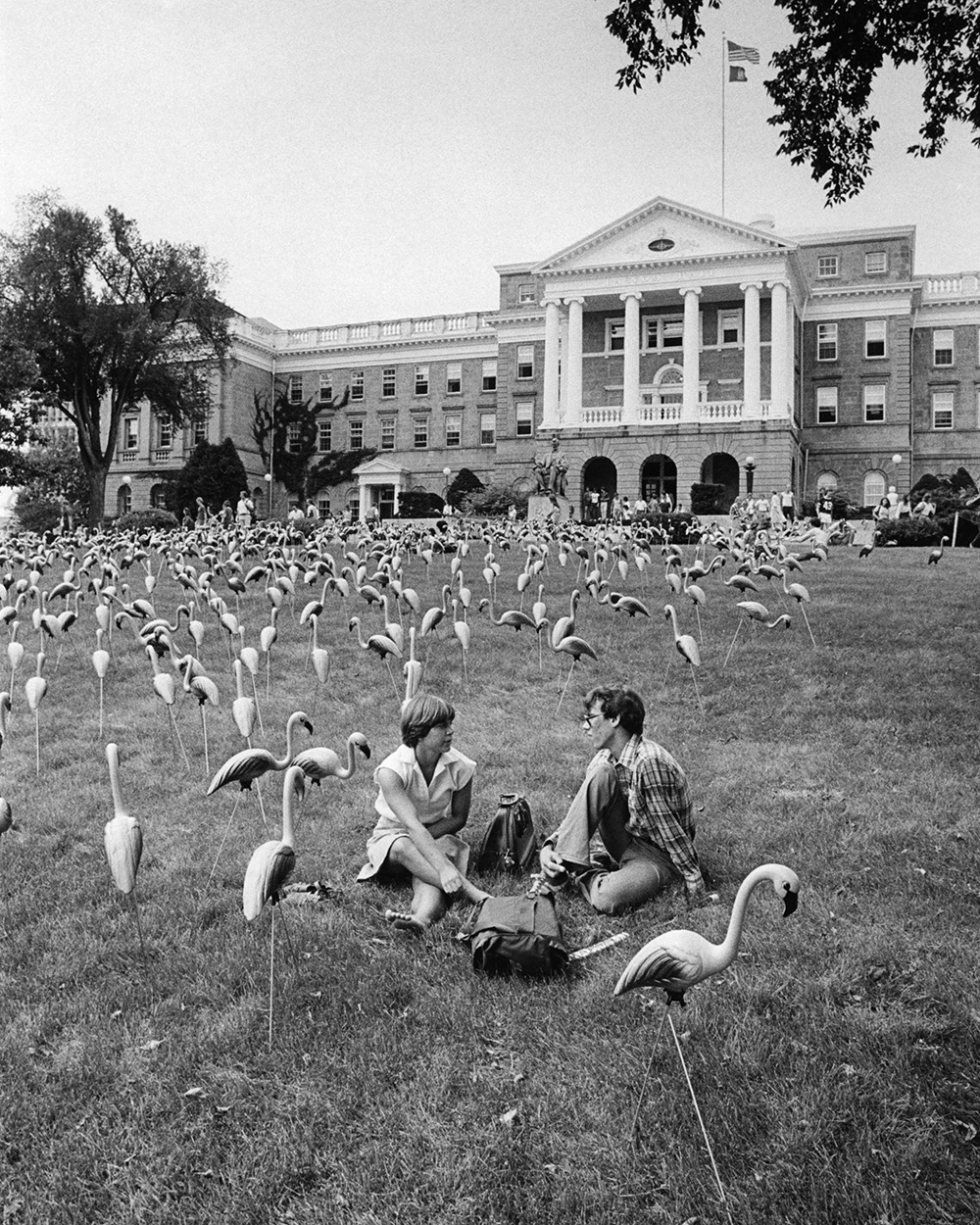
The pink flamingo prank has proven one of the most enduring actions ever taken by UW student government. UW Archives
Indeed. More than three decades later, it inspired the Wisconsin Foundation and Alumni Association (WFAA) to create the annual Fill the Hill fundraiser that, since 2013, has raised more than $5 million through more than 30,000 individual gifts, with thousands of replica flamingos distributed as thanks.
The idea of bringing flamingos back to Bascom to spark donations arose as casually as their initial appearance. “It probably started as a joke,” says Caroline Sullivan ’12, who was then a marketing coordinator for WFAA. But soon the marketing team realized, “Wait, yes, we can actually do this.”
Sullivan, now WFAA development director for the UW College of Letters & Science, marvels that “something we thought would just be a one-time thing is now a pinnacle tradition of our university.”
Former sergeant at arms Baker wants WFAA to build on the legacy by creating a gender-neutral Frankie Flamingo mascot as Bucky Badger’s pet. “Think of all the new swag you could sell!” he enthused during a conversation on the Memorial Union Terrace.
That prank from 1979 also still reverberates throughout Madison, where the plastic pink flamingo has been the official city bird since 2009 and the Forward Madison FC professional soccer team is nicknamed the “Flamingos.”
A Wind-Powered Concert
Some good ideas didn’t pan out. A few days after the flamingos flew in, WSA sponsored the country’s first wind-powered rock concert, in James Madison Park. But the breezes that day were too gentle to generate electricity, which Madison Gas and Electric provided the old-fashioned way. WSA got its mojo back a week later, producing a second successful toga party in front of the Memorial Union that caused the university to relocate an appearance by the Dalai Lama.
Acknowledging that Pail and Shovel left WSA “in total shambles,” Ginsberg found that their disregard for normal student government work had a surprise benefit: it freed up his staff “to do other important things because we weren’t involved with WSA.”
Ginsberg, whom Varjian publicly called “Dad” — the source of his allowance — was paternalistically benevolent. “I tended not to be as critical of the party as others are,” he said. “They came in at a time when people needed to smile. And they made it very clear that they were clowns. They proclaimed that before they were elected. Often you learn that only after.”
Mallon never expected those two years would still be a topic of interest almost half a century later. “We were just doing what struck us as joyful in the moment,” he says, “and I found out later in life that was an exceedingly rare experience.”
Former Madison mayor Dave Cieslewicz ’81 was new to campus during Pail and Shovel’s heyday and was impressed. A political science major, he thought that Varjian and Mallon “were the most brilliant politicians at any level of government at the time because they perfectly captured the absurdity of it all.”
Stu Levitan JD’86 is a historian, author, and radio host. This article is adapted from his book Madison: The Illustrated History Volume 2, 1932–1979 (University of Wisconsin Press, 2026).
Published in the Winter 2026 issue


Comments
No comments posted yet.