Spy vs. Spy vs. Spy
Sasha Ingber ’06 uncovers the world of America’s secret agents.
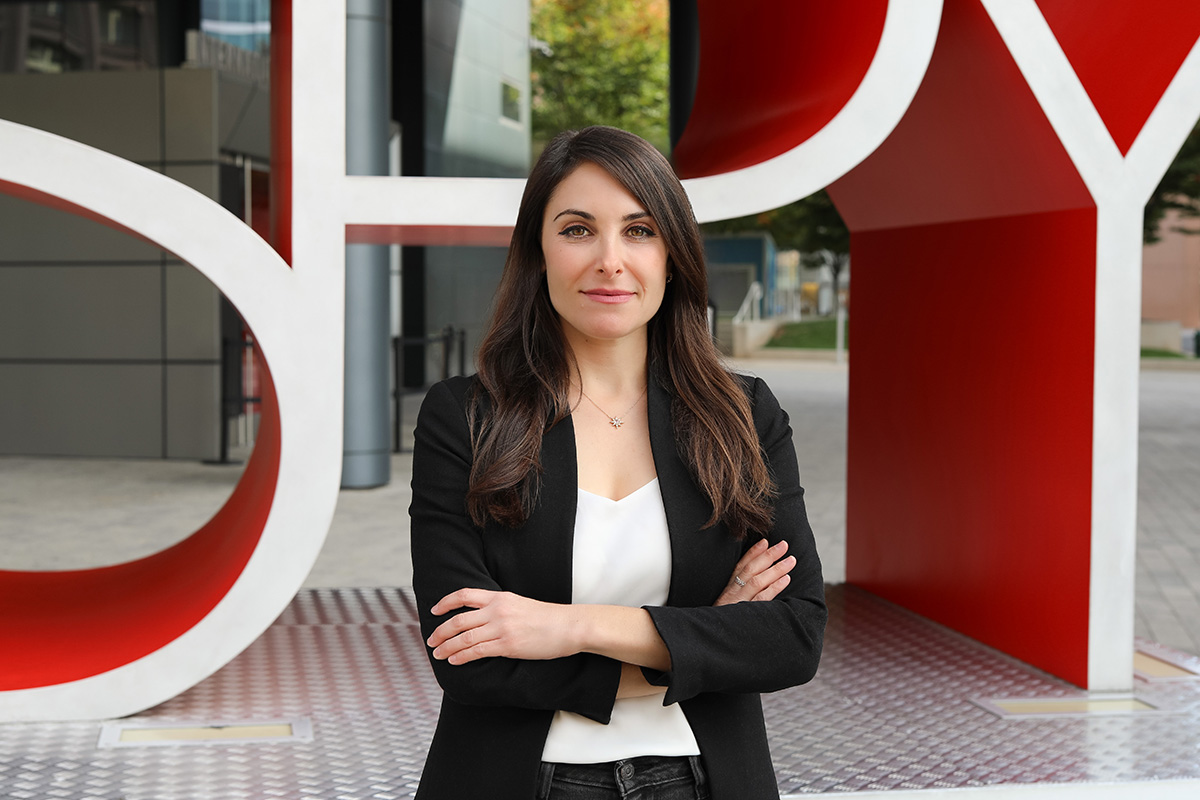
Ingber: “My interviews with American intelligence officers make me appreciate the people who are earnestly trying to keep our country safe.” Emily Rens for the International Spy Museum
For more than a decade, journalist Sasha Ingber ’06 has told stories of unsung American heroes and the foreign threats they fight.
As the host of SpyCast, the long-running weekly video podcast of the International Spy Museum in Washington, DC, Ingber conducts hour-long interviews with espionage insiders such as the chair of the House Intelligence Committee, FBI counterintelligence agents, and the former head of the CIA’s Special Activities Division, which runs covert operations.
On her Substack HUMINT, she digs into such topics as “Putin’s paramilitary 2.0” and “Loneliness, China, and AI Recruiting.” Ingber also appears regularly on the History Channel show Secrets Declassified with David Duchovny and is at work on another docuseries called World’s Most Secret Places.
After graduation, she hoped to pursue directing and screenwriting. Instead, she landed a job as a writer at the State Department. After Russia seized Crimea and occupied the Donbas, she was assigned to a small team tasked with debunking an onslaught of Russian disinformation.
A year later, Ingber’s team was “indefinitely frozen,” which she says is “diplo-speak” for being shut down. She resigned and moved onto journalism roles with Smithsonian and NPR. Then she became the sole national security correspondent for Scripps News, covering the fall of Afghanistan, wars in Ukraine and Gaza, and entering a secret Manhattan “police station” China’s government used to harass its expatriates.
In 2024, she made a gutsy decision. She founded her media company HUMINT, used credit card points to fly to Poland, and walked across the border into Ukraine. At a secret military base, she met adults and teenagers preparing for the front. “Their level of honor and dignity made me feel like I was meeting people from our Greatest Generation,” she says.
While Ingber was in Kyiv, a Russian missile attack hit the country’s largest children’s hospital. “People were being pulled from the rubble,” she recalls. She was moved by how many first responders showed up to help, seeing “the goodness of people in that moment of darkness.”
“My interviews with American intelligence officers make me appreciate the people who are earnestly trying to keep our country safe,” Ingber says. “It brings me a deeper level of understanding about how our government works. It’s much more nuanced than people think.”
Now that we are 25 years post-9/11, she says, “This is a time when terrorism seems to be forgotten. But everybody who works in counterterrorism thinks we need to be ever vigilant of this threat.”
Published in the Winter 2026 issue

Comments
No comments posted yet.