The Beauty of Discovery
A new UW–Madison museum highlights the relationship between art and science.
Leonardo da Vinci recommended studying both “the art of science” and “the science of art” to appreciate their interconnectedness. The John D. Wiley Gallery for Art in Science brings that advice to life.
Located in the northwest corner of the Discovery Building, the gallery opened this past September to a “really positive response,” according to Andrew Hanus of the Wisconsin Institute for Discovery (WID).
Hanus says that the space, which pays homage to the ground-breaking research happening in the surrounding building, includes collected works from professional artists, faculty, and students.
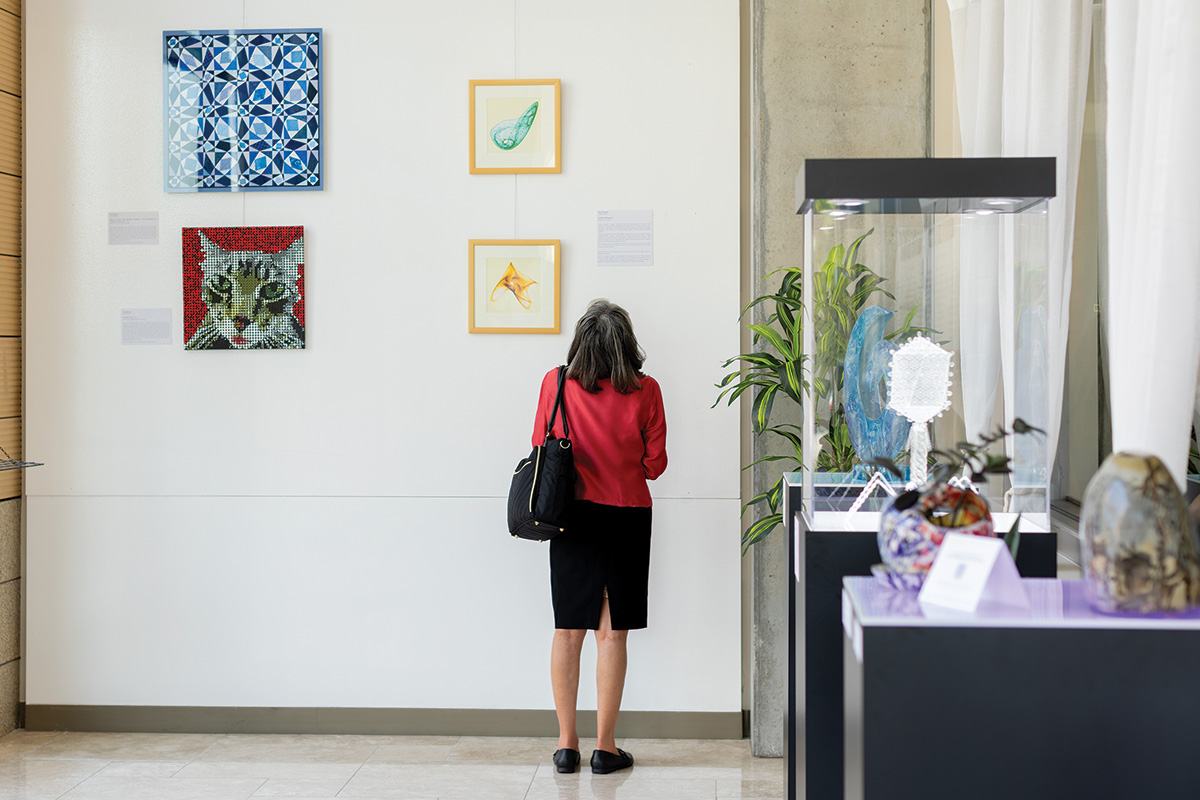
Visitors can explore artworks inspired by the patterns of the universe.
WID director Jo Handelsman PhD’84, who was the driving force behind the gallery, wanted it to honor someone who helped create the Discovery Building, who helped support the arts on campus, and “who really breathes the essence of art and science fusion.” That person is John Wiley MS’65, PhD’68.
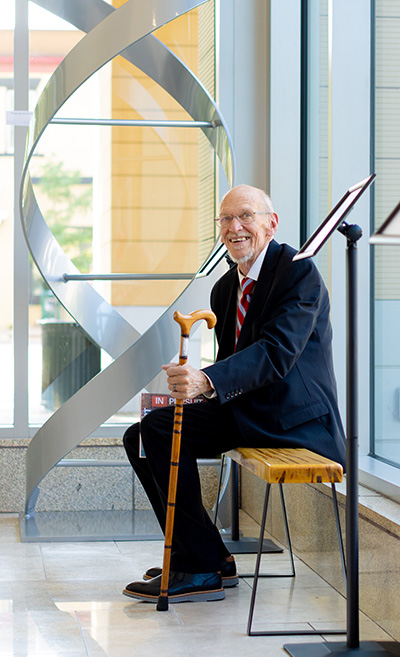
Wiley with a metal DNA helix weighing close to 500 pounds.
Wiley, a member of the engineering faculty before moving into administration, was pivotal in the creation of the Discovery Building and became its first director. When he was UW–Madison chancellor from 2001 to 2008, he advocated for the East Campus Arts Gateway and helped raise funding to create the Hamel Music Center, the Chazen Museum of Art addition, and other arts initiatives.
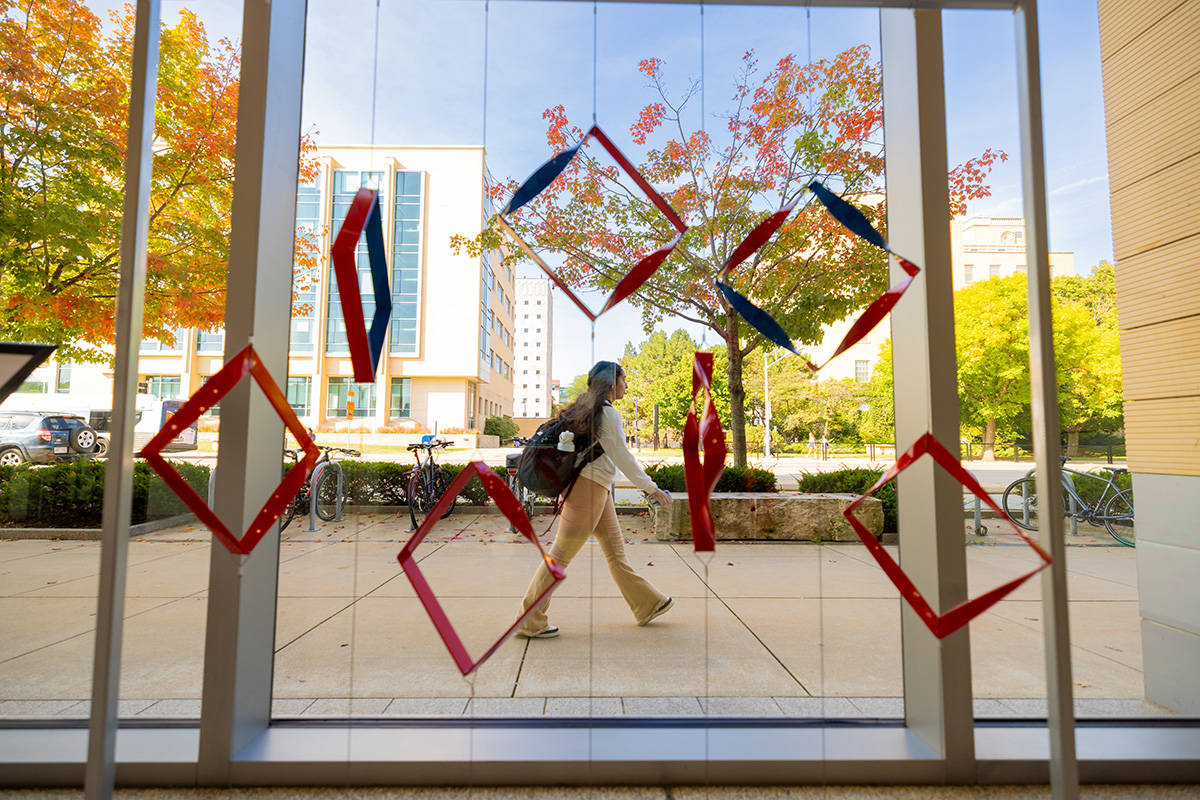
Wiley, himself a metalworks enthusiast, created several metal Möbius strips for the gallery. “It was a way to demonstrate how art can be intrinsic to math and science,” says Hanus.
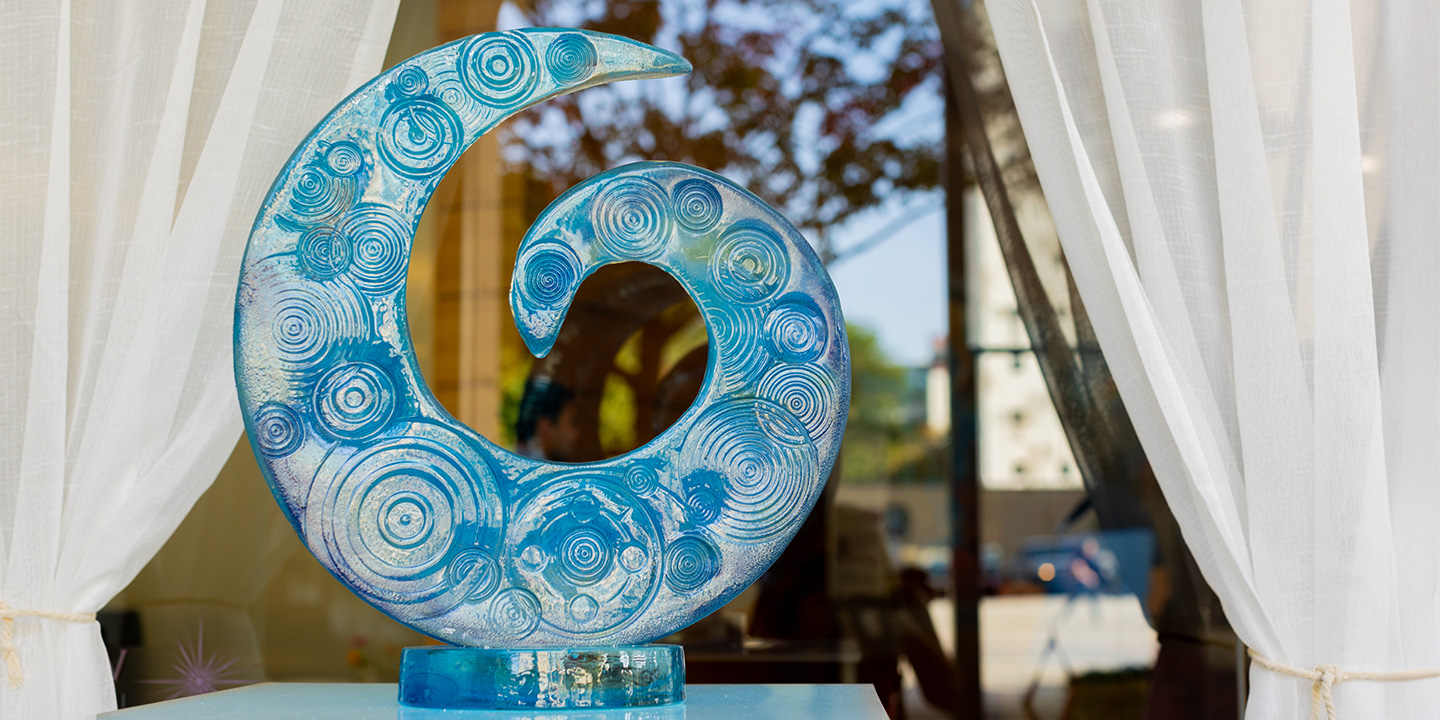
Other works in the light-filled, airy space include two huge, metal DNA double helixes, a delicate glass sculpture representing a bacteriophage T4 (a type of virus), and a piece that pays tribute to the Fibonacci sequence.
The Wiley Gallery is open during building hours, Monday through Friday from 7 a.m. to 8 p.m., and Saturday from 9 a.m. to 8 p.m.
Published in the Spring 2026 issue



Comments
No comments posted yet.