Where the Wild Things Are
Matthew Becker ’96 runs one of the world’s largest carnivore conservation projects, protecting big cats, African dogs, and other endangered species.
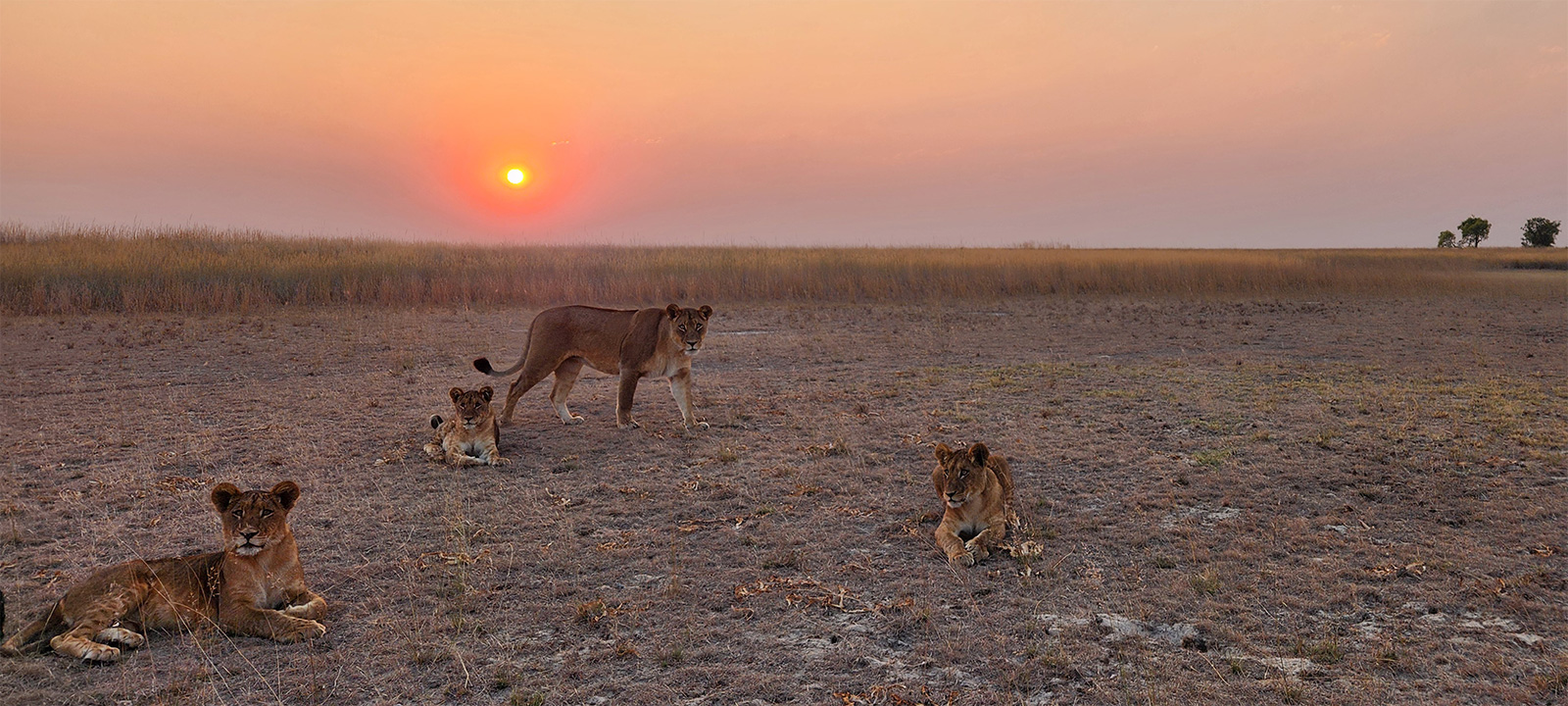
The Luangwa River Valley in eastern Zambia stretches more than 430 miles and encompasses floodplains, miombo woodlands, and oxbow lagoons. It’s home to one of Africa’s largest lion populations, along with elephants, hippos, giraffes and blue wildebeests. Four national parks and the adjacent game-management areas within the valley connect a massive, unfenced region that’s around eight times the size of Yellowstone National Park.
For 17 years, Matthew Becker ’96 has called the Luangwa Valley home. As CEO of the Zambian Carnivore Programme (ZCP), he leads one of Africa’s longest-lasting efforts to safeguard large carnivores and ecosystems. The program has a team of nearly 100 people working in five ecosystems to protect more than 1,200 carnivores each year — big cats, wild dogs, and hyenas — from snaring, poisoning, poaching, and other threats.
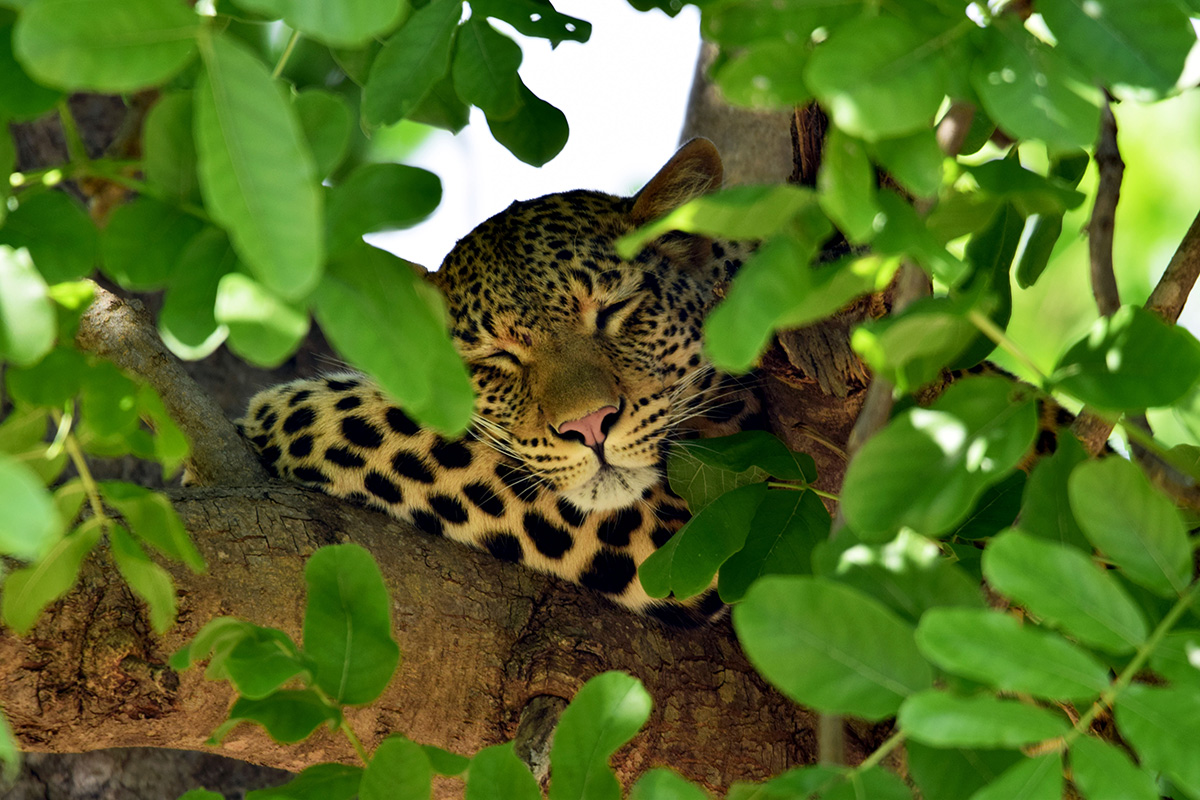
A leopard naps peacefully on a shady perch. The Zambian Carnivore Programme combats a growing illegal trade in big cat skins and parts. Elke Van Gils
Becker’s path to Zambia began in Bozeman, Montana, where he grew up with academic parents who’d met in graduate school at the UW. Michael MBA’64, PhD’71 and Stephanie Becker ’63, MA’64 raised their son to be curious and to feel a personal connection with the natural world.
“I think my parents, who learned this in part from their time at Madison, really emphasized the importance of education and also the importance of doing something bigger than yourself and making a contribution in the world,” Becker says. “I was one of those kids who knew from around age five what I wanted to do. I always wanted to work with wild animals.”
Deciding where to attend college was easy for Becker, thanks to his family’s connection — and thanks to the fact that the UW happened to have one of the top-ranked programs in wildlife ecology. But he didn’t enroll immediately after high school. Instead, he did several internships at wildlife refuges across the United States, and by the time he moved to Madison, he was ready to take his coursework seriously.
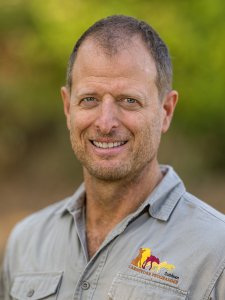
Becker knew from the time he was five that he wanted to work with wild animals. Marcus Westberg
As an incoming freshman, Becker met Robert Garrott, then an assistant professor of wildlife ecology, at a department social. “[Garrott] stood out as someone who was very enthusiastic and helpful, who genuinely enjoyed assisting young people just starting out in the field,” he says.
A year later, Becker saw a flyer for a field assistant position in Yellowstone with Garrott and graduate student P.J. (Patrick) White PhD’96. “It pretty much read like a litany of how you could get killed during backcountry fieldwork: freeze to death, drown in icy rivers, get buried in an avalanche, fall in geothermal pools, bison goring, grizzly mauling in the spring, etc.,” Becker says. “Starry-eyed, I was immediately sold and promptly marched into Bob’s office and declared my interest in the job.”
The Making of a Conservationist
He didn’t get it. But he did get a mentor who offered an independent study instead, also in Yellowstone, and Becker jumped at the chance. He describes the first season working with Garrott as one of the most enjoyable of his career. It set the stage for several decades of work. Garrott encouraged Becker to get a wide variety of experience and not to be in a hurry to get to graduate school or start a professional job. “ ‘Enjoy these years,’ he would say. ‘There’s no rush.’ ”
Becker graduated in December 1996 with a triple major in wildlife ecology, entomology, and biological aspects of conservation. With those credentials, he ventured to Antarctica to manage what was at the time the longest-running penguin project on King George Island. He spent five months at a time monitoring Adélie, chinstrap, and gentoo penguins, along with flying seabirds. He also traveled to Alaska and the Arctic to work on various seabird-related projects.
Eventually, Becker landed a job as project manager for the Kibale Chimpanzee Project, a long-term effort to study chimpanzees at the base of the Rwenzori Mountains, along the border between Uganda and the Democratic Republic of the Congo. He was there in 1999 when armed rebel groups roamed the mountains and attacked communities and parks. After rebels targeted Kibale National Park and started moving toward the project area, Becker and his colleagues were quickly evacuated. He was only two months into what was supposed to be a yearlong job. “It was really sad,” he says. “Ugandans are wonderful people, and it was a great project.”
But the chimp project had opened his eyes to a wide range of opportunities in Africa. He moved to the Okavango Delta in Botswana to volunteer for a wild dog project that would eventually evolve into what is now the Botswana Predator Conservation Trust. Becker only planned to stay for a couple of months, but he fell in love with wild dogs, captivated by their social bonds and cooperative hunting. He spent nearly two years there, becoming an expert at fieldwork and running projects.
Though Becker says he has a “great appreciation for all creatures, great and small,” he holds a special passion for endangered African wild dogs.
But he realized that he didn’t have the training needed to become a scientist. By then, his undergraduate mentor, Garrott, was a professor of ecology and the director of the fish and wildlife management program at Montana State University. And so, Becker went back to his hometown of Bozeman — and back to work with Garrott in Yellowstone.
Big-Picture Thinking
In the 1940s, wolves were destroyed in the Yellowstone area as part of a nationwide predator-eradication program. But in 1995, the National Park Service reintroduced wolves, and scientists were eager to understand how that affected the region. Intermittently over the years, Becker had visited the park to help with fieldwork and training on Garrott and White’s project. He’d witnessed the work grow from an elk-monitoring initiative into a 20-year, multidisciplinary effort to understand large mammal dynamics and the impacts of snow, vegetation, geothermal features, and more in addition to the effects of wolf reintroduction.
The National Science Foundation provided a fellowship for Becker’s dissertation, which evaluated predator-prey dynamics among wolves, elk, and bison in central Yellowstone. The work helped him learn how to design and implement long-term, integrated projects in arenas with a lot of controversies and differing values, which struck him as similar to working with lions in Africa. Becker also took note of the broader effects of climate on the species he studied. “We need to align and protect the areas that wolves and elk evolved to coexist in,” he says. This sort of urgent, big-picture thinking would soon become a hallmark of Becker’s vision as a researcher and leader.
As his graduate studies wound down, Becker found himself dreaming of starting his own long-term project somewhere new, and he caught wind of one based in Zambia called African Wild Dog Conservation, which was the first of its kind in that country. Becker was hired on a two-year contract and left Montana for the Luangwa Valley. Seventeen years later, he’s still there.
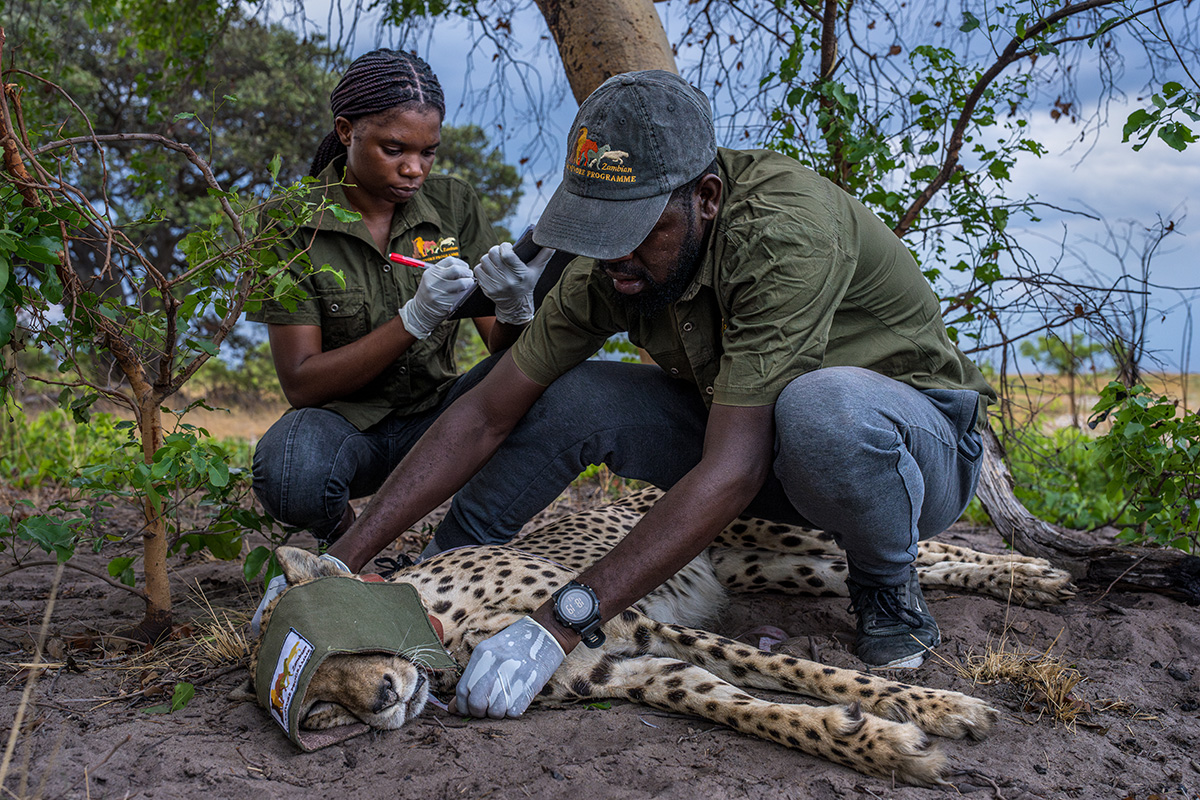
A field team fits a cheetah with a tracking collar. Program staff monitored more than 1,200 carnivores in 2024, allowing them to send antipoaching patrols to key areas. Marcus Westberg
Under Becker, African Wild Dog Conservation expanded into the Zambian Carnivore Programme, which now encompasses a sprawling network of projects across the country involving 15 populations of large carnivores. The work includes reducing conflict between lions and humans in Luangwa; saving carnivores from illegal snares in Kafue National Park; supporting the recovery of carnivore populations in Liuwa Plain National Park after decades of heavy poaching; and monitoring wild dogs across several regions.
“The most important thing is that ZCP is multi-species, multisite, and integrated — we do the same thing in each area for the long term,” Becker says. “We don’t just look at lions, for example. We look at their competitors, their prey, their habitat, and the human influences and drivers.”
Riding Till the Wheels Fall Off
Scott Creel, a distinguished professor of letters and science at Montana State, has worked with ZCP for nearly 15 years as its senior scientist and graduate student adviser. Creel wrote the first scientific book on African wild dogs, based on his work in Tanzania, and he was on Becker’s dissertation committee. “Matt is an exceptional blend of scientist, NGO leader, and diplomat, and I do not know anyone who could have done a better job of building the Zambian Carnivore Programme,” he says.
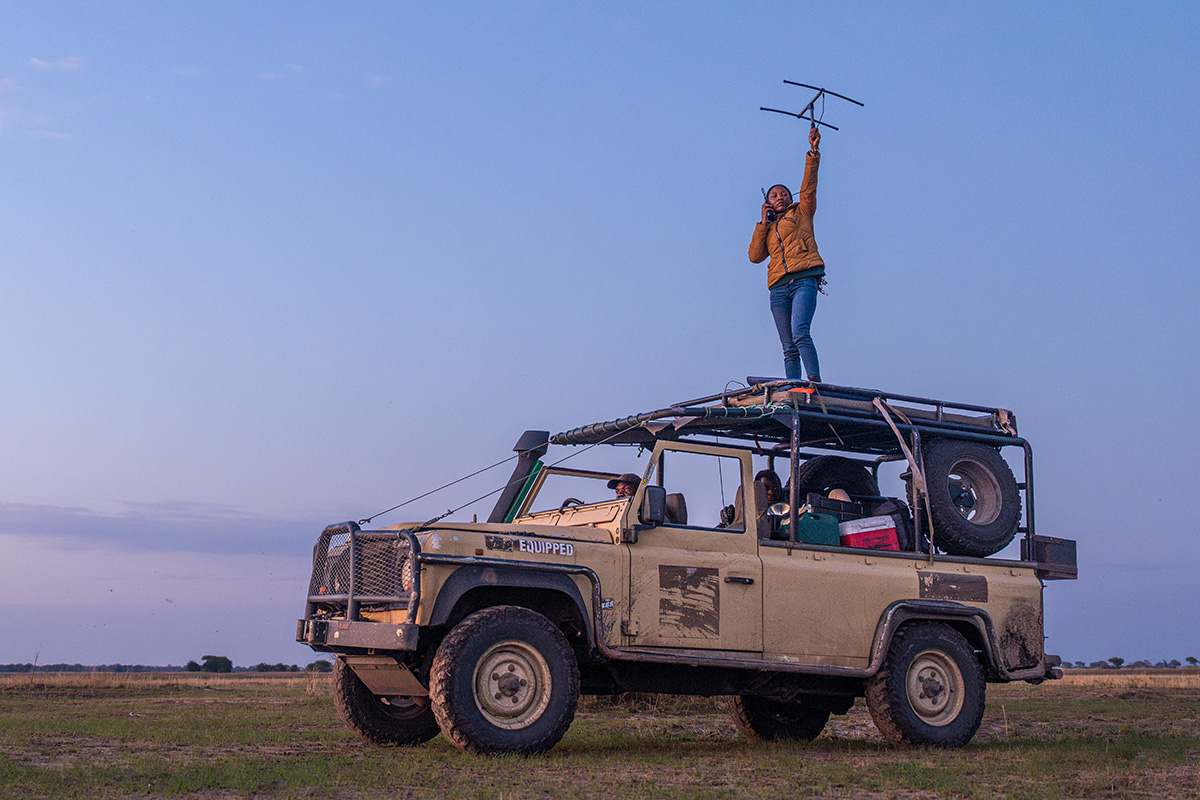
In Zambia's Kafue National Park, Becker's team often relies on grit and improvisation to get things done. Marcus Westberg
Creel remembers the early years of ZCP, when the team relied mostly on grit and improvisation to get things done. “Sometime around 2012, when we were a small group working on a shoestring, I was meeting up with Matt at our research camp in central Kafue. Shortly after I arrived, Matt came rolling in from Liuwa in an old Land Cruiser that we’d brought down from our research in Kenya. After 10 hours on the road, they pulled up … and a front wheel promptly fell right off,” Creel says. “Lacking any alternatives, we collected the fragments of the wheel bearing from the dirt, cobbled it back together, and carried on.”
For 30 miles, the Land Cruiser limped along with a failing wheel bearing, so slowly the team was able to count the tsetse flies they killed along the way: 1,228, a record that still stands among ZCP scientists.
“The first four years I can confidently say virtually nothing went right,” Becker says. “There were so many daunting challenges, and we had so little money to start these additional projects, like spending three to five thousand dollars for a vehicle, and it was just a complete crucible.”
When ZCP began, there were more important things than the Land Cruiser (which Becker still drives). For example, they weren’t able to provide many opportunities for local Zambian conservationists within the organization. But they persisted, and in 2011, one of the team’s Zambian members received a Fulbright award to pursue a doctorate with Creel at Montana State. The next year Creel received a prestigious National Science Foundation grant to study predator-prey dynamics at ZCP’s sites.
“The grant was ambitious and challenging, but that was the start of things really moving upward fast, and all the work we had put into building the foundation started to pay off,” Becker says. “As we’ve grown, we’ve gotten to a point where now we have some of the largest and longest-running projects on the continent, and there’s a growing interest and opportunity for people across Africa who want to get involved in this work.”
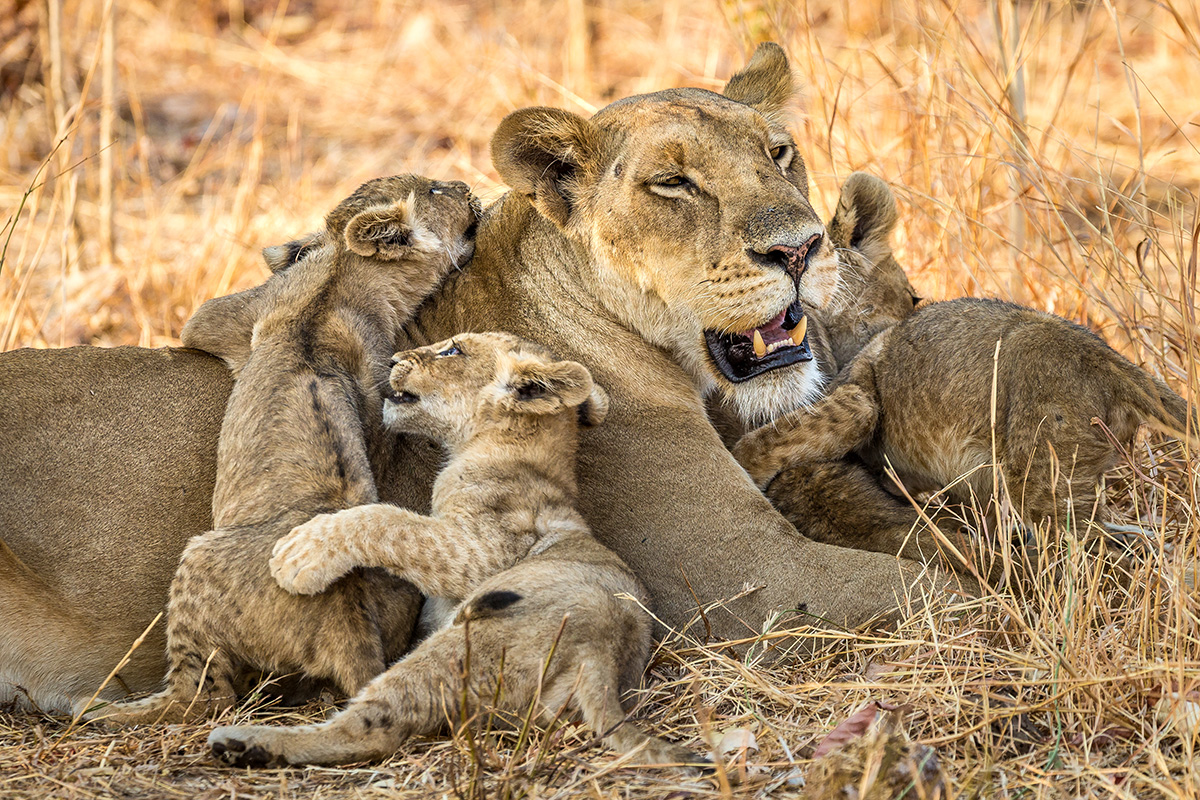
The Zambian Carnivore Programme strives to reduce conflict between lions and humans.
The Resilience of Wild Dogs
The Zambian Carnivore Programme currently partners with nearly 50 organizations, agencies, and institutions, including Zambia’s Department of National Parks and Wildlife and several universities around the world. The data its teams collect have informed government policies and dozens of wildlife ecology research papers and projects.
The organization also makes a concerted effort to share its work with the public. The team collaborated with the BBC for five years to produce Kingdom, a documentary released in November 2025 and narrated by David Attenborough. The series follows the real-life sagas of four predator families in Zambia, including wild dogs, lions, leopards, and hyenas. In 2021, ZCP began tracking a wild dog tagged EWD 1355 and her two sisters as they embarked on the longest recorded journey for the species — 1,300 miles across Zambia, Zimbabwe, and Mozambique over the course of nine months. A year later, the New York Times published a “dog log” of their travels.
Though Becker says he has a “great appreciation for all creatures, great and small,” he holds a special passion for endangered African wild dogs. Smaller and far less famous than Africa’s other carnivores, they are intensely social and astonishingly resilient. Unlike lion prides, in which the females hunt so the males can eat first, wild dog packs ensure puppies are the first to feed. And they’re cooperative breeders, meaning one female and male pair will produce puppies that are supported by the other adults.
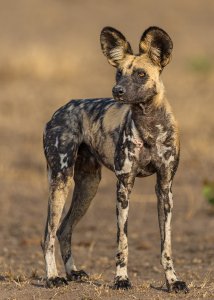
African wild dogs are intensely social and astonishingly resilient. Marcus Westberg
Yet wild dogs are severely endangered, with a population that numbers fewer than black rhinos. Zambia is an important stronghold for them.
“With all the natural threats and human impacts around them, it’s a miracle they’re able to make a go of it,” Becker says. “They’re amazing animals to watch. They look out for each other and take care of each other. We just had a dog that almost died in a snare this weekend, but our partners were able to rescue it. She basically has no use of her front leg, but she’s alive, and she’ll survive because she can keep up with her sisters, and they’ll feed her and they’ll protect her.”
The resilience of wild dogs carries a lesson for the human conservationists who monitor them. “This is very challenging work,” Becker says. “You never finish, and you never do enough because there are so many challenges for them. But it’s rewarding work.”
Wildlife ecologists, as a professional species, tend to be as peripatetic as wild dogs, and Becker is no different. Yet he seems to have found his home territory in the Luangwa Valley. He lives with his partner, Rachel McRobb, who runs the nonprofit Conservation South Luangwa. “I think it was a combination of working on species that I really was passionate about and being able to start and design long-term projects [that has kept me with ZCP for so long],” he says. “That was always my dream, but I never imagined we’d be doing it at this scale. It can be difficult to accomplish things here, but when you do accomplish them, it can be pretty significant.”
These days, Becker finds himself offering younger conservationists the same advice that Garrott once gave him: start every project as if you’re going to run it for 20 years, and enjoy every season in the field.
Sandra K. Barnidge ’09, MA’13 is a writer based in Gainesville, Florida. She’s the author of The Diamondbacks, and diamondback terrapins are the wild creatures closest to her heart.
Published in the Spring 2026 issue


Comments
No comments posted yet.