Lights, Camera, Badgers!
With his movie in progress, Professor Aaron Greer turns UW–Madison into a film set.
If the setting in the upcoming movie Morning Moon looks familiar, that’s because it’s the real thing.
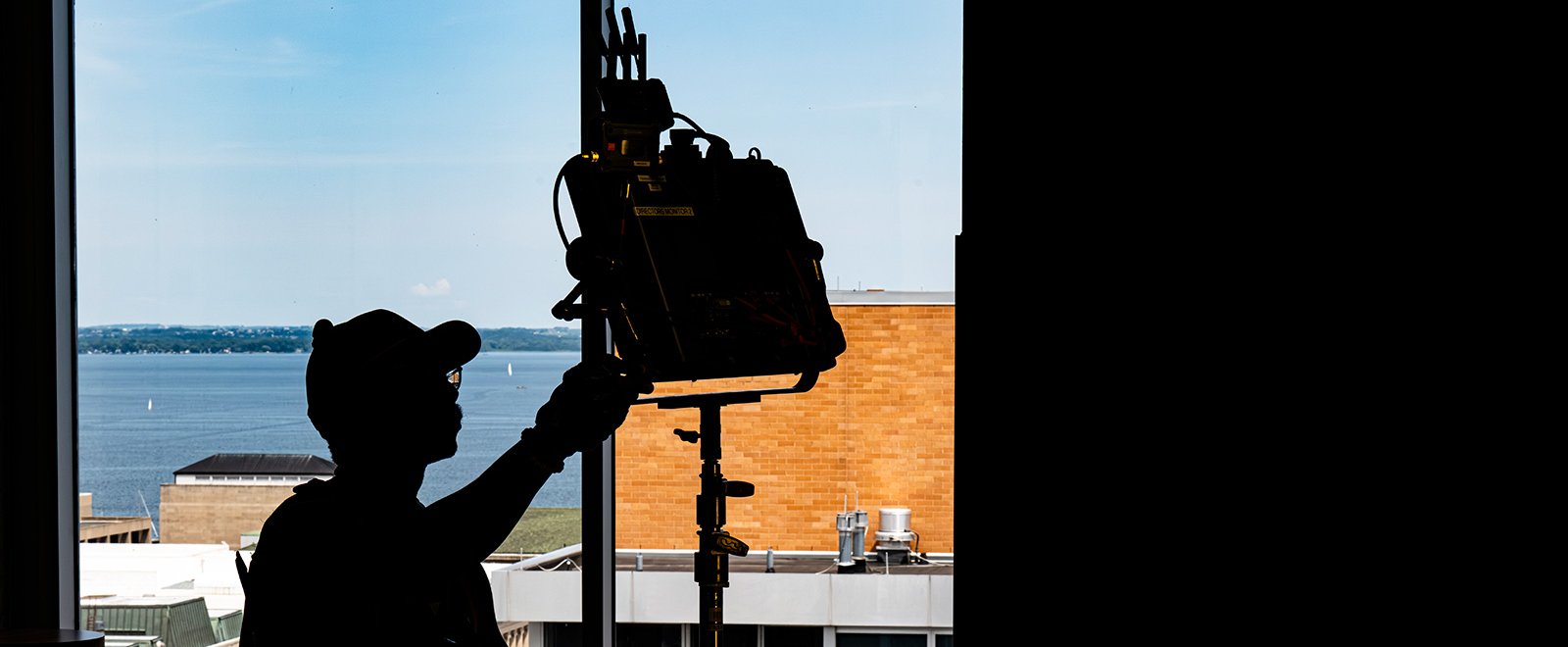
The full-length feature was shot last summer in Madison, with some of the action filmed in UW–Madison locations such as Lathrop Hall and the Office of the Registrar. In the director’s chair was UW communication arts professor Aaron Greer.
Greer has more than a dozen documentary and feature films to his credit. He wrote the screenplay, is producing, and will edit Morning Moon.
“I’ve always been interested in character-driven films,” he says. “I was influenced by films that came out of Europe and South America in the ’60s and ’70s, with real people, real places, a little less of the gloss and glamour of Hollywood.”
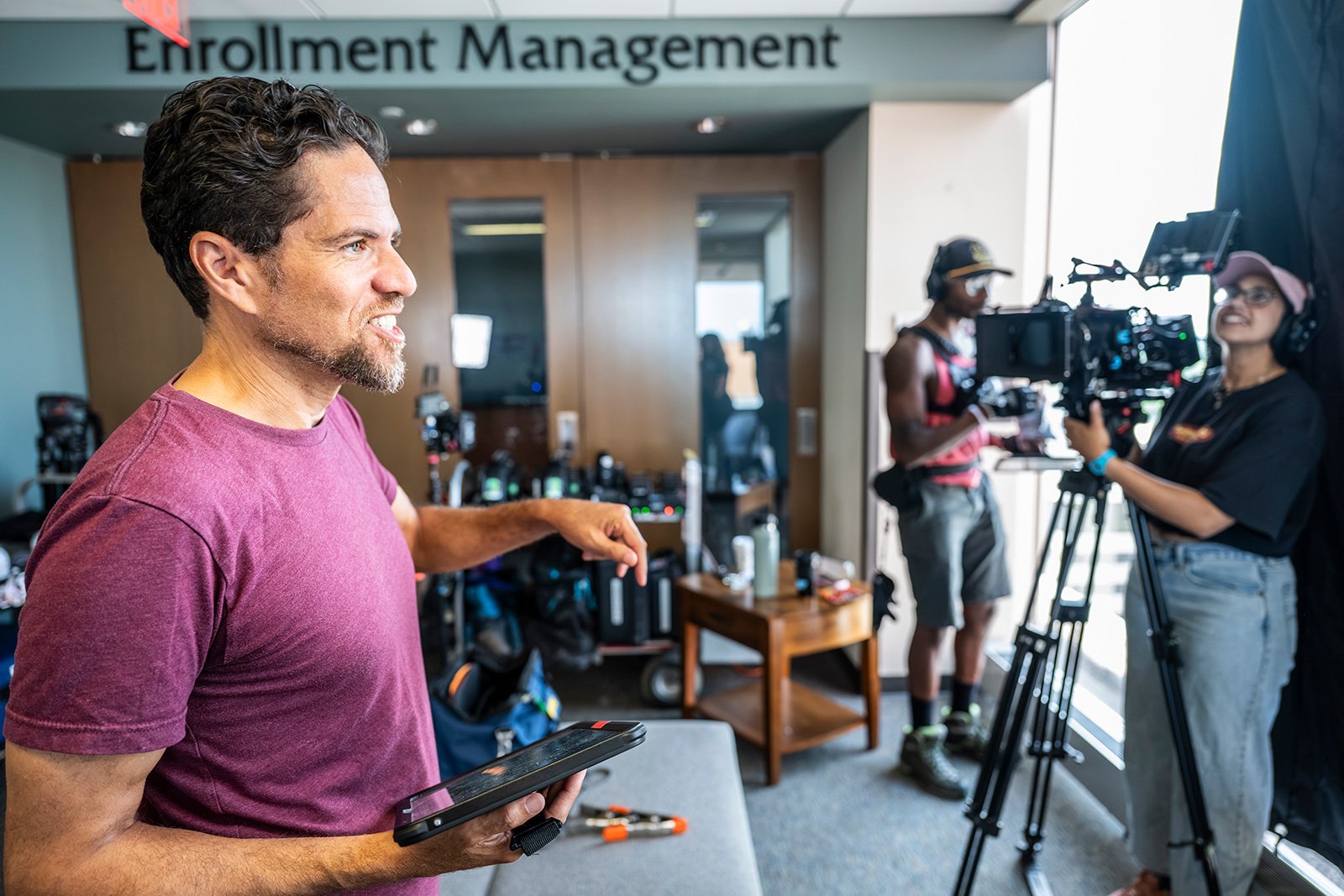
The filming of Morning Moon came after a year of painstaking planning. The fictional story centers on a 22-year-old Minnesota college student named Selena who journeys to Madison — and the UW campus — in search of clues to her mother’s past. Through a strange turn of events, she becomes a fixture in the lives of Avi and Nya, a longtime Madison couple on an emotional journey of their own as they try to start a family.
While union actors from Chicago won the roles of Selena, Avi, and Nya, UW students and faculty help fill out the cast. Theater student Jenny Duarte Castillo x’28, for example, is playing a key role, as is African American studies professor emerita Sandra Adell MA’86, PhD’89.
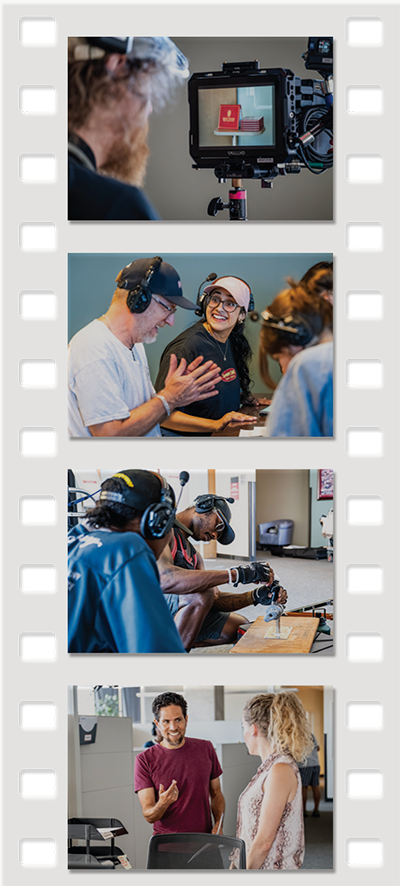
A number of alumni — now professionals in the film and video world — served on the film crew. C Kessler ’24 did costumes, hair, and makeup, and Alejandro Dominguez ’24 is the sound mixer. Both took a senior-year capstone filmmaking course with Greer and his UW–Madison colleague Erik Gunneson ’89, who is the movie’s assistant director and coproducer. They each credit the skills and friendships from that experience, along with other coursework, for leading them to professional opportunities after graduation.
Crew member Kyla Pollard ’24 is a communication arts graduate now pursuing a master’s degree in filmmaking at New York University. Greer had taught one of Pollard’s favorite undergrad classes — screenwriting — and wrote her a letter of recommendation for graduate school.
“It’s nice to be on set with a director who really cares,” she says, “and who has a clear vision.”
The Art of Filmmaking
A Milwaukee native who grew up watching the latest blockbusters, Greer did not become intrigued by the art of filmmaking itself until his college years.
“I majored in history. I was doing an honors thesis and had gotten interested in the history of the Cuban revolution,” he says. “Somehow I landed on this idea that I would look at how the Cuban media changed in the early years of the revolution, and the only Cuban media I could get my hands on was the dry government newspaper — or films.”
The films riveted Greer. “I’d never seen anything like them, and I started reading more about the filmmakers,” he says. “That’s really how I got the bug.”
Since then, Greer has taught film studies and production at several universities and won multiple prizes for both films and screenplays, such as the 2016 American Black Film Festival’s grand jury prize for best narrative feature for Service to Man.
He came to UW–Madison in 2020, and as he wrote Morning Moon, he knew he wanted to set some of the action on campus.
“I’ve been part of the group of folks lobbying for film and television tax incentives to return to the state,” he says. “We encourage some of our students to try to stick around and work in Wisconsin. If we’re going to have an ecosystem for that, I have to film in the state myself.”
Greer also wants to demonstrate to his students that they have all the filmmaking resources they need at hand. “They’re able to make really moving films with the amazing equipment that we have here at Vilas Hall,” he says. “It’s stuff they can put in the back of a car or minivan. You don’t have to have huge trucks of equipment to make a film look good and sound good.”
Funding for the film has come primarily from grants, including a Creative Arts Award Greer received from the university’s Division of the Arts. He plans to edit the film while on sabbatical this fall and submit it to film festivals next year.
Beyond their paychecks, many on the film crew are earning valuable experience. For Gunneson, coordinator of the university’s digital cinema production certificate, it’s gratifying to see former students return to campus as professionals.
“I always tell my students that one of my favorite places on earth is a film set,” he says. “Here I am, in one of my favorite places.”
Gayle Worland is a writer with UW–Madison’s Office of Strategic Communication.
Published in the Winter 2026 issue.
Comments
No comments posted yet.