AI’s Humanistic Angle
A UW–Madison research center grapples with tough questions surrounding the new technology.
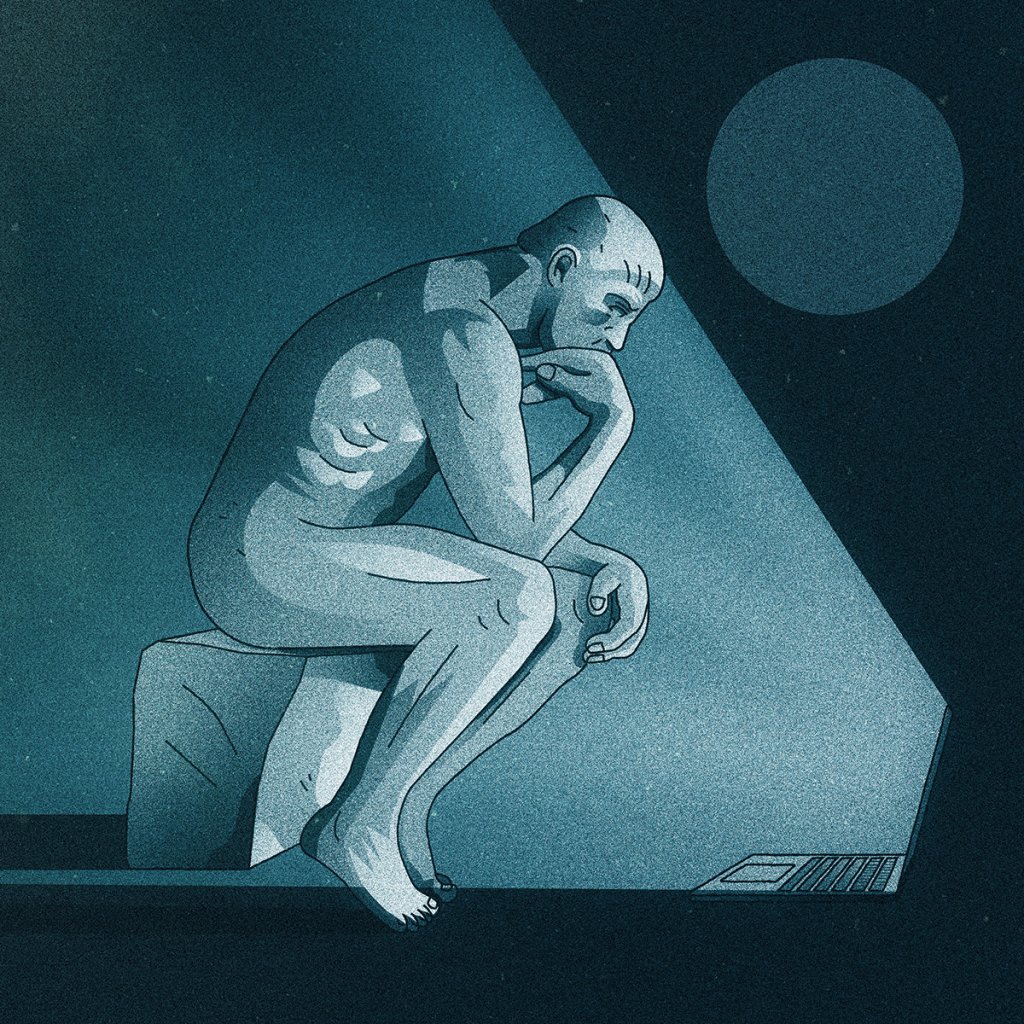
“We’re applying the basic questions that the humanities are so good at asking to come up with creative and important new ways of thinking about these technologies and shaping their development.” Jaime Espinoza
What are the ethics of artificial intelligence? How will historians look back at the development phase of this new technology? What will be the long-term effect on our society as governments embrace these tools?
These are the types of questions that will be investigated by the UW’s new Center for Humanistic Inquiry into AI and Uncertainty.
“We’re going through this seismic shift that will have massive impacts on the way we work, on the way we live, and on all aspects of human life and society,” says Grant Nelsestuen, associate dean for arts and humanities in the UW College of Letters & Science and a professor of classics. “We’re applying the basic questions that the humanities are so good at asking to come up with creative and important new ways of thinking about these technologies and shaping their development.”
Nelsestuen and his coleader, philosophy professor Steven Nadler, have brought together a team of 12 researchers from the Information School, UW Libraries, and the Departments of History, Philosophy, Communication Arts, and English. They will look at the rise of AI from every humanistic angle, aided by a three-year National Endowment for the Humanities grant.
Artificial intelligence has been a focus of the Wisconsin Research, Innovation, and Scholarly Excellence (RISE) Initiative, which the UW launched in 2024 to facilitate transformative discoveries and translate them into real-world impact. RISE-AI seeks to boost the university’s network of AI innovators by adding faculty positions across campus.
Nelsestuen got the idea for the Center for Humanistic Inquiry into AI and Uncertainty when he realized just how many researchers from the College of Letters & Science were investigating AI. He had a vision of getting them talking.
“This is the sort of creative, dynamic, and wide-ranging thinking that is characteristic of UW–Madison’s faculty, students, and alumni,” he says.
Published in the Spring 2026 issue



Comments
No comments posted yet.