Mighty Mycology
UW fungi researchers across many disciplines have created a world-class supergroup to improve our lives.
It’s no joke. Fungus is among us. As many as 11 million fungi species exist, although only 150,000 have been identified.
Some, like those that the antibiotic penicillin are made from, are lifesaving. Many are plant pathogens. Powdery mildew, rusts, and blight do more than irritate home gardeners. They cost billions in annual crop losses. In fact, fungi are responsible for about 70 percent of all plant diseases.
Luckily for farmers, doctors, and diners everywhere, fungal research at the UW has deep connections in academic fields spanning five schools and colleges and numerous departments. For 27 years, campus has been home to the Fungal Biology Supergroup, a loose alliance that has grown to some three dozen professors and researchers in disciplines that range from botany and pharmacy to medicine and public health.
The UW’s supergroup is the world’s largest and most diverse collection of fungal researchers, according to Christina Hull, a professor of biomolecular chemistry, medical microbiology, and immunology. “It’s a rich community,” she says. Research ranges from studies on medical applications for psychedelic mushrooms to the development of antifungal treatments for people, animals, and plants.
“The supergroup has become stronger over the years,” says its founder, Nancy Keller, a professor of plant pathology as well as medical microbiology and immunology. Members, including faculty, researchers, and students, meet monthly to share progress in their fields, make connections, and create research partnerships. (One lab even has Fungus Fashion Fridays.)
Mehdi Kabbage, a professor in plant pathology, only needs one word to sum up the supergroup’s impact on the UW’s research prowess.
“It’s massive,” he says. “Massive.”
Here are just a few of the projects that members of the supergroup are tackling to improve our lives.
Stemming the Rot
Programmed cell death sounds like the name of a heavy metal band, but if Kabbage is right, this biological term holds the key to stopping the scourge of soybean farmers everywhere: Sclerotinia stem rot.
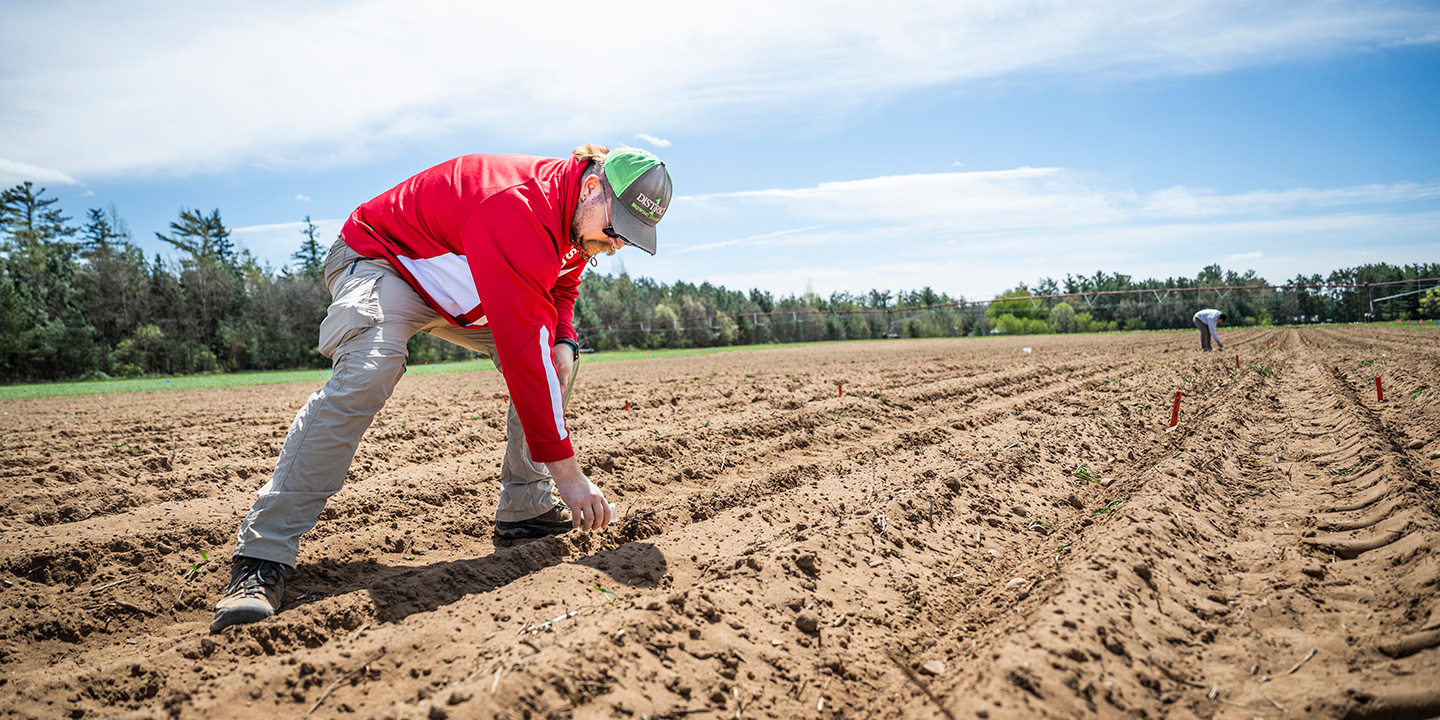
The stem rot fungus can live in soil for several years and infect more than 400 other species, including many economically important crops. By tricking the plant into flipping its own “self-destruct” switch, this fungus triggers a biological meltdown that drains more than $1 billion from U.S. agriculture annually. Currently, farmers rely on fungicide applications and other less effective tools to stem the tide.
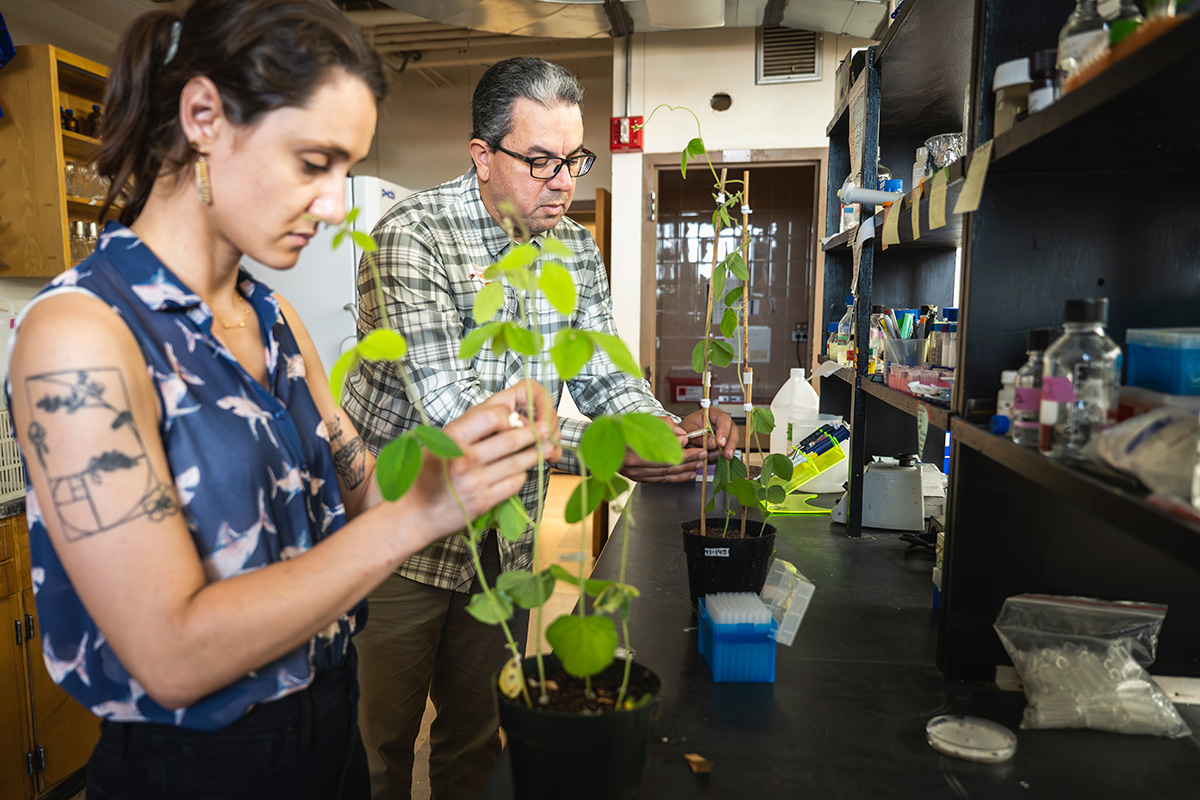
Madeline Bondy PhDx’27 and Professor Mehdi Kabbage inoculate soybeans to learn about a stem rot fungus.
Kabbage wants to mitigate yield losses by genetically modifying soybean plants to improve their resistance. That way, if Sclerotinia’s cottony growths appear, the plant will defend itself.
By transferring genes into soybean plants, he has succeeded in programming the new hosts to make endangered cells shut down, stopping the disease’s progression.
Kabbage found an added benefit. These enhanced plants are more drought resistant because they are better able to manage the chemical stress caused by water deficit.
He took his first mycology course as an undergraduate in France. “For me, it was love at first sight,” he recalls. “I fell in love with fungi’s lifestyle, the structures they produce, and their plasticity across multiple environments.”
Kabbage is also seeking a cure for a new variant of Panama disease, a soil-borne fungal infection of banana plants. “It threatens to wipe out banana production worldwide,” he says. “Banana plants have no resistance.”
Death Caps, Disease, and Drugs
When a death cap mushroom kills a luckless diner, reporters from outlets like NPR, NBC, and the Washington Post put botany professor Anne Pringle on speed dial.
Pringle, a past president of the Mycological Society of America, isn’t seeking a cure for the deadly effects of the world’s most toxic mushroom. Instead, her interest is invasion biology. As a graduate student in California, she began collecting the killer mushroom when she learned it had migrated there.
“The death cap became a tool to try to understand a particular aspect of the changing biodiversity of fungi and understand why it’s happening,” says the ecologist and evolutionary biologist.
The National Geographic Society has since named her as one of its Explorers, a select group of adventurers and scientists who often appear in the pages of National Geographic magazine. No doubt it’s because she speaks with such passion about fungi.
“If you want to make discoveries that challenge what we think about biology, fungi are the organisms to work with,” she says. “Fungi challenge our very notions of individuality and hierarchy and integration.”
Pringle hates the “myth of the lone professor.” If she were a fungus, she might be of the mutualist variety — one that has a mutually beneficial association with other kinds of organisms — reflecting how she collaborates with grad students and researchers. “Whenever I give talks,” she says, “somewhere at the top, I always tell people that I’m using the word I, but the word I is a lie. It’s never an I. It’s always a we.”
She has teamed with Hull to understand how death caps are evolving. Most mushrooms need a partner of the opposite mating type to reproduce. But Pringle and Hull found that death caps can reproduce on their own, a fact that helps explain how their territory has spread.
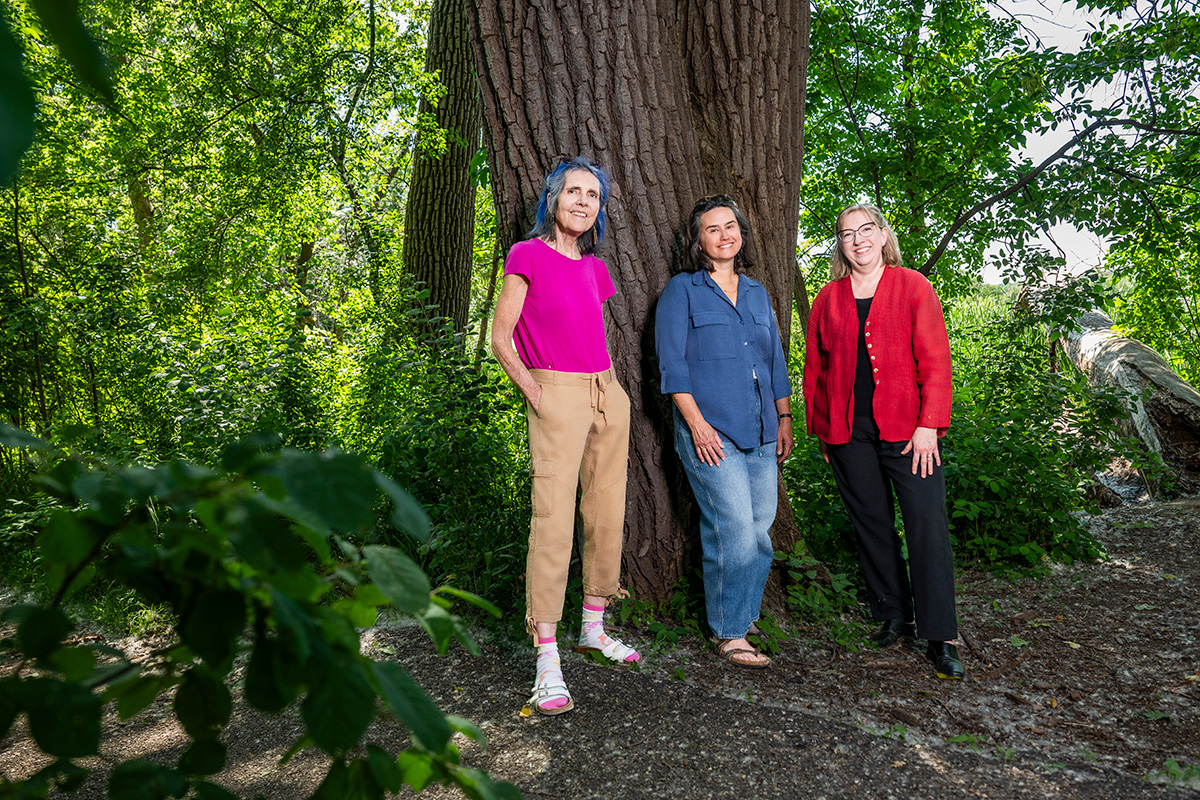
Fungi researchers Nancy Keller, Anne Pringle, and Christina Hull are part of the UW’s Fungal Biology Supergroup, which was founded by Keller.
Nematodes are also a subject of study for Pringle, this time in collaboration with Keller, a leader in the field of fungal chemistry. These microscopic roundworms are found around the world. Though most are harmless and benefit soil health, some cause debilitating maladies like elephantiasis, river blindness, and trichinosis.
“We’ve found that extracts from a certain mushroom appear to kill nematodes. We’re going to try to find out what that metabolite is, because there’s a great need for nematicides in the world,” says Keller.
Meanwhile, she and Pringle have allied themselves with Hull. And Keller and Hull, who both work on fungi that cause fatal diseases in people, have also paired up for many years.
“We are interested in how the spores of those fungi can get into a host and set up shop,” says Hull. “If we can stop those spores from becoming active, we could prevent disease in people.”
Hull and Keller’s research into antifungal drug development involves identifying small molecules that will either prevent germination or kill the organism once it has caused a disease.
“Everything is connected,” Hull says. “As a fungal biologist, what else am I going to say?”
Eye on the Spuds
Potatoes are complicated, especially when it comes to fungal threats. That’s the way plant pathology professor and Extension specialist Amanda Gevens sees it.
Wisconsin is the nation’s third-largest producer of the humble tuber by acreage, and fungus can attack it anywhere in its life cycle, as well as after harvesting. One particular fungus that causes early blight shows up in almost every potato field in the state starting in July.
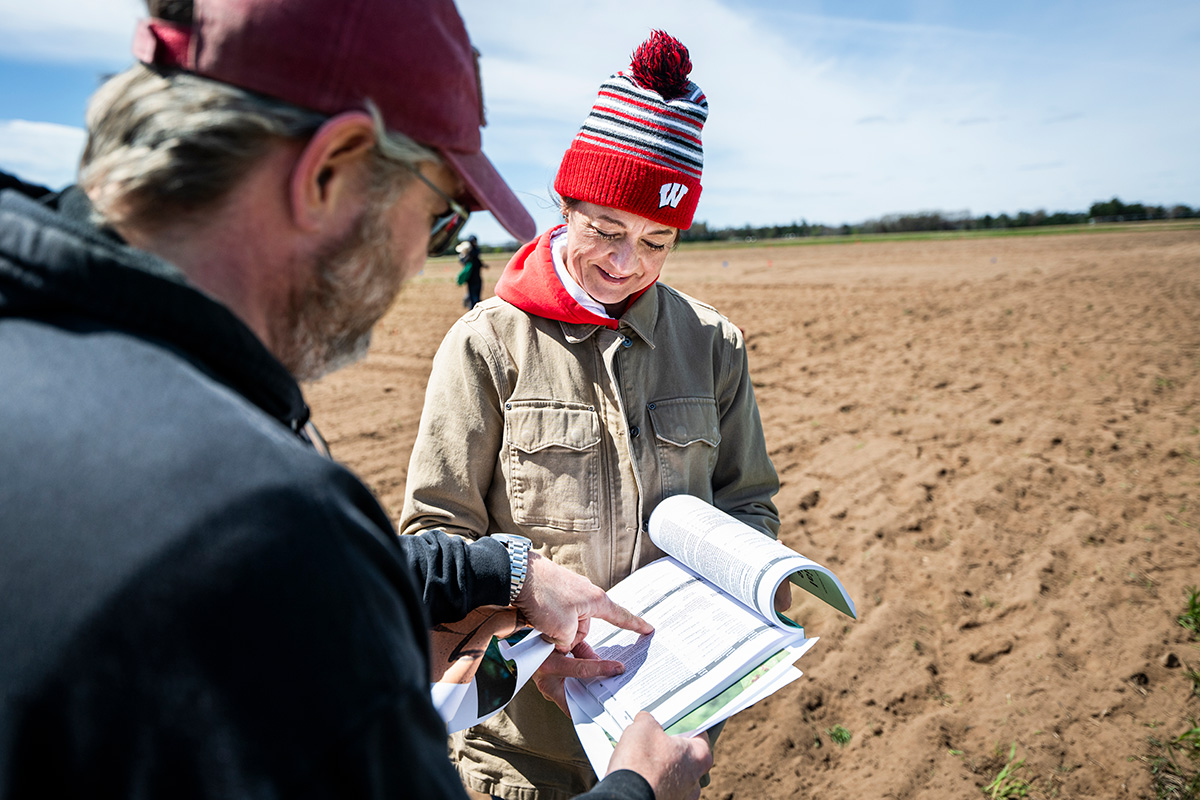
Outreach specialist Stephen Jordan and Amanda Gevens review information on potato blight. Below: a researcher handles a container of fungal pathogen inoculum used to infect a research plot.
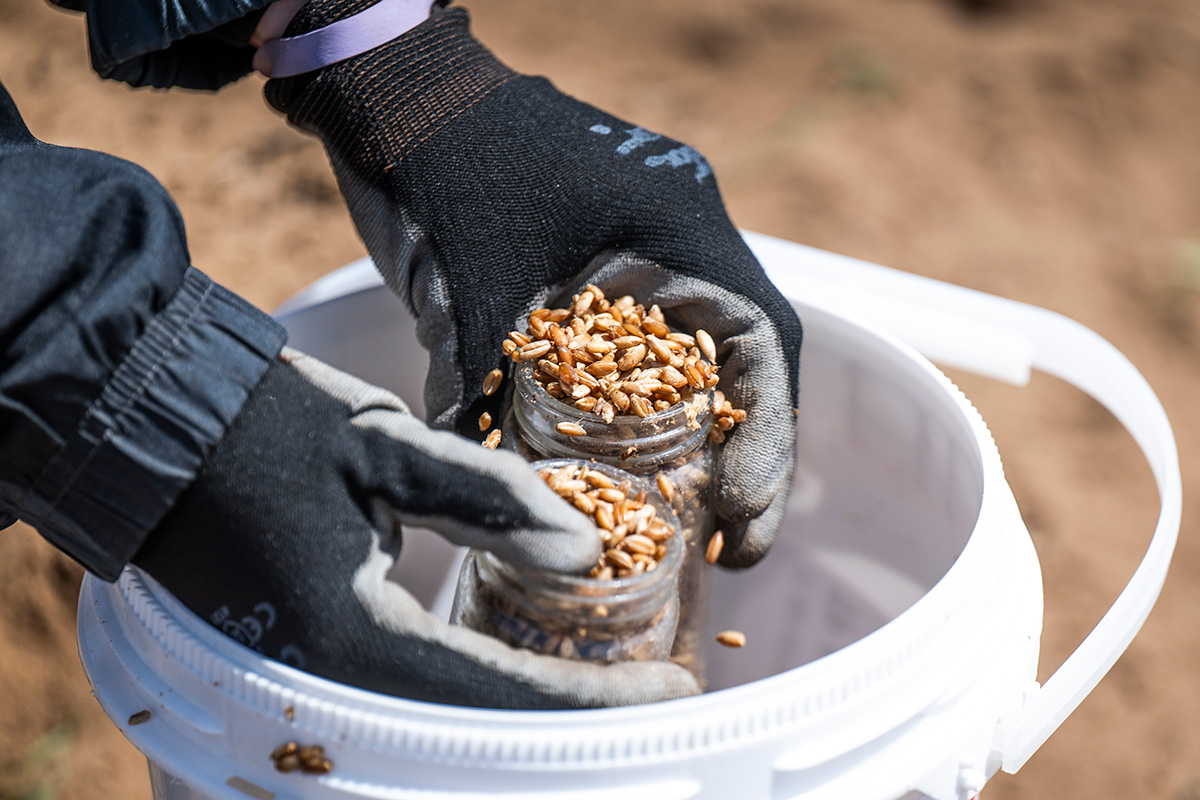
Farmers often call Gevens the plant doctor. She also studies fungal threats to sweet corn, peas, cabbage, onions, and carrots.
“Much of the work I do is diagnostic,” she says. “They call me to their fields or send me potato plants so we can understand what’s making their plants sick and offer management strategies.”
Gevens, in collaboration with Phil Townsend, a professor of forest and wildlife ecology, is developing techniques to detect disease in potato plants before symptoms can be seen with the naked eye. They began with handheld devices in fields. Since then, they have tested the technology in drones and airplanes and hope to extend the testing to satellites. Their goal is to make the technology commercially available.
Gevens’s lab has also studied using ultraviolet light as a nonchemical post-harvest means of stopping fungus. “We expose tubers to low-duration UV light that deactivates pathogens, so potatoes can be stored more healthfully,” she says.
Wisconsin farmers rely on more than 40 fungicides to keep their potatoes healthy, but chemicals can only do so much.
“When we think we’ve got a fungal pathogen managed and outwitted, inevitably, that’s not the case,” Gevens says. “They find another way of persisting. Fungi have a real drive to survive, and that’s the constant challenge.”
Powerful Medicine
The FDA may approve psilocybin for treatment of depression later this year or in early 2027, based in part on research data submitted by the UW’s Center for Psychedelic Research and Education.
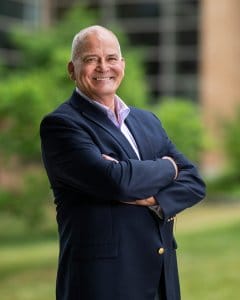
Pharmacy professor Paul Hutson directs a UW center that is researching the use of fungus-derived psilocybin to treat mental illness.
“It’s an enormous opportunity,” says the center’s director, Paul Hutson, the Thora M. Vervoren Professor for Research in Psychoactive Substances in the School of Pharmacy.
“This will be a new class of drugs. They will be as big a paradigm shift as any drug class you can think of in the treatment of cancer, mental health, and cardiovascular disease.”
Psilocybin is the active ingredient in some types of hallucinogenic or “magic” mushrooms. Research suggests that the trip-inducing fungus, long used in rituals by indigenous cultures in pre-Columbian Mexico, increases neuroplasticity. In effect, it rewires the brain in ways that create opportunities for learning that can help people overcome psychological woes.
What has most surprised Hutson is how fast psilocybin’s effects occur and how durable they are. “Even though the drug leaves the system within a day, something fundamentally changes in people,” he says.
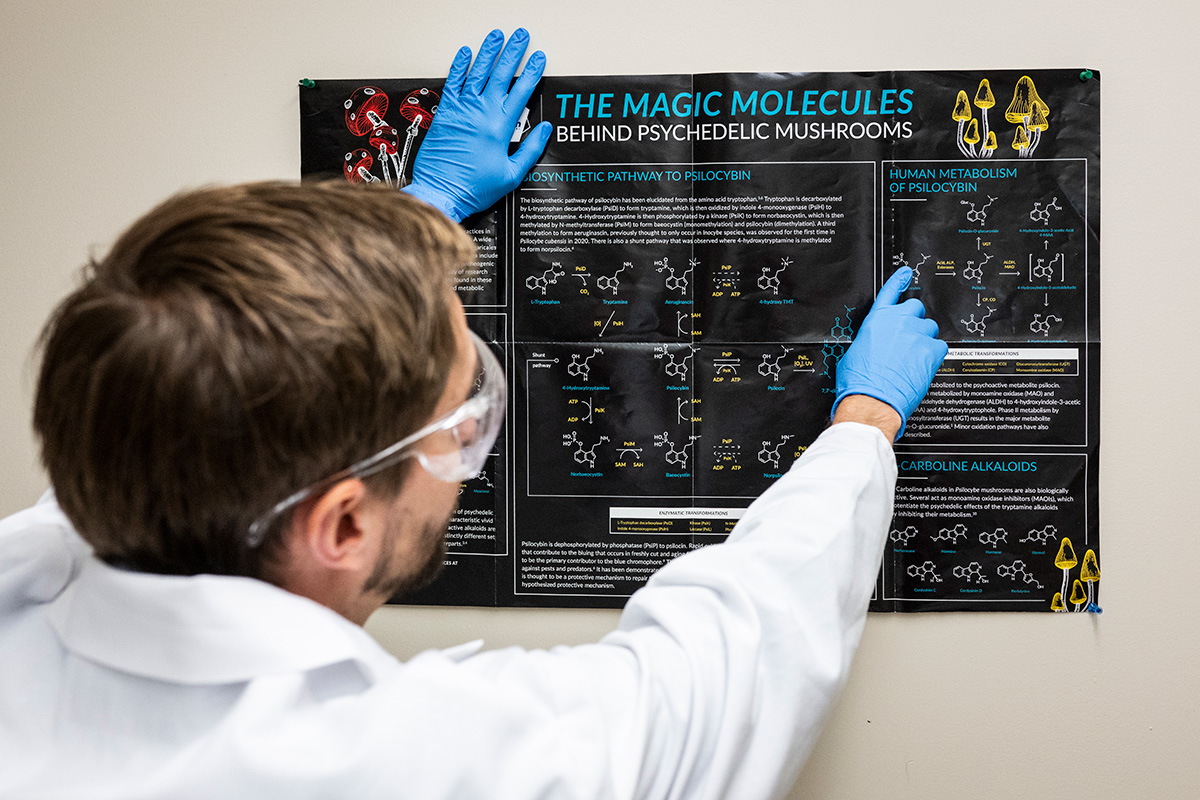
Associate professor of pharmacy Cody Wenthur explains his psilocybin research.
Trial subjects who are addicted to cocaine, methamphetamines, tobacco, and alcohol lose their desire for those substances “virtually immediately,” he says. “We’ve seen a 90 percent drop in methamphetamine use after two doses of psilocybin.”
Trials are also underway to determine the effect of psilocybin on sleeping subjects and those given the amnesia-inducing drug midazolam, which is administered during colonoscopies.
“How important is it to remember the nature, severity, or intensity of a psychedelic treatment to get a therapeutic benefit?” asks Hutson. “We’re asking fundamental questions about how this drug works.”
A Fungal Legacy
The university’s fungi expertise is not limited to the modern era. UW researchers played a key role in the development of penicillin. A fungus discovered on a moldy cantaloupe in 1943 in Peoria, Illinois, became “the great granddaddy” of all penicillin cultures now in use.
For its discovery, thank UW professor of bacteriology and botany Kenneth Raper, then a USDA researcher. He and his team played a key role in the strain’s commercialization.
Raper shipped samples to UW microbiologists Marvin Johnson and Elizabeth McCoy 1925, MS1926, PhD1929, who exposed them to ultraviolet light. This created a new strain that yielded 900 times more penicillin than the variant Scottish physician Alexander Fleming found in 1928.
Raper came to the UW in 1953 and spent the next 26 years studying fungi and doing pioneering work on slime mold, which, although not actually a fungus, has become a go-to organism for scientists who study cell communication.
Since 1849, the botany department has housed one of the world’s greatest resources for fungi researchers. The Wisconsin State Herbarium boasts a collection of nearly 1.4 million plant specimens, including more than 91,000 fungi. It’s the third-largest public university herbarium in the U.S. — and one of the world’s biggest. In the last decade, staff discovered that 59 of the facility’s fungal pathogen specimens had been mailed to Birge Hall in 1900 by George Washington Carver, the famed botanist and peanut researcher.
“Our greatest strength is in microfungi,” says director and botany professor Ken Cameron. “These are the disease-causing mildews, molds, cankers, rusts, and smuts. Since we’re an agricultural land-grant university, these specimens have historically been very important to us.”
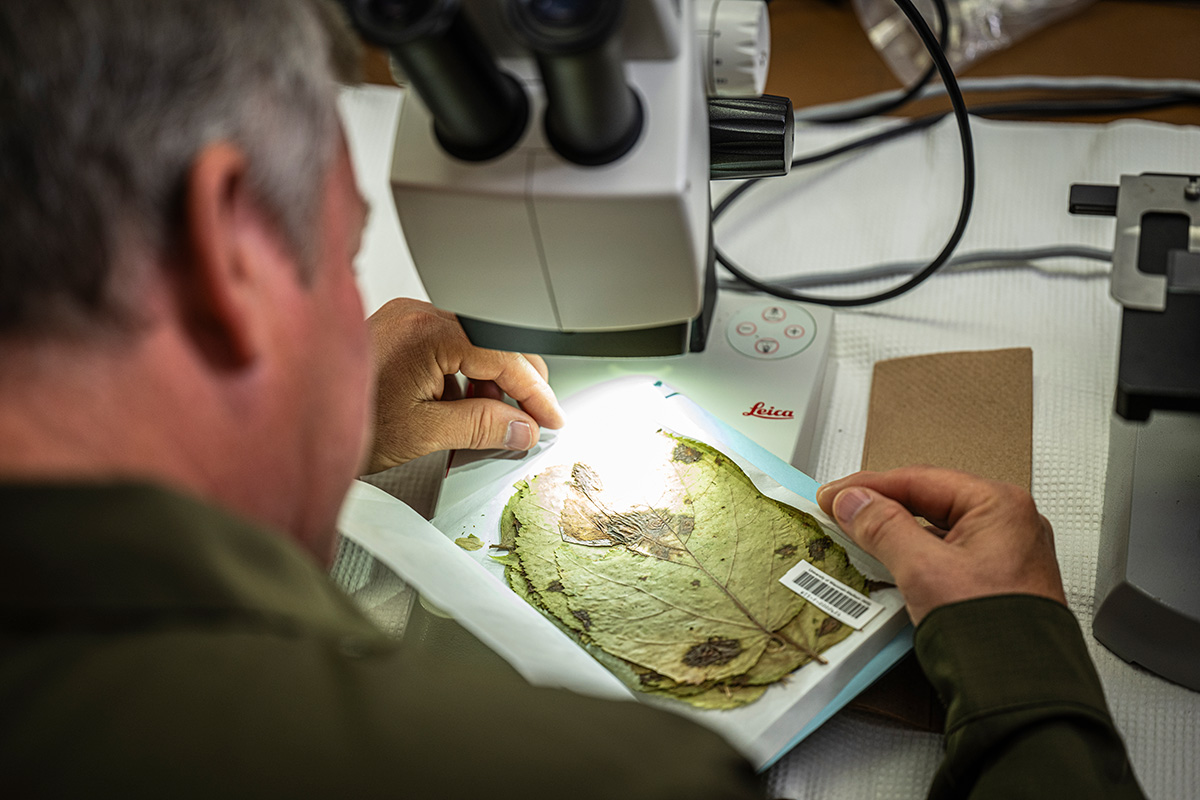
Ken Cameron examines a sample of microfungi in the Wisconsin State Herbarium.
Cameron, who is a global expert on orchids, is very familiar with fungi because the exotic flowers have coevolved with them and need specific fungi species to ensure that their seeds germinate.
Cameron is also president of the Botanical Society of America, and he dismisses the notion that an herbarium is old-fashioned. The UW’s increasingly serves as a kind of lending library. Scientists from around the world borrow its specimens, sequence their DNA, and trace the origins of new diseases.
“We collect plants and fungi for use by the next generation, but when people look at our historical specimens today, they’re looking backward in time,” he says. “What people are now realizing is that we are sitting on a treasure trove of information.”
George Spencer profiled Alzheimer’s disease expert Nathaniel Chin ’06, MD’10 for On Wisconsin in 2023. Together they wrote the book When Memory Fades (St. Martin’s Press).
Published in the Fall 2026 issue
Comments
No comments posted yet.