The Astonishing Unknowable Universe
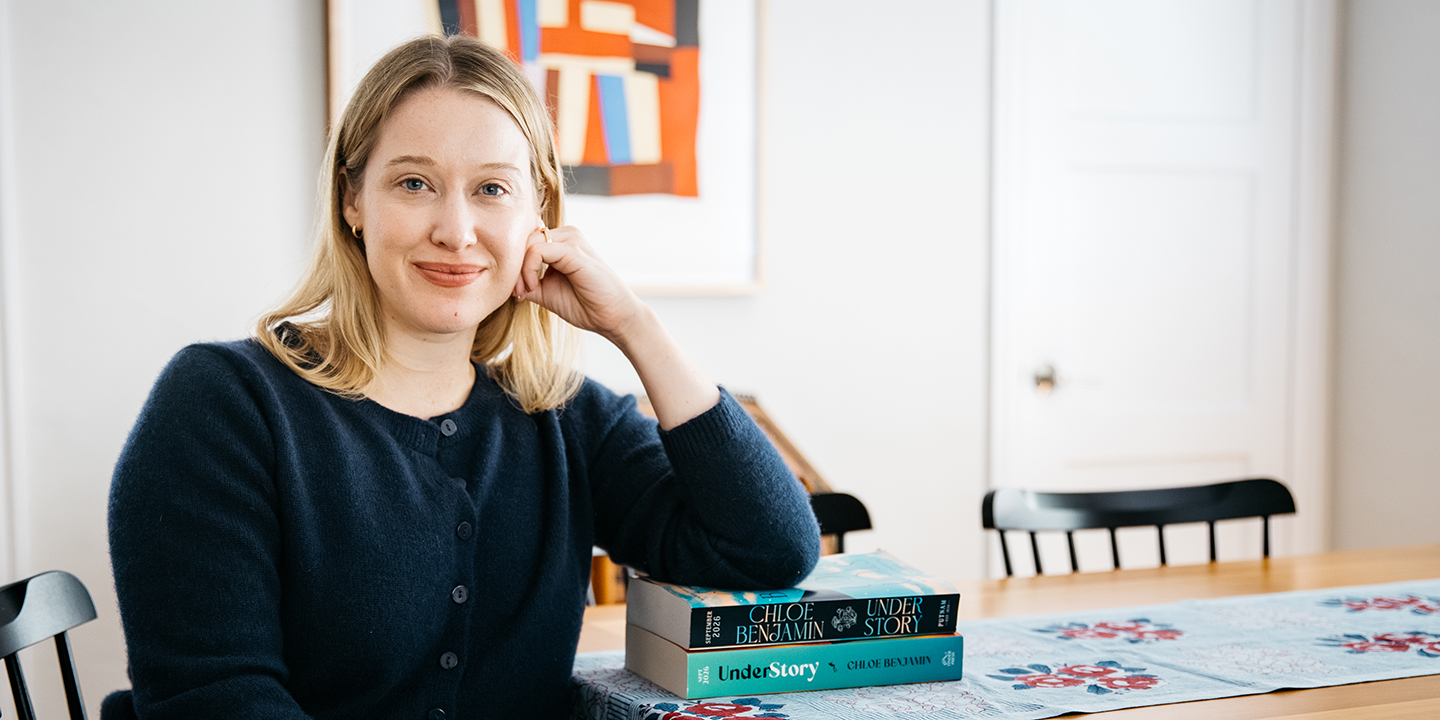
With a mind-bending new novel, bestselling author Chloe Benjamin MFA'12 makes her first foray into full-blown science fiction.
This is a love story, all of it: California native Chloe Benjamin MFA’12 finding herself smitten with the University of Wisconsin–Madison from the moment she stepped onto campus in 2010; meeting her future husband, Nathan Jandl MA’10, PhD’16, during the two-year creative writing program and staying for 15 years; and, the latest chapter, the fated relationship between two research scientists at the heart of her newly released third novel, Under Story.
“Wisconsin was the third-highest-ranked creative writing program in the country when I got in, and I was so excited I canceled tickets to visit another program,” says Benjamin, who finally moved back to her hometown of San Francisco in 2025. “I’d planned to just stay for the program, but I fell in love with Madison, like so many people have before me.”
During their 15 years in Wisconsin, Jandl became the associate director of UW–Madison’s Office of Sustainability while Benjamin launched a literary career. Her debut novel, 2014’s The Anatomy of Dreams, won the Edna Ferber Fiction Book Award and was longlisted for the Center for Fiction First Novel Prize. But it was 2018’s The Immortalists, an instant New York Times bestseller, that catapulted her career. Translated into more than 30 languages, The Immortalists topped a slew of best-of lists and even landed her on The Tonight Show. As for 2026’s Under Story, Warner Bros. Pictures teamed with the producers behind Harry Potter and Barbie to scoop up the movie rights nearly a year before the book was even published.
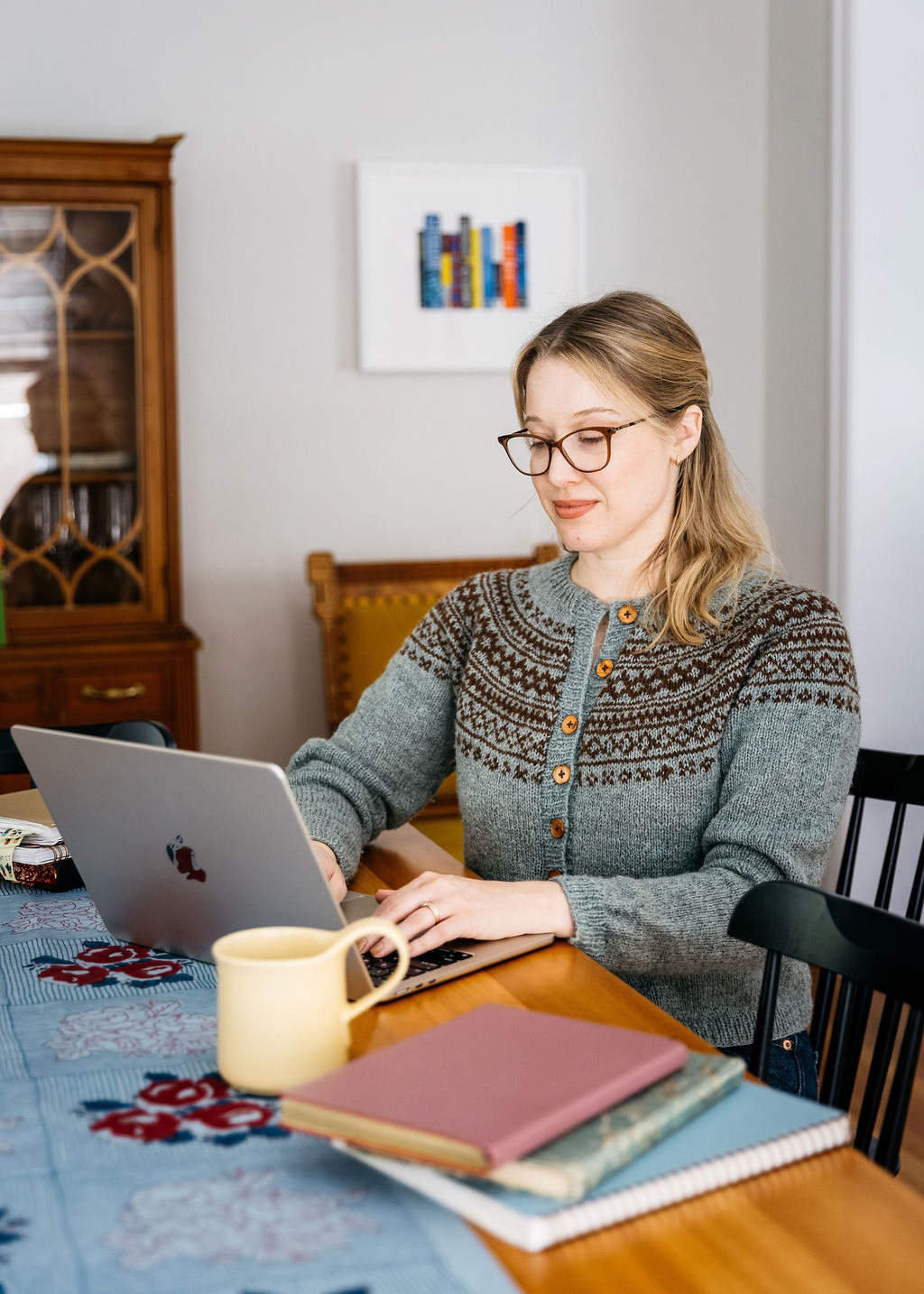
Benjamin: “A discomfort with uncertainty and a fear of loss — those are things that haunt me and which I’m drawn to exploring again and again.”
“It’s totally thrilling,” says Benjamin, who was so overwhelmed when she got the news that she forgot to heat the kettle before pouring cold water into her coffee grounds. (“I was like, why does this taste so bad?”)
Although Benjamin’s first two novels flirted with speculative elements (lucid dreaming, clairvoyance), Under Story is her first full foray into science fiction — and it took six years to write. Benjamin credits the success of The Immortalists for affording her the luxury of time, increasingly rare in today’s publishing industry.
“I don’t have very many ideas, which is one reason why I’m a novelist and not a short-story writer,” Benjamin says. “But when the right idea comes, I know it.”
Escaping Through Fiction
Under Story is a wildly ambitious and poetic brain-bender set in Antarctica and Madison, in both the world as we know it and the inverse as Benjamin imagines it. The idea came during COVID lockdown after she read a 2020 article with the headline “Why Some Physicists Really Think There’s a ‘Mirror Universe’ Hiding in Space-Time.” It detailed a neutrino experiment in Antarctica that was producing strange results and a speculative concept: the CPT-symmetric universe (in which time moves both forward and backward) proposed by Latham Boyle, Kieran Finn, and Neil Turok. A fourth scientist brainstormed a link between the results and the concept, which was later disproved — but the seed was planted.
“I think physicists were probably rolling their eyes,” Benjamin says. “But for a fiction writer, it was catnip.”
As part of her research for Under Story, Chloe Benjamin shadowed the lab of UW botany professor Anne Pringle, who’s profiled in this issue’s “Mighty Mycology.”
Benjamin began about six months of the prewriting she’s come to recognize when she’s seized by a story: deep-diving into rabbit holes, scribbling and sketching in her notebooks, collecting bits of dialogue and scenes — even interviewing a physicist early on.
“It’s a very intense initial process of receiving inspiration, as pretentious as I know that might sound,” Benjamin says. “What I mean is I’m flooded with ideas. I’m taking notes at all hours of the day. When I have this kind of overwhelming transmission, that’s how I know: This is a novel.”
The time also felt ripe for both escape and reflection. In addition to the challenges of the pandemic, Benjamin’s stepmother was living through the final years of advanced Alzheimer’s. Benjamin herself was working through debilitating chronic pain and related issues aggravated by an 18-month book tour for The Immortalists and years of putting her own mental and physical health on hold. These weighty themes play out clearly on the pages of Under Story: self-care versus caretaking within a relationship; expanded consciousness during grief; and the striking parallels between the beginning and end of life.
“I think my anxiety about mortality is simply a driving force for me as a writer,” Benjamin says. “That’s in The Immortalists, and it’s very much in this book as well. A discomfort with uncertainty and a fear of loss — those are things that haunt me and which I’m drawn to exploring again and again.”
The Scientist as Literary Assistant
Many of the novel’s scenes unfold in places like the UW Arboretum and Science Hall.
There’s also so much beauty on display in Under Story, with rich prose celebrating the astonishing unknowable universe. While detailed descriptions of Antarctica’s real-life McMurdo Station afford a rare glimpse of a place most people will never see, the sections set in Madison offer a more recognizable treat. Many scenes unfold in places like the UW’s Arboretum and Science Hall. There’s also a family-owned apple orchard based on Door Creek Orchard in nearby Cottage Grove, one of Benjamin’s favorite haunts.
Writing what you know is the easy part — but there was so much Benjamin didn’t know about the realities of this new fictional world, so she shadowed scientists in caves, attended conferences on psychedelics and mushroom growers, and visited a sheepshearing at the apple orchard. One of the biggest game changers, owed to the success of The Immortalists, was her ability to hire a research assistant for Under Story. The role required a trained scientist with a unique blend of traits: a willingness to imagine bending the rules for some fantastical what-ifs and also to practice discretion with Benjamin’s intellectual property.
To find just the right person, she advertised through related UW–Madison graduate programs, specifically physics and botany. Her first hire was Lena Vincent PhD’22, who held the job for nearly two years before getting hired elsewhere. Her second was Alyssa Adams, who’s been in the role since 2022. Adams has done two postdocs at the UW, one in computation and informatics in biology and medicine, and the other at the Morgridge Institute for Research.
“This is the most fun job I’ve ever had in my entire life,” says Adams, who “felt like a stalker,” learning everything there was to know about Antarctica’s McMurdo Station. What are the oceans like? What time does it get dark in September? What exactly do researchers wear?
“Chloe would ask some really specific questions, like how far is it from this building to that building — would it be a five-minute walk? Ten? And I’m on Google Earth doing these measurements. Going on YouTube, trying to understand what people are saying, what they’re dressed like, what weird stories have happened. She wants to make sure that she has a complete picture of the world, even if she’s not going to share it entirely in the book.”
Best of all, Adams says, Benjamin only shared what was needed to solve each particular story puzzle. In other words, she gave away no spoilers.
“When I finally read the book from end to end, it was like reading it fresh. I respect her so much for that, and I loved seeing how it unfolded,” Adams says. “I was actually crying at a couple points, and I don’t usually cry. I legitimately was like, ‘Am I biased? No, this is an incredible book.'”
A UW Writing Community
UW–Madison’s unique, competitive, fully funded graduate program in creative writing is located inside the Helen C. White building on the shores of Lake Mendota. It only accepts six students each cohort, alternating between poetry and fiction each year. Benjamin prizes her MFA experience for its intimate access to incredible mentors — heavyweights like Judith Claire Mitchell, Amy Quan Barry, Lorrie Moore, Jesse Lee Kercheval — and also for giving her a writing community.
“I felt like I had found my people, and that was very profound,” Benjamin says. “And a lot of these relationships have carried into the future.”
One of those is with New York Times best-selling author Brittany Cavallaro MFA’11, who was in the poetry program but took some fiction workshops with Benjamin and remains her closest friend from those days. The two would meet up to write at Ground Zero coffee shop or the Chocolaterian and critique each other’s work.
“Chloe has terrific instincts for what makes a story emotional and compelling,” Cavallaro says. “She was so smart and poised at such a young age. Even then, her fiction was so emotionally textured, mature, and smart.”
Cavallaro is also responsible for one of the most profound relationships of all — she’s the one who introduced Benjamin to Jandl, who was then pursuing his PhD in 20th-century American literature with an environmental component.
“We probably would not have crossed paths socially if not for her, because those programs are pretty distinct,” Benjamin says, smiling. “There are the sixth floor MFA-ers and the seventh floor PhDs.”
New Beginning
Under Story is dedicated to Jandl, and theirs is more than just a love story — he is an early and exceptionally qualified reader of her work. His writing and educational background, a career in sustainability, and even his rural upbringing have given Benjamin access to another sort of research assistant, this one in-house. One of Under Story’s strongest threads is the climate crisis, and Benjamin even stopped eating meat during the making of this book.
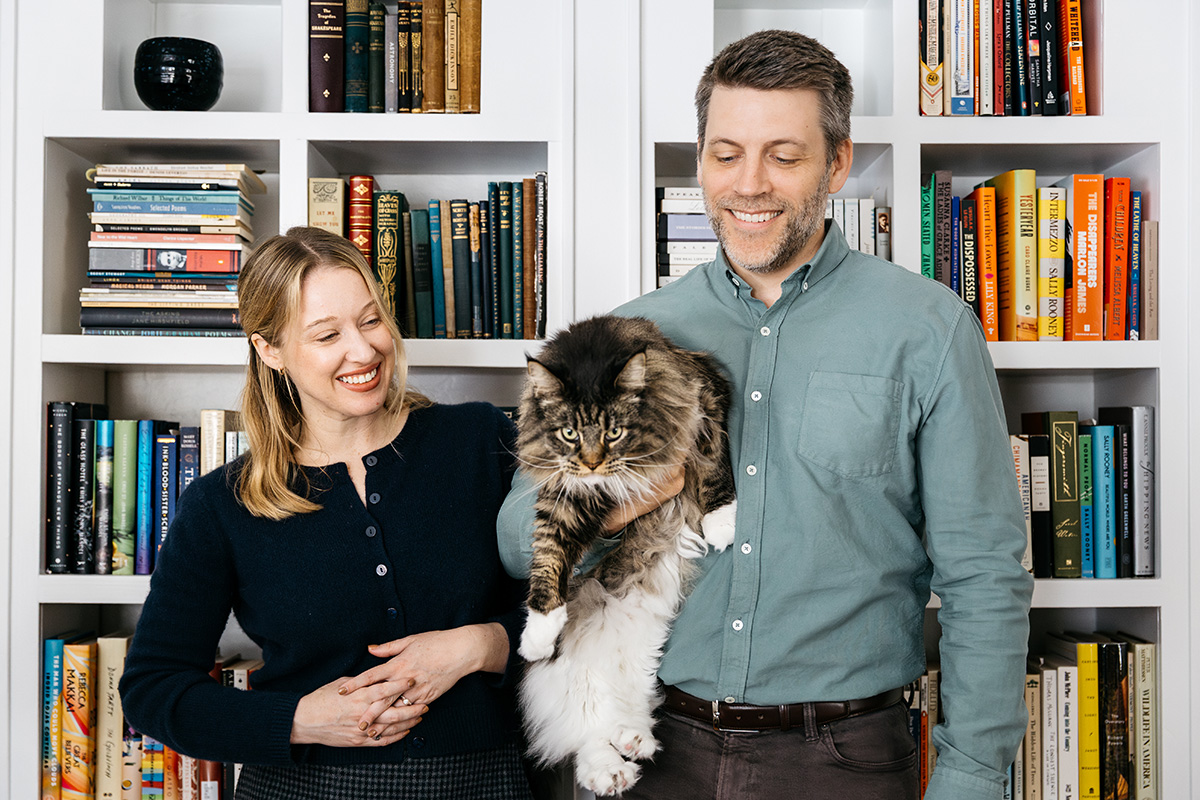
Benjamin met husband Nathan Jandl at the UW. He serves as an early and exceptionally qualified reader of her work.
“He has truly earned that dedication, both professionally and personally,” she says, adding that it’s very difficult to support a partner through chronic illness. “That sort of sustained caretaking requires so much grit and commitment. For years, things were very tough. And Nathan hung in there.”
It was actually Jandl’s career that triggered the recent move back to San Francisco, after he was offered a position of director of sustainability at the University of California–Berkeley.
“It’s the only job that would have taken us away,” says Benjamin, with more than a hint of wistfulness in her voice.
Still, beginnings are exciting for any author. She may be living closer to family in the city where she was raised, but she’s seeing her old universe through new eyes, much like her characters in Under Story. She’s found effective treatments for her health issues, and she’s more determined than ever to enjoy her one brilliant chance at this life — so much of which she worked through with this novel.
“I’m more accepting of the unknown, more okay with uncertainty, more positive, as opposed to catastrophic, worry-based thinking,” she says.
Benjamin does miss Madison and maybe always will.
“I’m as happy to be here as I am grieving what we left,” she says. “I’m such a San Francisco soul, but Wisconsin really shaped me. Fifteen years is a long time, and I very proudly consider myself an honorary Wisconsinite. I will always feel that it is one of my homes.”
Maggie Ginsberg ’97 is the author of novels Still True and the forthcoming Daisy Chain. She works as the writer for UW–Madison’s Division of the Arts.
Published in the Fall 2026 issue
Comments
No comments posted yet.