UW–Madison in Four Walks
Join us for a classic stroll around the world’s most beautiful urban campus.
Campus life quickly wears down shoe soles as it builds up leg muscles, because for UW–Madison students it is primarily lived on foot. Cars, bikes, scooters, skateboards, and buses abound on this urban campus, but they are often experienced by students as obstacles to dodge.
Remember the walk — buzzing with wary energy — from the residence hall to your first freshman class? Then there was the route from those Regent Street tailgate parties toward a raucous Badger victory at Camp Randall Stadium. Recollections far more serene might include strolling hand-in-hand with a date along the verdant Lakeshore Path at sunset.
Here are some of the most fondly and frequently recalled UW–Madison footpaths, featuring lush landscapes, iconic architecture, centuries of local history, and meditative escapes. And of course, in America’s Dairyland, Babcock Hall ice cream.
Camp Randall Game Day Walk
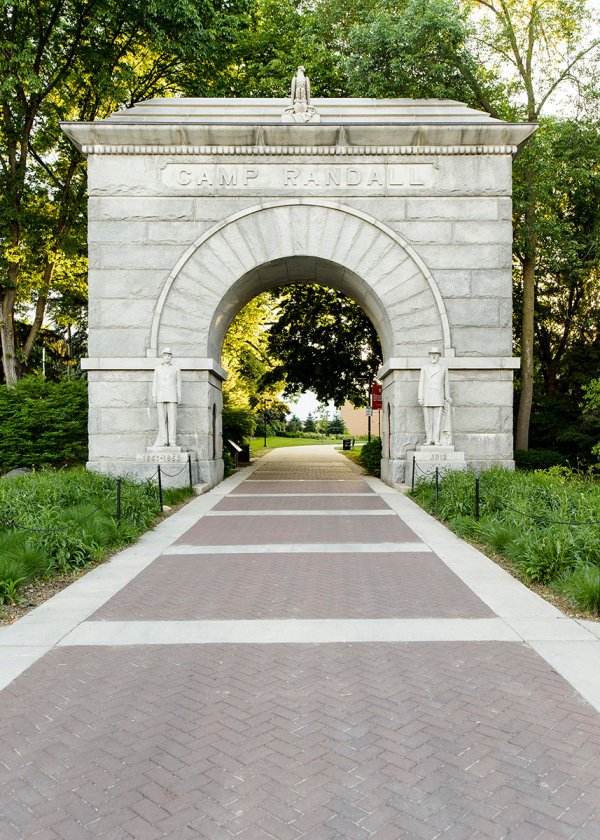
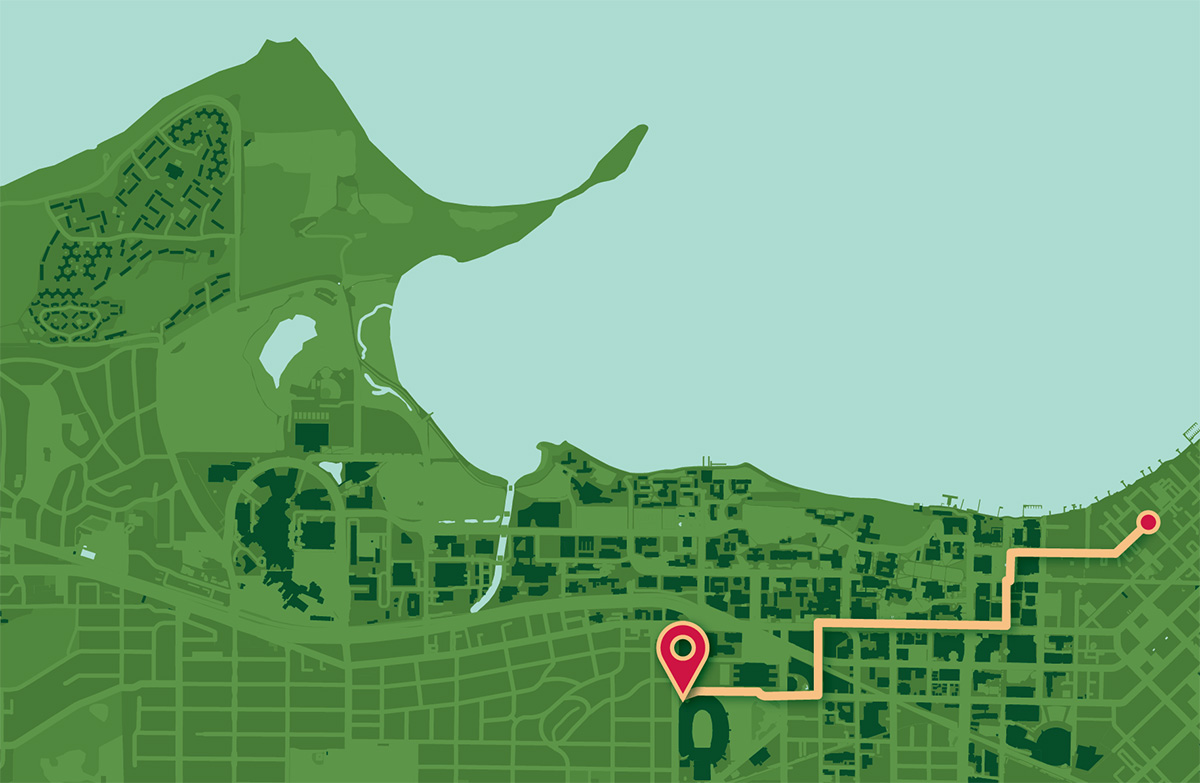 The path to a Badger football game might be a march, or even a bar crawl. But tradition strictly dictates that whether you come from parties on Langdon or Mifflin streets, tailgates on Regent Street, or Union South’s Badger Bash, those ribbons of cardinal red and white must converge at the end of Dayton Street and flow beneath the imposing 1912 Camp Randall Memorial Arch (though note that it’s temporarily closed due to construction).
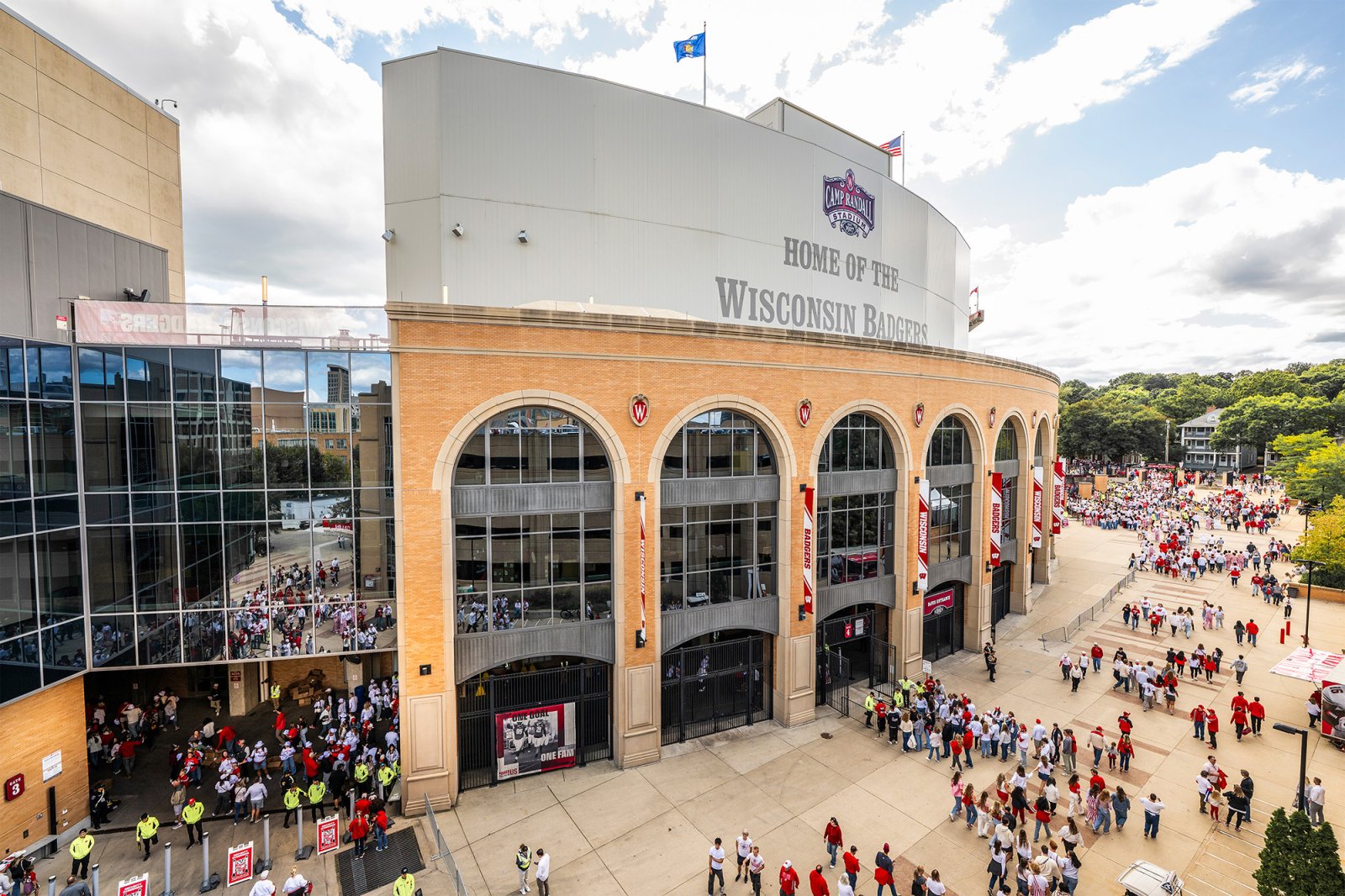
For Civil War buffs, the grassy Camp Randall Memorial Park to the left showcases a guardhouse, two cannons, and a host of historic markers. For football-focused fans, however, it’s a direct path between the engineering campus to the right and the looming stadium on the left to reach the students’ Gate 5 entrance near Breese Terrace.
Once the ground has been shaken by “Jump Around” and the UW Marching Band has dazzled with its exuberant Fifth Quarter anarchy, exiting near the Field House offers a view of the new Kellner Family Athletic Center, where future Badger athletes will train.



On a football Game Day, simply follow the ribbons of cardinal and white to Camp Randall Stadium.




Lakeshore Path Walk
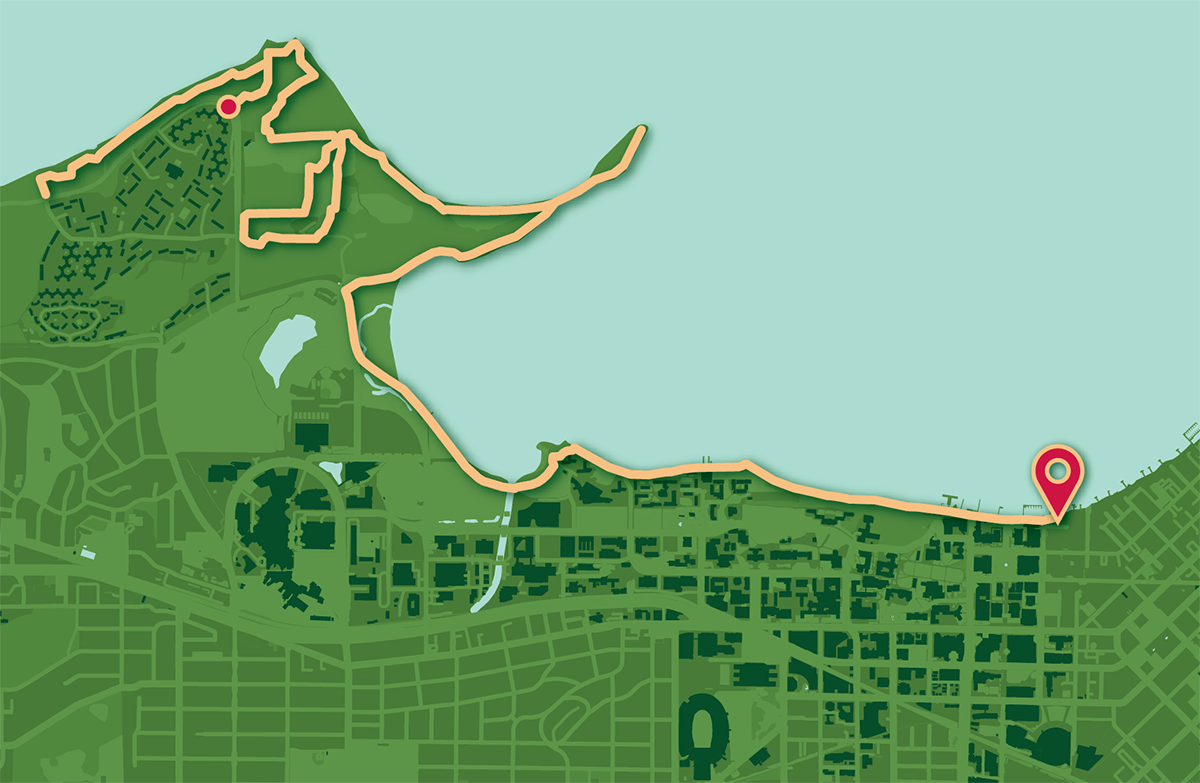
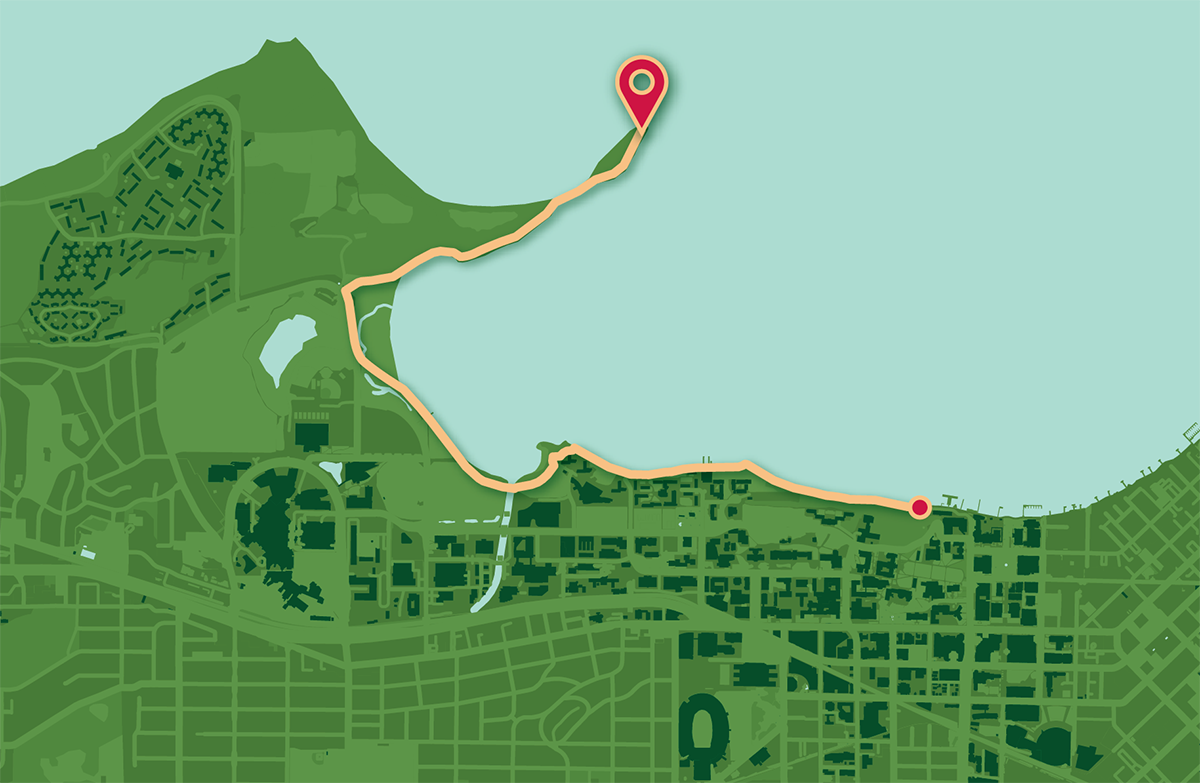 Student stresses can necessitate a healing respite among trees and rippling Lake Mendota. The cacophony of the Memorial Union Terrace recedes at the entrance to the Howard Temin Lakeshore Path. Although the path technically starts back at Park Street, it’s farther west where one begins to find the soaring trees, small beaches, and large stones that offer spaces for quieter conversations or solitude. The birds’ trills and the gliding sailboats promise an escape from the steady beat of urban campus life.
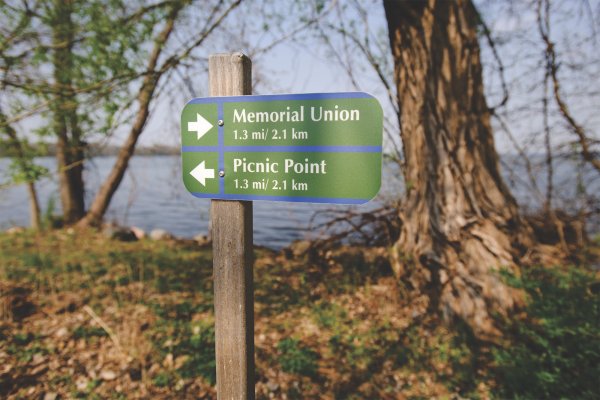
Trees dwindle along University Bay and the Triangle Marsh before the official path circles the Class of 1918 Marsh into Bill’s Woods and the Big Woods. But most visitors are drawn rightward to Picnic Point, which beckons with its creeping flowers, fire circles, woodpiles, and some of the most expansive Lake Mendota views in Madison. The beloved peninsula juts nearly a mile into the lake.
Here, numerous benches, felled logs, and smaller footpaths provide wide-angle views of the capitol, campus buildings, Langdon Street, and the Edgewater Hotel piers to the right. Look left for “real” life in Madison’s sprawling suburbs and lakeside homes, stretching beyond the boats that dot the water. The Picnic Point portion of the Lakeshore Path is the most visited area of the UW’s 300-acre Lakeshore Nature Preserve, with thousands of people traversing it every year. A visit even on a snowy winter day will turn up students, dogs, and townspeople seeking exercise or peace.
Walk to the point and set everything else in the chaotic world aside.
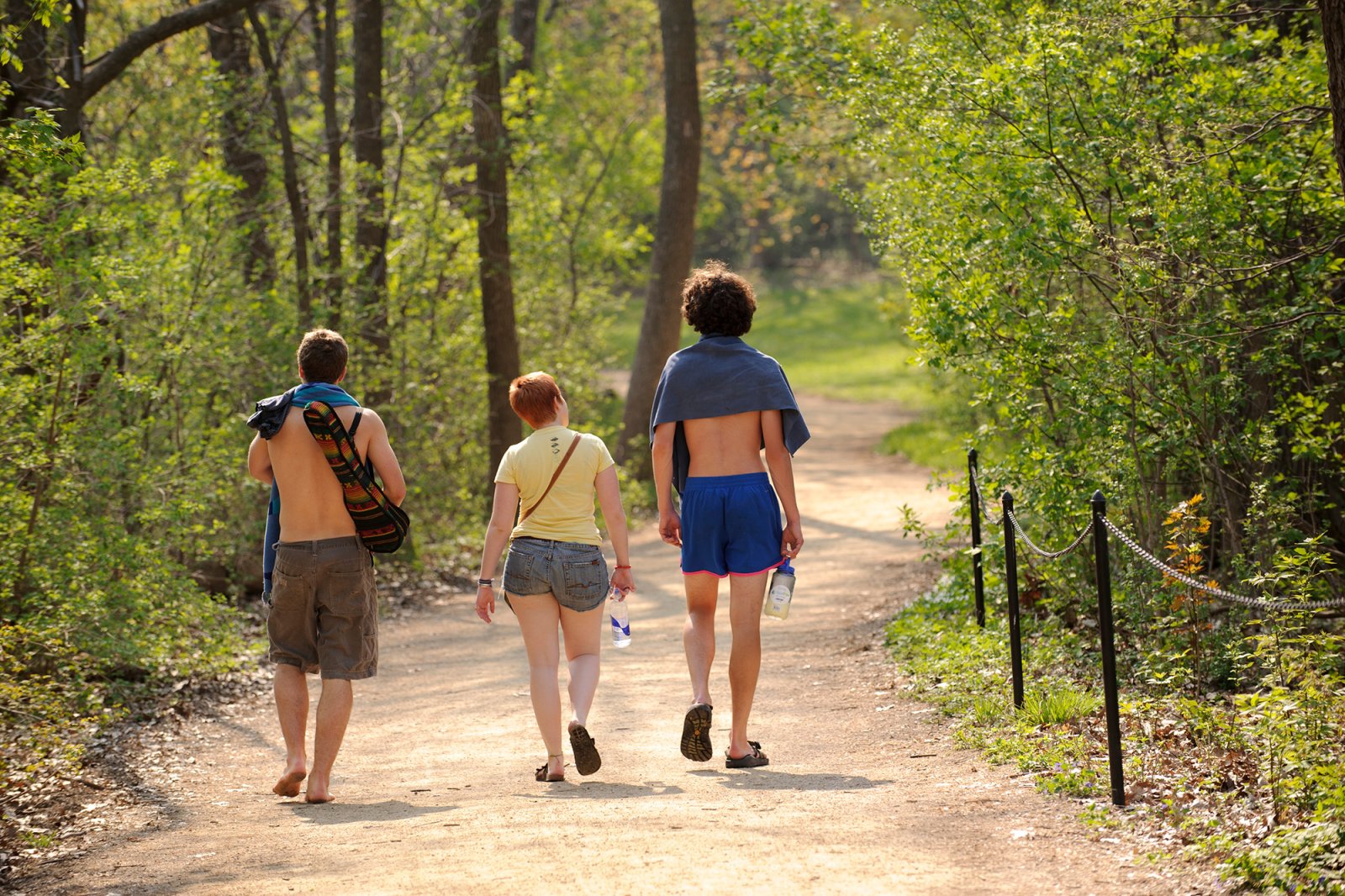
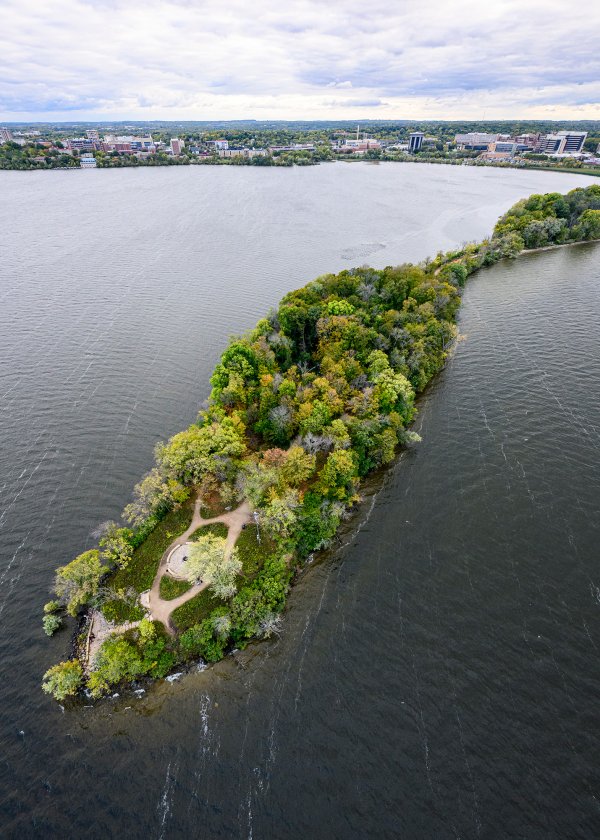
The Lakeshore Nature Preserve offers the perfect escape from urban campus life.

Lake Mendota Path Walk
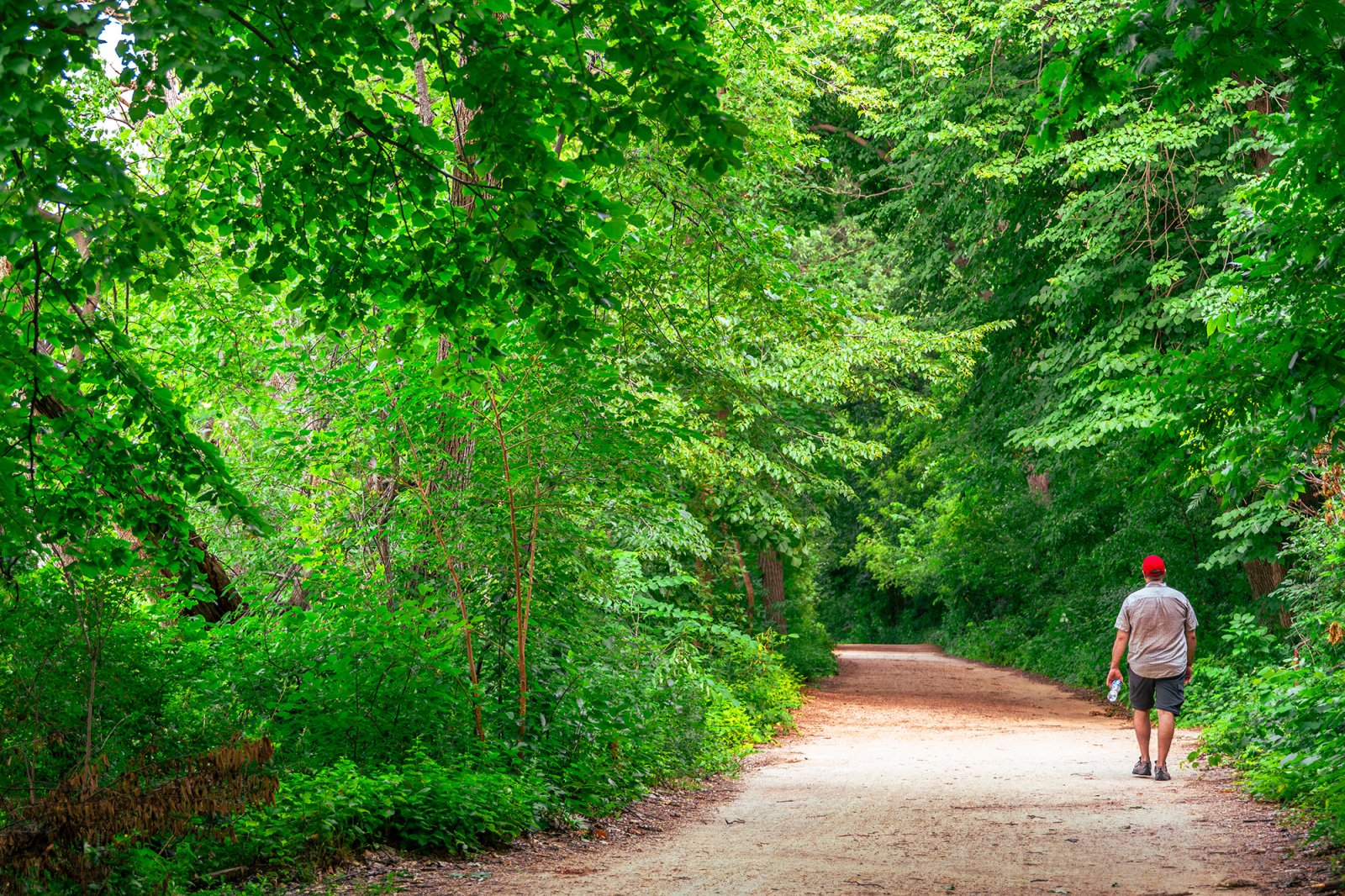
 A walk on the wild side of the Lakeshore Nature Preserve turns up fewer humans on the narrow, sandy, root-riddled paths. In these biologically diverse arbors, birds clamor amid the rustling of trees and tall grass. If you do happen to meet another person, it likely requires stepping sideways into the brush to let them pass.
A good place to start is Frautschi Point’s small parking lot, which sits across from the Eagle Heights University Apartments. A short walk down toward the lake arrives at the two small bumps that jut out into the water like an owl’s ears and mark the point.
To the west lie nearly abandoned, denser woods. The Lake Mendota path passes through the Tent Colony Woods, Wally Bauman Woods, and steep Eagle Heights Woods, which hosts plants found nowhere else in the preserve. Paths to the east cross the more populated Eagle Heights Community Gardens, where walkways encourage wandering among the varieties of crops. There are plenty of opportunities here to “touch grass” or even squeeze handfuls of soil — a perfect break from scrolling and screens.
This route continues with a loop through the 11-acre restored Biocore Prairie, which consists of marshy fields and teaching landscapes tended by UW staff and students. Take in the new home for purple martins and the Bluebird Trail, dotted with bluebird boxes.
The interior footpaths, some dusted with wood chips, circle back to Eagle Heights. Those seeking more than four miles of leg-stretching can hike the lakeshore all the way back to Picnic Point where it intersects with the Howard Temin Lakeshore Path, then head to Alumni Park, the green space between the Memorial Union and the Red Gym that honors prominent alumni. An audio tour of the Lakeshore Nature Preserve, available at lakeshorepreserve.wisc.edu, features history, poetry, and recollections.


Observatory Hill Walk
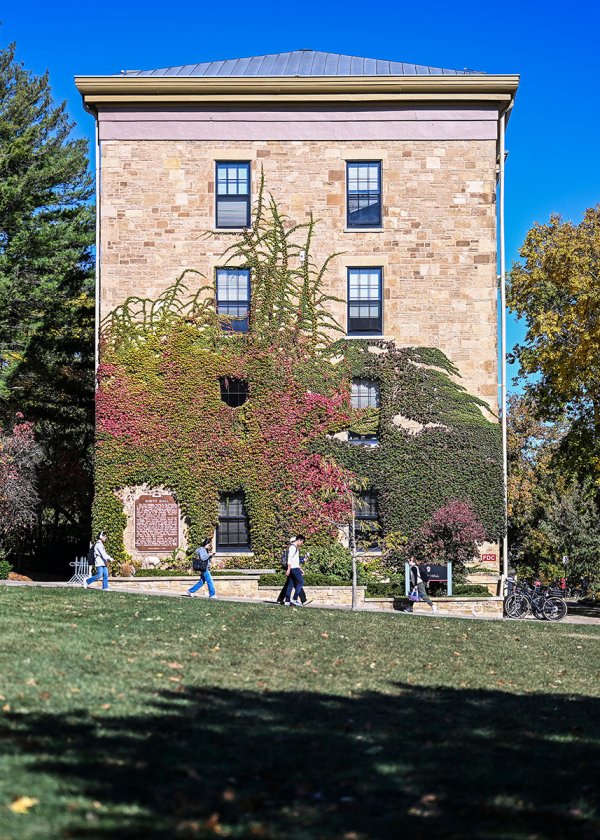
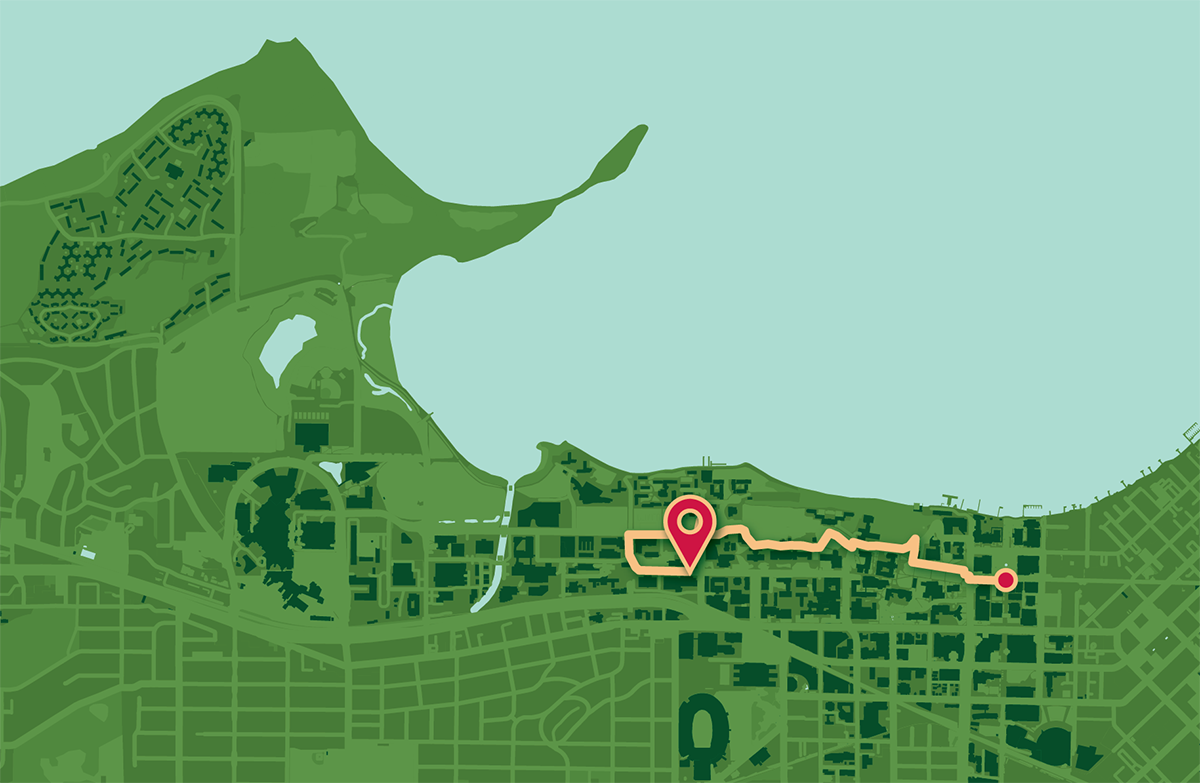 An endurance trek from Library Mall up Bascom Hill can curve right around the university’s first building, North Hall, to arrive at the walkable start to Observatory Drive. Cross the street and pause in the Storyteller’s Circle to reflect on the Wisconsin Idea, then take in sparkling views of Lake Mendota from on high, visible through the trees of Muir Woods. It’s seven acres of seclusion in the bustling heart of campus.
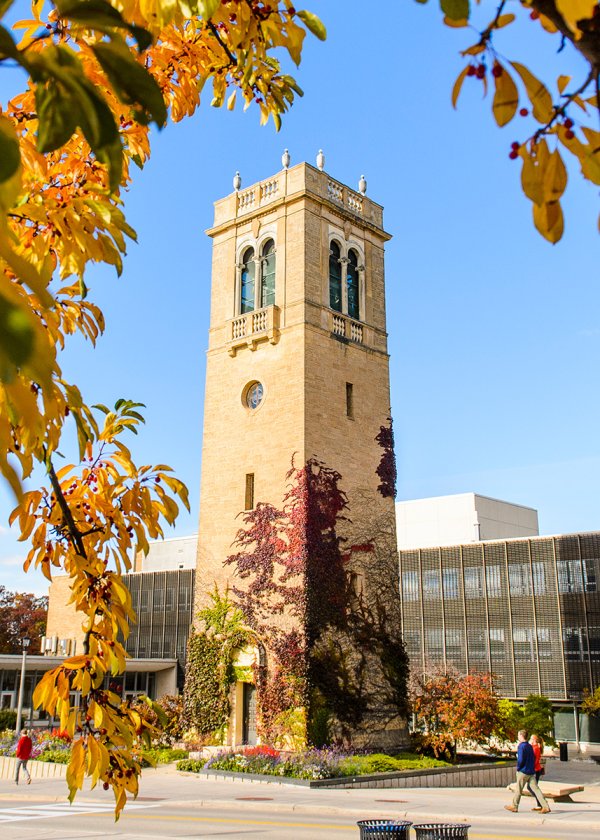
Returning to Observatory Drive, gaze skyward to the Carillon Tower with its 56 bells — an 85-foot ivy-bedecked tower out of the Rapunzel fairy tale. Originally it was surrounded by woods, which were partially removed in the ’60s to build the Social Sciences Building. The carillon’s quarter-hour tolling continues to provoke students to hustle, reminded that they are late for class.
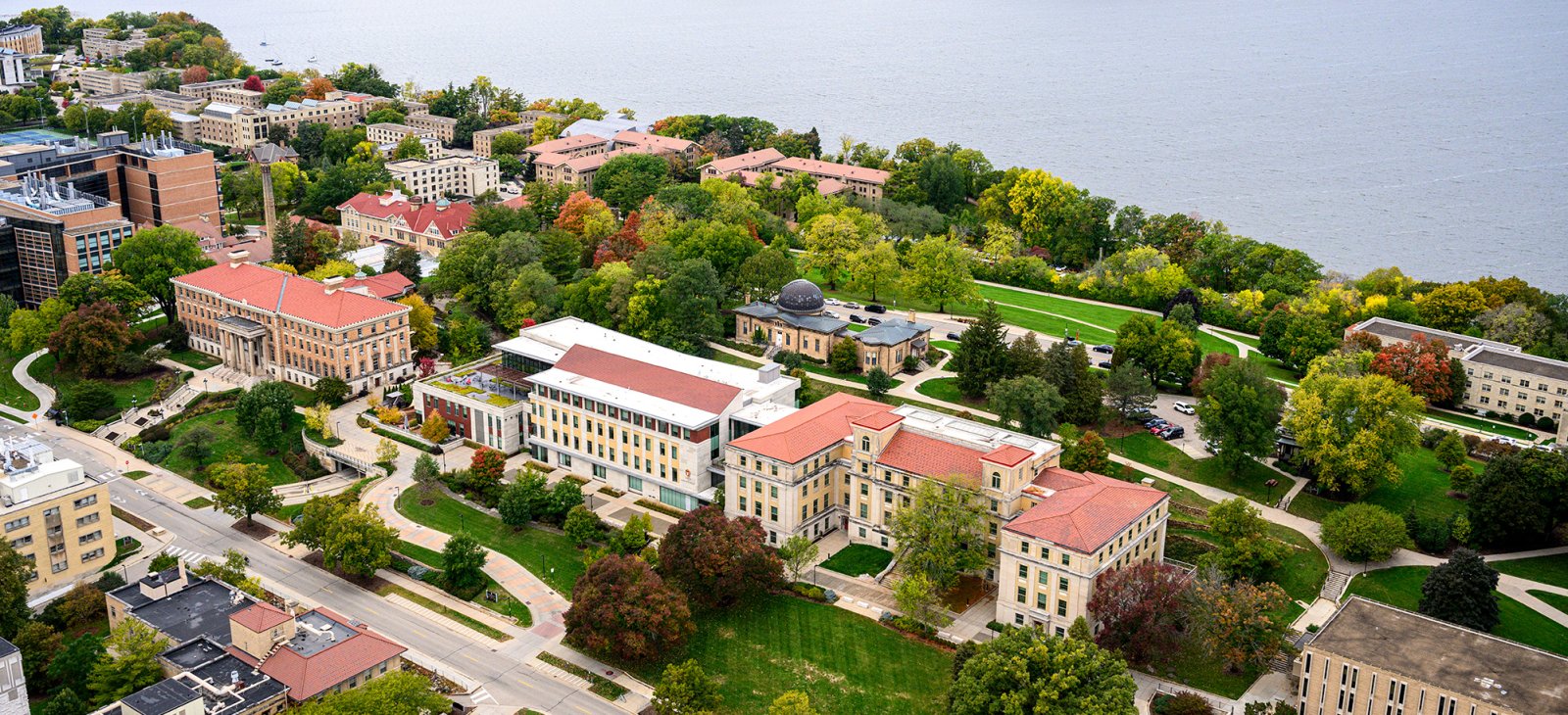
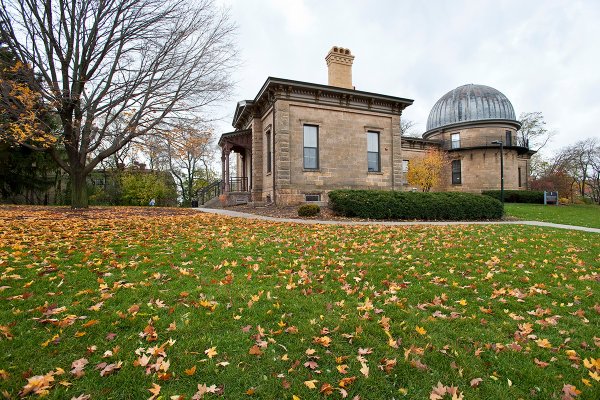
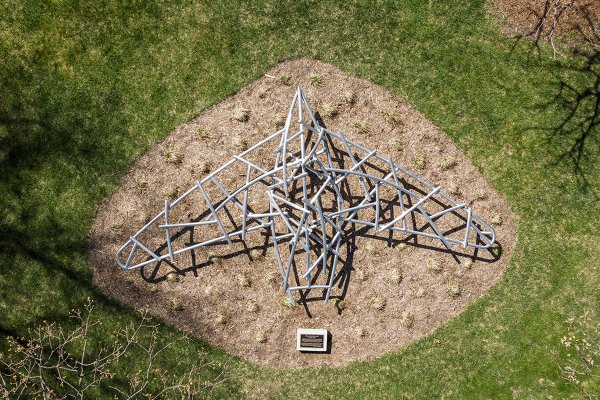
Further along Observatory Drive lies its namesake, the domed Washburn Observatory, which inspired a popular 1930s song heralding it as a great place to take a date. The paths just off the street offer better views of the observatory and also pass by the Effigy: Bird Form sculpture by the late UW art professor Truman Lowe MFA’73. This area in Agricultural Hall’s backyard contains the earthworks that remain of the Observatory Hill Mound Group. A two-tailed water spirit and a bird integrated into the landscape are easy to miss when trotting by, although small plaques honor the area’s Indigenous history.
Continuing on the left are multiple paths throughout this National Historic District, which encompasses much of the agricultural campus that grew up around the 1893 King Hall. The College of Agricultural and Life Sciences has devised its own “Discovery Walk” of the area, showcasing the architecture as well as the scientific progress that took place in these historic buildings.
Further ahead, cross to the lake side of Observatory Drive and enter the oasis of Zen that is the Allen Centennial Garden. Smells shift from budding flowers, to spicy tree bark, to earthen mulch, to musty pond before you pass under an ivy-covered cedar pergola and cross a red Japanese-style bridge, both of which are excellent spots to focus all your senses on the surroundings. Many benches, each with a unique view of the thousands of plants puzzled into the sylvan space, surround the yellow-brick Victorian Gothic mansion that once housed agricultural deans.
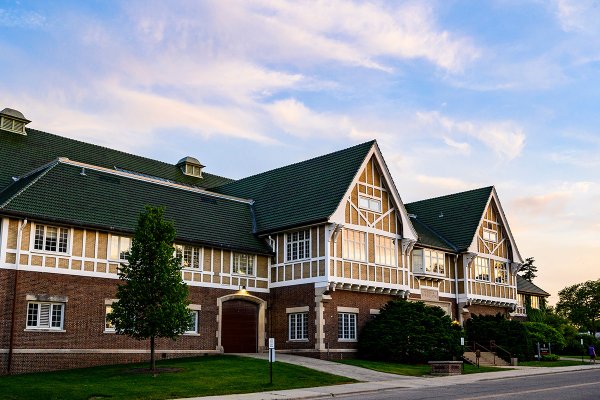
Exit this small Eden, cross Observatory Drive, and take a path south toward Linden Drive. As the 1908 Tudor Revival–style Stock Pavilion comes into view, envision Harry Truman, Teddy Roosevelt, or Bill Clinton bellowing stump speeches inside, projected by its admirable acoustics. Or, if you prefer, listen hard to hear echoes of Sergei Rachmaninoff, Dr. Martin Luther King Jr., Muhammad Ali, R.E.M., or Bonnie Raitt, who have also graced this distinctive structure.
The next building to the east is arguably the most delightful spot on campus. It’s the place where chemist Stephen Babcock’s esteemed butterfat test of 1890 paved the way to today’s delectable dairy treats, still made from the 1951 ice cream recipe developed the year Babcock Hall was built. It’s the ultimate cherry on top of a meandering campus expedition.


What are your favorite UW–Madison walks?
Leave a comment below; email onwisconsin@uwalumni.com; or write to 1848 University Avenue, Madison, Wisconsin 53726.
Melanie Conklin MA’93 is a Wisconsin journalist and political communications director.
Comments
Joan Lowery October 16, 2026
This brings back such fond memories. Have you thought of making guided walks around these four iconic areas? It could be a special event. I would fly back to Madison for that!
Kristin October 17, 2026
Melanie! We have never done the Lake Mendota Path! Maybe we can meet you and Aaron for a walk sometime when we are in town and not swamped with family stuff!
David T. Memmel October 19, 2026
Wow! I love all of these walks! It is hard to beat the beauty of the UW Madison campus! I remember walking across Lake Mendota in the dead of winter carrying my hockey bag and stick as I headed to the “shell” for a late night intramural hockey game. I thought it was safe enough as the lake had ice fishing tents everywhere!