Architectural Treasures
UW–Madison has a wealth of nationally recognized historic places.
The National Register of Historic Places (NRHP) lists locations whose significance to local, state, or national history merits recognition and preservation. When the register was established in 1966, the first UW building added to its roster was, well, the first UW building: North Hall, built in 1851. Over the past 60 years, the NRHP has recognized 25 more locations on the UW campus, listed below in order of when they joined the national register. The most recent addition is also the oldest: the Willow Drive Mounds and Habitation Complex, built by Indigenous peoples between 5000 BCE–1200 CE and added to the register in 2025. Five of these campus locations are distinguished as National Historic Landmarks for their exceptional relevance to American history. As campus expands and evolves to meet the world’s ever-growing demand for Badgers, these culturally and historically significant places endure as physical reminders of the past that makes the future possible.
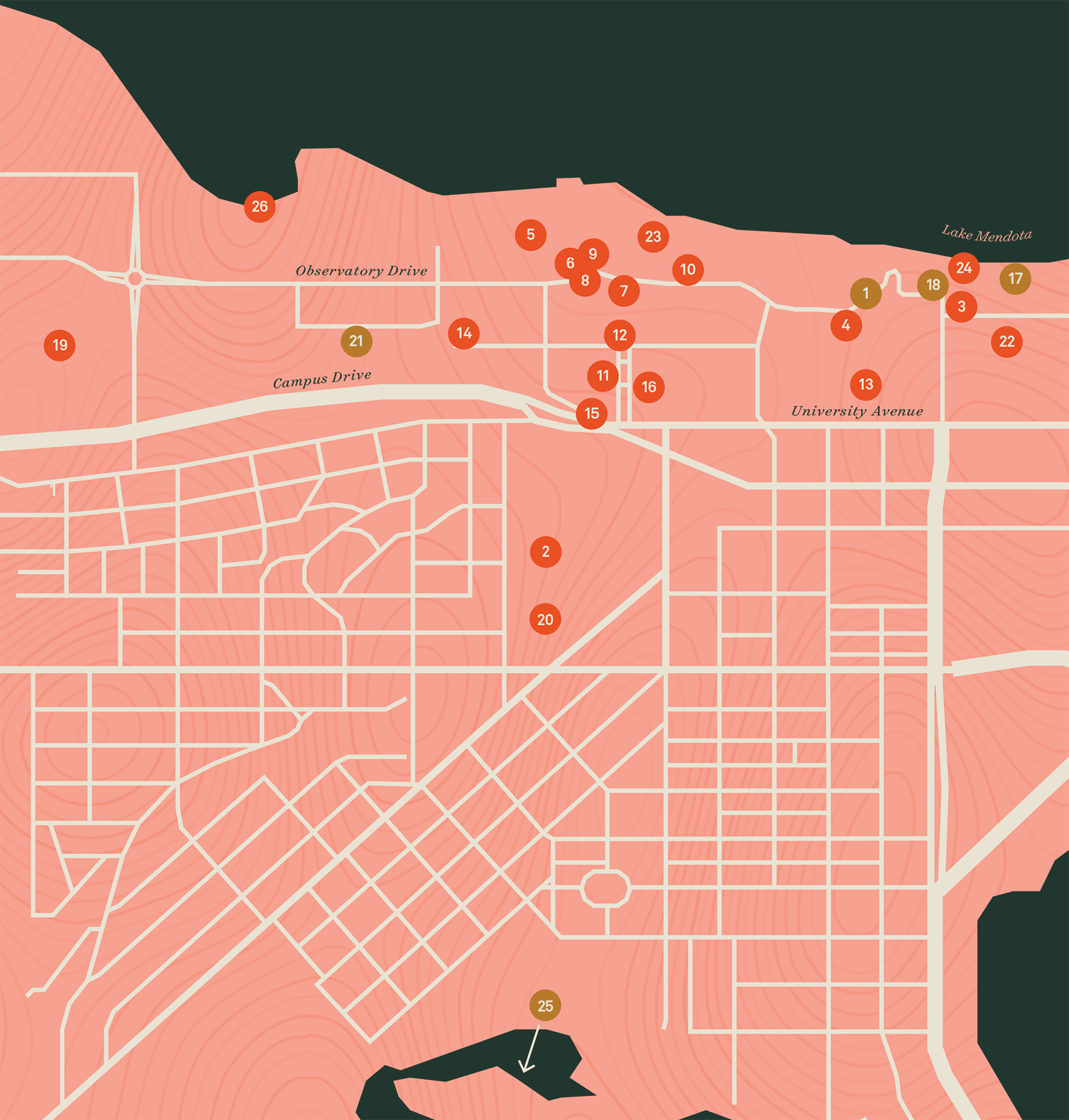
- North Hall* 1851
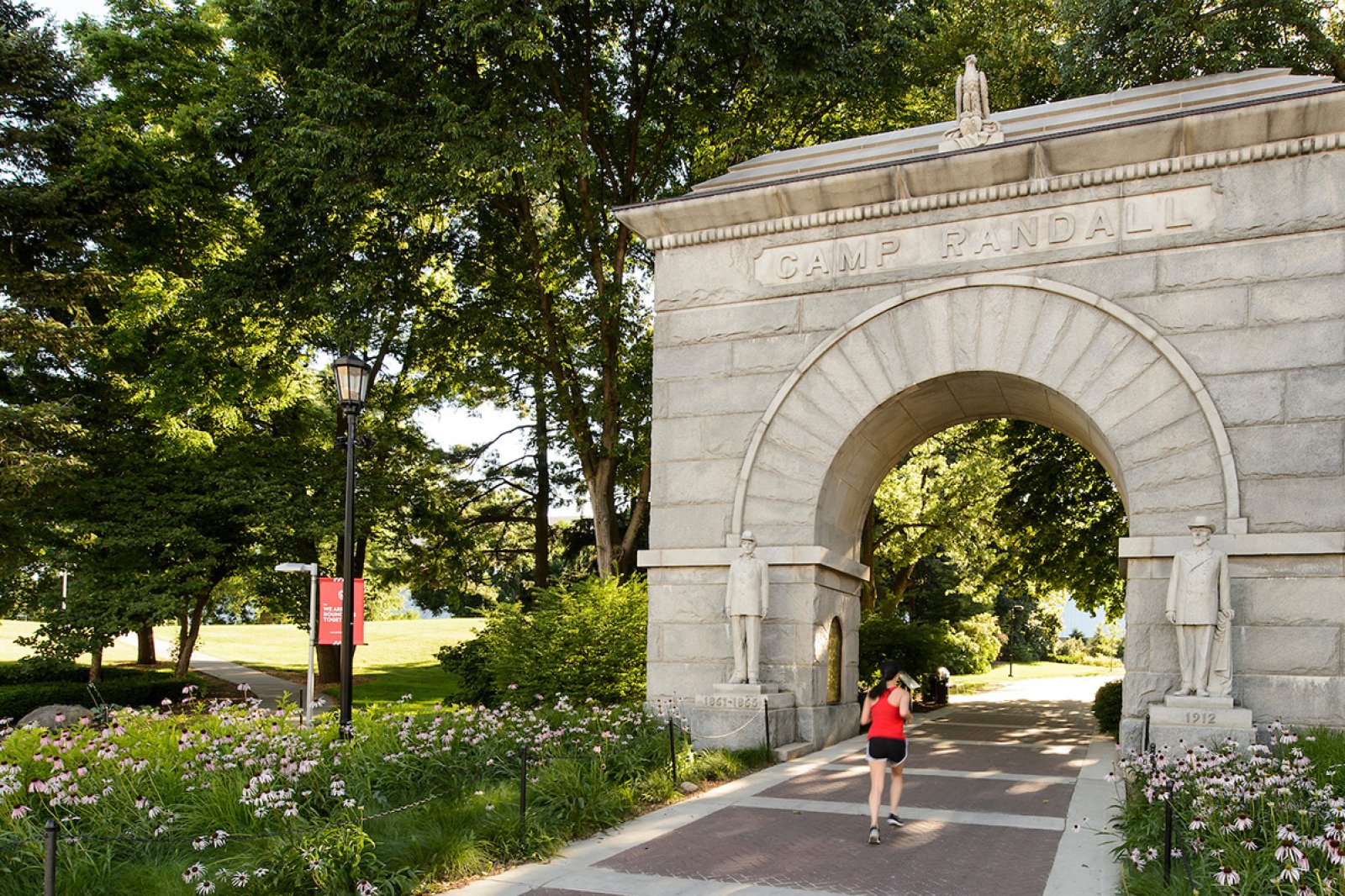
- Camp Randall Memorial Park 1913
- Wisconsin Historical Society 1900
- Bascom Hill Historic District 1851–1969
- Agricultural Dean’s Residence 1896
- Agricultural Bulletin Building 1901
- Agriculture Hall 1903
- Hiram Smith Hall and Annex 1891–1909
- King Hall (Soil Sciences) 1893
- Washburn Observatory 1882 and 1854
- Hector F. DeLuca Biochemistry Building 1916
- Agricultural Engineering Building 1907
- Lathrop Hall 1908
- Stock Pavilion 1908
- Materials Science and Engineering Building 1901
- Henry Mall Historic District 1906–25
- Red Gym* 1894
- Science Hall* 1887
- Forest Products Laboratory 1932
- Field House 1930
- Dairy Barn* 1898
- University Presbyterian Church and Student Center (Pres House) 1935
- Observatory Hill Mound Group 700–1000 CE
- Memorial Union 1928
- University of Wisconsin Arboretum* 1927–43
- Willow Drive Mounds and Habitation Complex 5000 BCE–1200 CE
*National Historic Landmark
Published in the Spring 2026 issue